López-Torrejón Gema, Martínez-Jiménez María I, Ayora Silvia
Department of Microbial Biotechnology, Centro Nacional Biotecnología, CSIC Darwin 3, Campus Universidad Autónoma de Madrid, Cantoblanco, 28049 Madrid, Spain.
Nucleic Acids Res. 2006 Jan 10;34(1):120-9. doi: 10.1093/nar/gkj418. Print 2006.
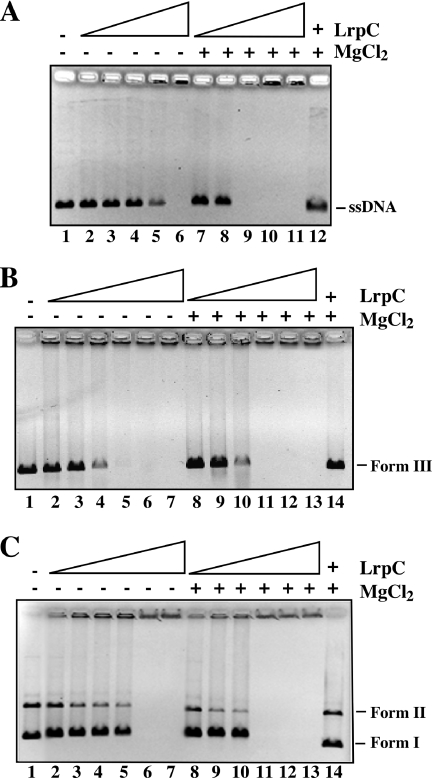
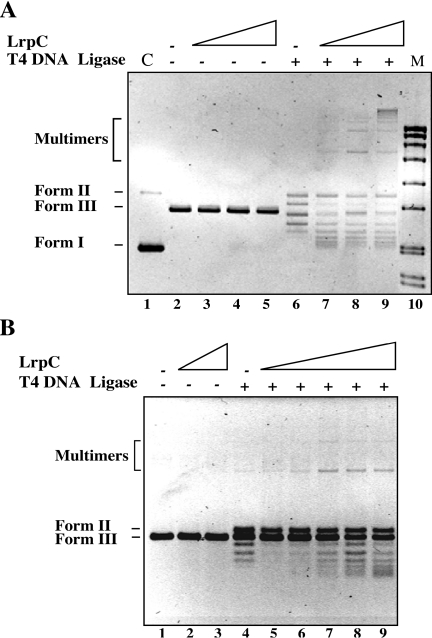
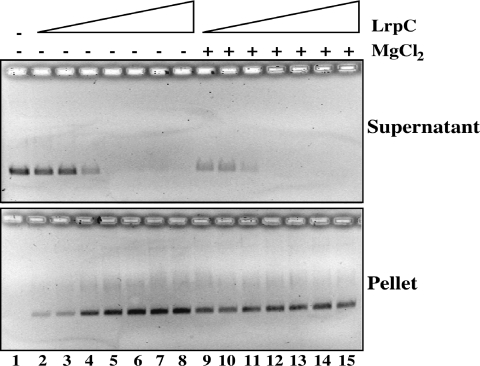
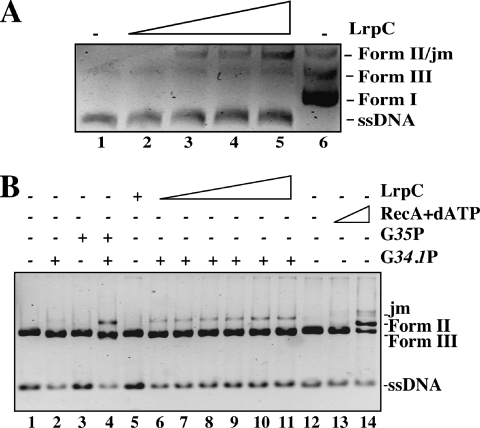
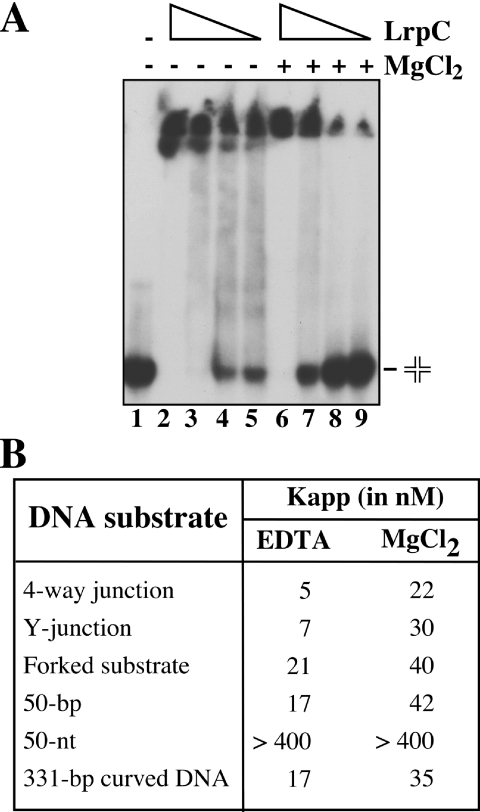
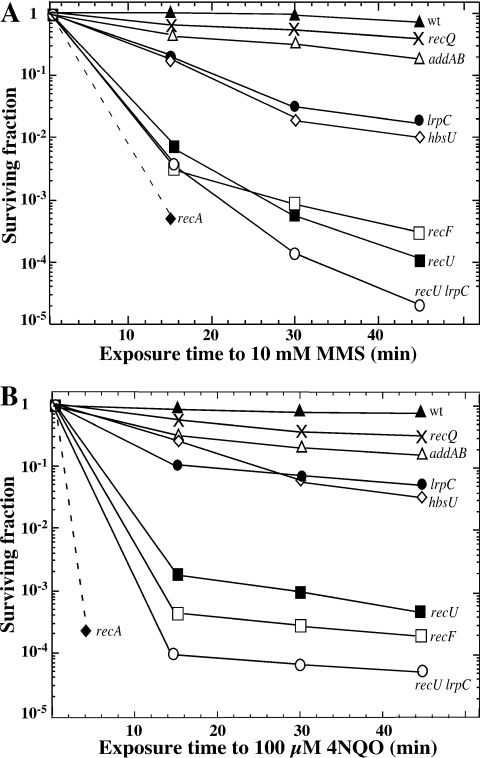
Bacillus subtilis LrpC is a sequence-independent DNA-binding and DNA-bending protein, which binds both single-stranded (ss) and double-stranded (ds) DNA and facilitates the formation of higher order protein-DNA complexes in vitro. LrpC binds at different sites within the same DNA molecule promoting intramolecular ligation. When bound to separate molecules, it promotes intermolecular ligation, and joint molecule formation between a circular ssDNA and a homologous ssDNA-tailed linear dsDNA. LrpC binding showed a higher affinity for 4-way (Holliday) junctions in their open conformation, when compared with curved dsDNA. Consistent with these biochemical activities, an lrpC null mutant strain rendered cells sensitive to DNA damaging agents such as methyl methanesulfonate and 4-nitroquinoline-1-oxide, and showed a segregation defect. These findings collectively suggest that LrpC may be involved in DNA transactions during DNA repair and recombination.
枯草芽孢杆菌LrpC是一种不依赖序列的DNA结合和DNA弯曲蛋白,它能结合单链(ss)和双链(ds)DNA,并在体外促进高阶蛋白质-DNA复合物的形成。LrpC结合在同一DNA分子内的不同位点,促进分子内连接。当与分开的分子结合时,它促进分子间连接以及环状ssDNA与同源ssDNA尾线性dsDNA之间的连接分子形成。与弯曲的dsDNA相比,LrpC结合对处于开放构象的4向(霍利迪)连接点表现出更高的亲和力。与这些生化活性一致,lrpC缺失突变株使细胞对DNA损伤剂如甲磺酸甲酯和4-硝基喹啉-1-氧化物敏感,并表现出分离缺陷。这些发现共同表明,LrpC可能参与DNA修复和重组过程中的DNA交易。