Martin Patrick, Albagli Olivier, Poggi Marie Christine, Boulukos Kim E, Pognonec Philippe
CNRS UMR6548, Parc Valrose, Université de Nice Sophia Antipolis, Nice, France.
BMC Biotechnol. 2006 Jan 12;6:4. doi: 10.1186/1472-6750-6-4.
Internal Ribosome Entry Site (IRES)-based bicistronic vectors are important tools in today's cell biology. Among applications, the expression of two proteins under the control of a unique promoter permits the monitoring of expression of a protein whose biological function is being investigated through the observation of an easily detectable tracer, such as Green Fluorescent Protein (GFP). However, analysis of published results making use of bicistronic vectors indicates that the efficiency of the IRES-controlled expression can vary widely from one vector to another, despite their apparent identical IRES sequences. We investigated the molecular basis for these discrepancies.
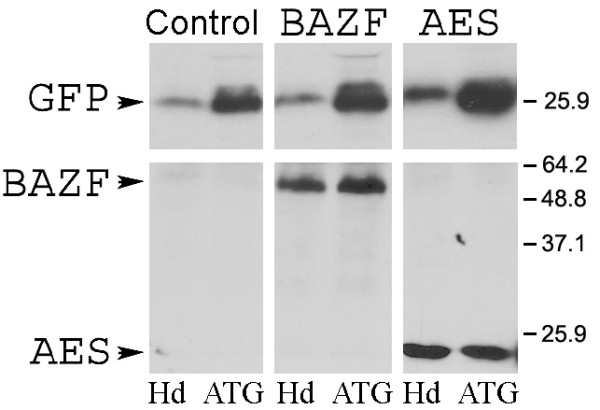
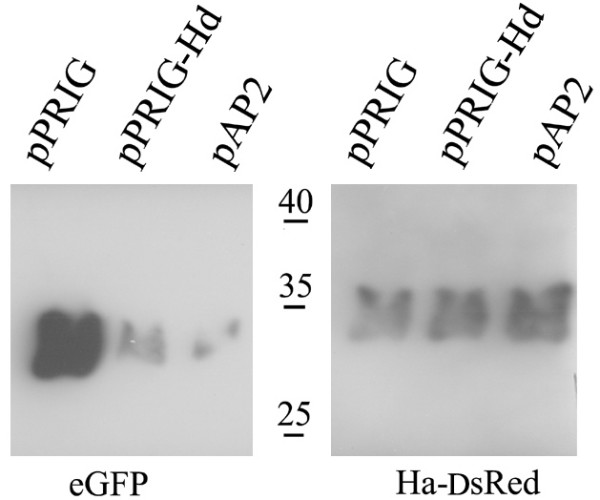
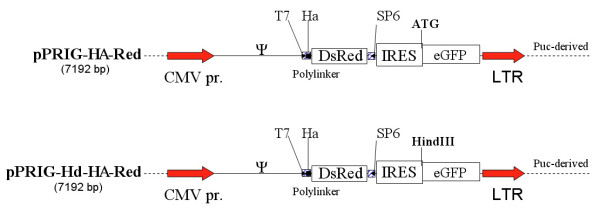
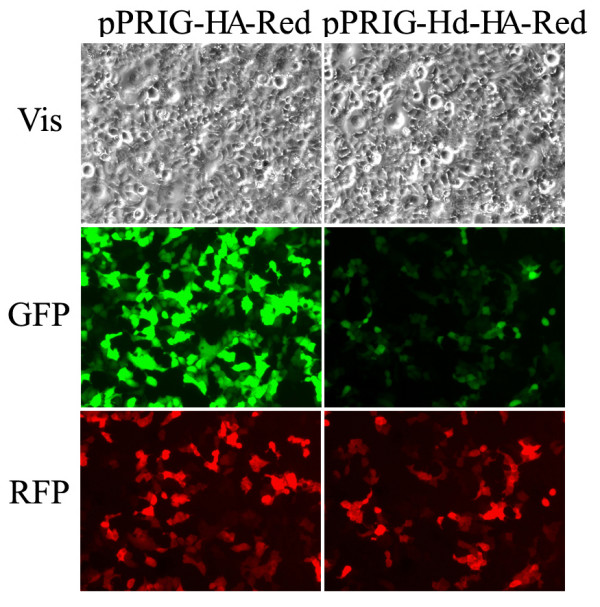
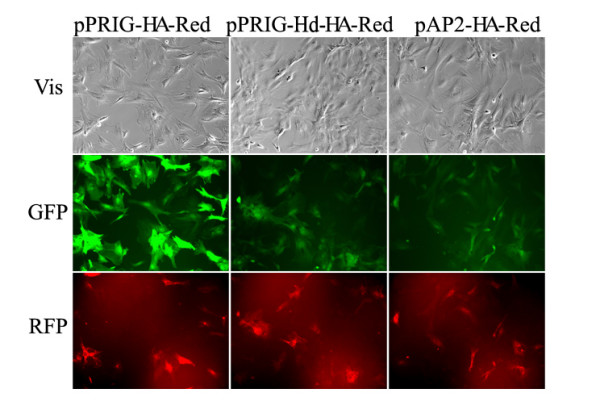
We observed up to a 10 fold difference in IRES-controlled expression from distinct bicistronic expression vectors harboring the same apparent IRES sequences. We show that the insertion of a HindIII site, in place of the initiating AUG codon of the wild type EMCV IRES, is responsible for the dramatic loss of expression from the second cistron, whereas expression from the first cistron remains unaffected. Thus, while the replacement of the authentic viral initiating AUG by a HindIII site results in the theoretical usage of the initiation codon of the HindIII-subcloned cDNA, the subsequent drop of expression dramatically diminishes the interest of the bicistronic structure. Indeed, insertion of the HindIII site has such a negative effect on IRES function that detection of the IRES-controlled product can be difficult, and sometimes even below the levels of detection. It is striking to observe that this deleterious modification is widely found in available IRES-containing vectors, including commercial ones, despite early reports in the literature stating the importance of the integrity of the initiation codon for optimal IRES function.
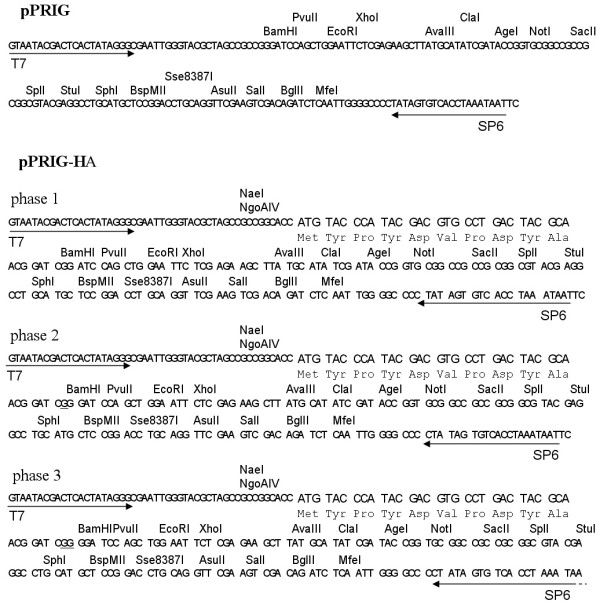
From these observations, we engineered a new vector family, pPRIG, which respects the EMCV IRES structure, and permits easy cloning, tagging, sequencing, and expression of any cDNA in the first cistron, while keeping a high level of expression from its IRES-dependent second cistron (here encoding eGFP).
基于内部核糖体进入位点(IRES)的双顺反子载体是当今细胞生物学中的重要工具。在各种应用中,在单一启动子控制下表达两种蛋白质能够通过观察易于检测的示踪剂(如绿色荧光蛋白(GFP))来监测正在研究其生物学功能的蛋白质的表达。然而,对利用双顺反子载体发表的结果分析表明,尽管IRES序列表面上相同,但IRES控制的表达效率在不同载体之间可能有很大差异。我们研究了这些差异的分子基础。
我们观察到,携带相同表面IRES序列的不同双顺反子表达载体的IRES控制表达存在高达10倍的差异。我们发现,用HindIII位点取代野生型EMCV IRES的起始AUG密码子,会导致第二个顺反子的表达显著丧失,而第一个顺反子的表达不受影响。因此,虽然用HindIII位点取代真实的病毒起始AUG会导致理论上使用HindIII亚克隆cDNA的起始密码子,但随后表达的下降极大地降低了双顺反子结构的价值。事实上,HindIII位点的插入对IRES功能有如此负面的影响,以至于很难检测到IRES控制的产物,有时甚至低于检测水平。令人惊讶的是,尽管文献早期报道了起始密码子完整性对最佳IRES功能的重要性,但这种有害修饰在现有的含IRES载体(包括商业载体)中广泛存在。
基于这些观察结果,我们构建了一个新的载体家族pPRIG,它保留了EMCV IRES结构,允许在第一个顺反子中轻松克隆、标记、测序和表达任何cDNA,同时保持其IRES依赖的第二个顺反子(此处编码eGFP)的高表达水平。