Ioannou Yiannis, Giles Ian, Lambrianides Anastasia, Richardson Chris, Pearl Laurence H, Latchman David S, Isenberg David A, Rahman Anisur
Centre for Rheumatology, Department of Medicine, University College London, Arthur Stanley House, 40-50 Tottenham Street, London, W1T 4NJ, UK.
BMC Biotechnol. 2006 Feb 10;6:8. doi: 10.1186/1472-6750-6-8.
The antiphospholipid syndrome (APS), characterised by recurrent miscarriage and thrombosis, is a significant cause of morbidity and mortality. Domain I (DI) of human beta 2 glycoprotein I (beta2GPI) is thought to contain crucial antibody binding epitopes for antiphospholipid antibodies (aPL), which are critical to the pathogenesis of APS. Expressing this protein in bacteria could facilitate studies investigating how this molecule interacts with aPL.
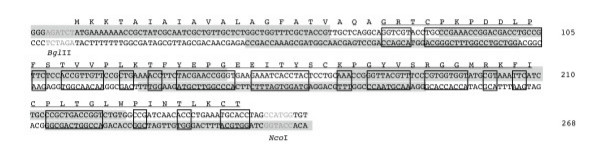
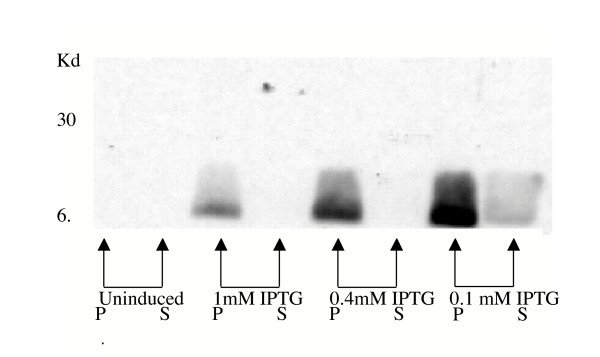
Using a computer programme called Juniper, sequentially overlapping primers were designed to be used in a recursive polymerase chain reaction (PCR) to produce a synthetic DI gene. Specifically Juniper incorporates 'major' codons preferred by bacteria altering 41 codons out of 61. This was cloned into the expression plasmid pET(26b) and expressed in BL21(DE3) Escherichia coli (E. coli). By virtue of a pelB leader sequence, periplasmic localisation of DI aided disulphide bond formation and toxicity was addressed by tightly regulating expression through the high stringency T7lac promoter.
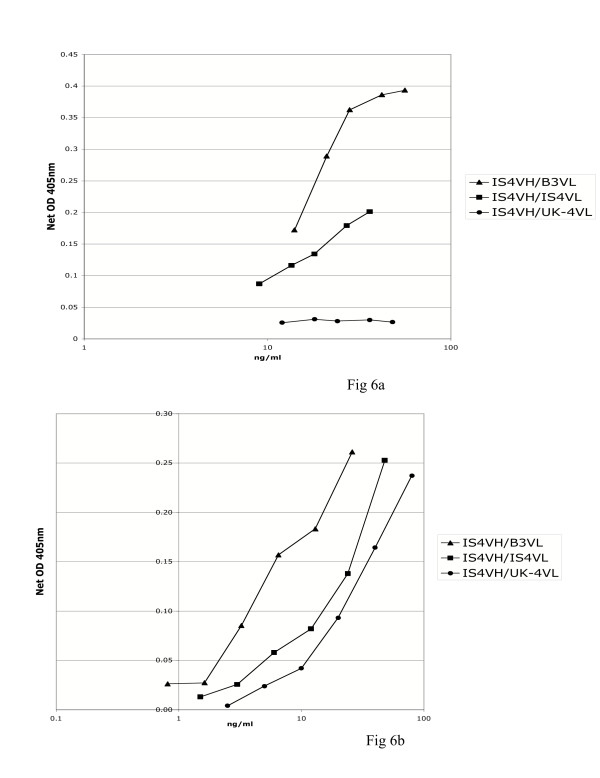
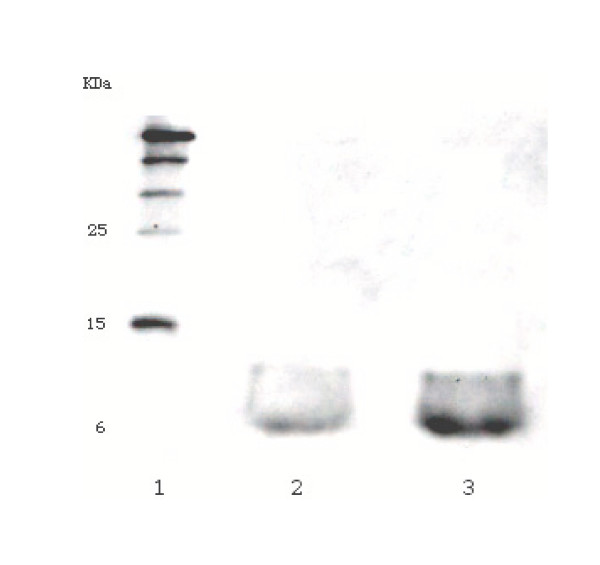
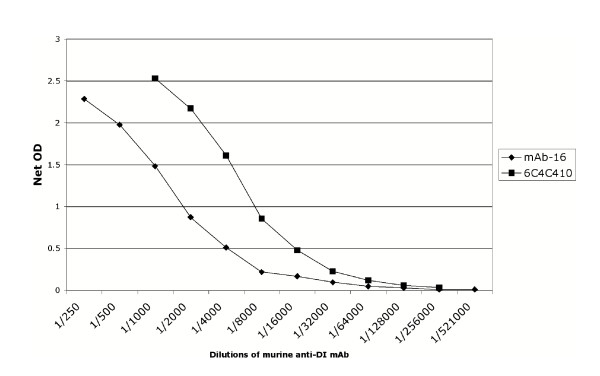
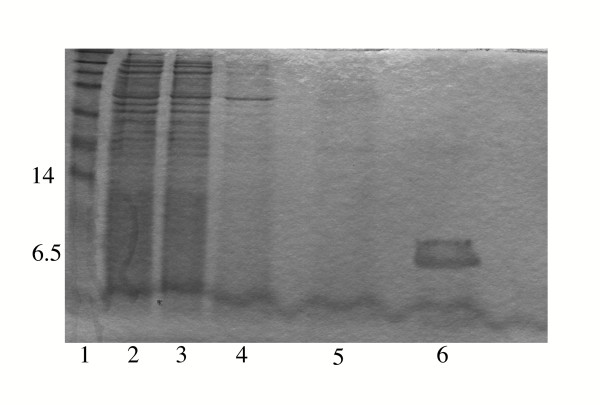
Purified, soluble his-tagged DI in yields of 750 microg/L bacterial culture was obtained and confirmed on Western blot. Expression using the native human cDNA sequence of DI in the same construct under identical conditions yielded significantly less DI compared to the recombinant optimised sequence. This constitutes the first description of prokaryotic expression of soluble DI of beta2GPI. Binding to murine monoclonal antibodies that recognise conformationally restricted epitopes on the surface of DI and pathogenic human monoclonal IgG aPL was confirmed by direct and indirect immunoassay. Recombinant DI also bound a series of 21 polyclonal IgG samples derived from patients with APS.
By producing a synthetic gene globally optimised for expression in E. coli, tightly regulating expression and utilising periplasmic product translocation, efficient, soluble E. coli expression of the eukaryotic protein DI of beta2GPI is possible. This novel platform of expression utilising pan-gene prokaryote codon optimisation for DI production will aid future antigenic studies. Furthermore if DI or peptide derivatives of DI are eventually used in the therapeutic setting either as toleragen or as a competitive inhibitor of pathogenic aPL, then an E. coli production system may aid cost-effective production.
抗磷脂综合征(APS)以反复流产和血栓形成为特征,是发病和死亡的重要原因。人β2糖蛋白I(β2GPI)的结构域I(DI)被认为包含抗磷脂抗体(aPL)的关键抗体结合表位,这对APS的发病机制至关重要。在细菌中表达这种蛋白有助于研究该分子与aPL的相互作用方式。
使用名为Juniper的计算机程序,设计连续重叠引物用于递归聚合酶链反应(PCR)以产生合成DI基因。具体而言,Juniper纳入了细菌偏好的“主要”密码子,改变了61个密码子中的41个。将其克隆到表达质粒pET(26b)中,并在BL21(DE3)大肠杆菌(E. coli)中表达。借助pelB前导序列,DI的周质定位有助于二硫键形成,并且通过高严谨性T7lac启动子严格调控表达来解决毒性问题。
获得了纯化的、可溶性的带有组氨酸标签的DI,产量为750微克/升细菌培养物,并在蛋白质印迹法中得到证实。在相同条件下,使用DI的天然人类cDNA序列在同一构建体中表达,与重组优化序列相比,产生的DI明显更少。这是β2GPI可溶性DI原核表达的首次描述。通过直接和间接免疫测定法证实了与识别DI表面构象受限表位的鼠单克隆抗体和致病性人类单克隆IgG aPL的结合。重组DI还与一系列来自APS患者的21份多克隆IgG样本结合。
通过产生在大肠杆菌中表达全局优化的合成基因、严格调控表达并利用周质产物转运,β2GPI的真核蛋白DI在大肠杆菌中高效、可溶性表达是可能的。这种利用全基因原核密码子优化生产DI的新型表达平台将有助于未来的抗原研究。此外,如果DI或DI的肽衍生物最终在治疗环境中用作耐受原或作为致病性aPL的竞争性抑制剂,那么大肠杆菌生产系统可能有助于实现具有成本效益的生产。