Hytönen Jukka, Haataja Sauli, Finne Jukka
Department of Medical Biochemistry and Molecular Biology, University of Turku, Kiinamyllynkatu 10, FI-20520 Turku, Finland.
BMC Microbiol. 2006 Feb 24;6:18. doi: 10.1186/1471-2180-6-18.
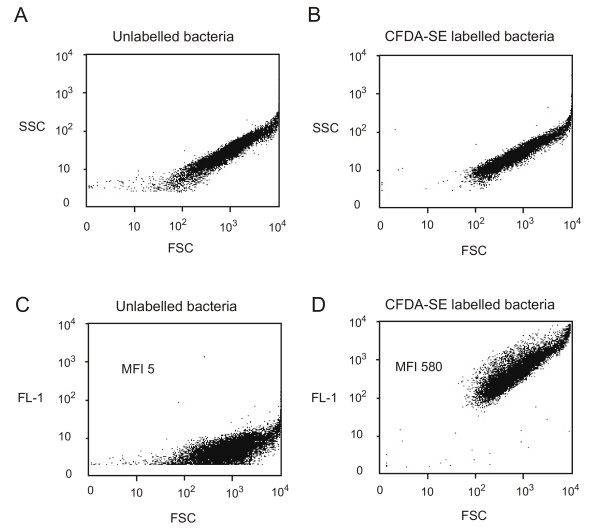
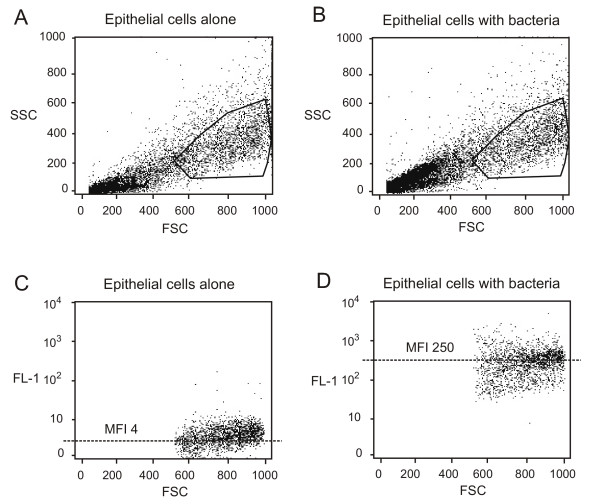
Flow cytometry based adherence assay is a potentially powerful but little used method in the study of bacterial binding to host structures. We have previously characterized a glycoprotein-binding activity in Streptococcus pyogenes called 'strepadhesin' binding to thyroglobulin, submaxillar mucin, fetuin and asialofetuin. We have identified surface-associated pullulanase (PulA) and cysteine protease (SpeB) as carriers of strepadhesin activity. In the present paper, we investigated the use of flow cytometry as a method to study the binding of Rgg, SpeB and PulA knock-out strains to cultured human epithelial cells.
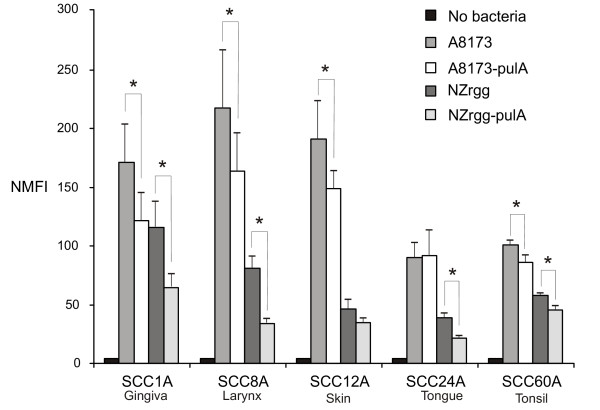
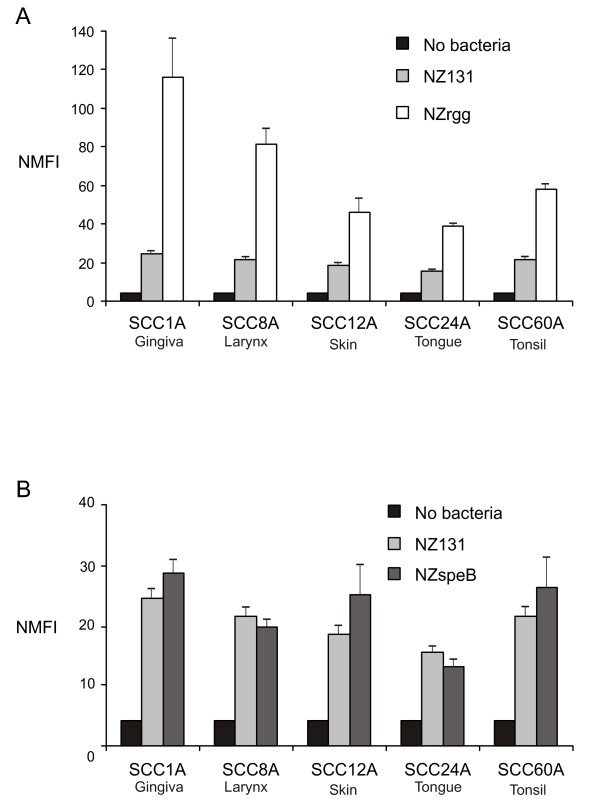
Streptococcal mutants were readily labelled with CFDA-SE and their binding to epithelial cells could be effectively studied by flow cytometry. A strain deficient in Rgg expression showed increased binding to the analyzed epithelial cell lines of various origin. Inactivation of SpeB had no effect on the adhesion, while PulA knock-out strains displayed decreased binding to the cell lines.
These results suggest that the flow cytometric assay is a valuable tool in the analysis of S. pyogenes adherence to host cells. It appears to be an efficient and sensitive tool for the characterization of interactions between the bacteria and the host at the molecular level. The results also suggest a role for Rgg regulated surface molecules, like PulA, in the adhesion of S. pyogenes to host cells.
基于流式细胞术的黏附试验是一种在细菌与宿主结构结合研究中具有潜在强大功能但使用较少的方法。我们之前已对化脓性链球菌中一种与甲状腺球蛋白、颌下黏蛋白、胎球蛋白和去唾液酸胎球蛋白结合的糖蛋白结合活性进行了表征,该活性称为“链球菌黏附素”。我们已鉴定出表面相关支链淀粉酶(PulA)和半胱氨酸蛋白酶(SpeB)是链球菌黏附素活性的载体。在本文中,我们研究了使用流式细胞术作为一种方法来研究Rgg、SpeB和PulA基因敲除菌株与培养的人上皮细胞的结合。
链球菌突变体很容易用CFDA-SE标记,并且它们与上皮细胞的结合可以通过流式细胞术有效研究。Rgg表达缺陷的菌株显示出与各种来源的被分析上皮细胞系的结合增加。SpeB的失活对黏附没有影响,而PulA基因敲除菌株与细胞系的结合减少。
这些结果表明流式细胞术检测是分析化脓性链球菌对宿主细胞黏附的一种有价值的工具。它似乎是在分子水平表征细菌与宿主之间相互作用的一种有效且灵敏的工具。结果还表明Rgg调节的表面分子,如PulA,在化脓性链球菌对宿主细胞的黏附中起作用。