Kuusi Markku, Lahti Elina, Virolainen Anni, Hatakka Maija, Vuento Risto, Rantala Leila, Vuopio-Varkila Jaana, Seuna Eija, Karppelin Matti, Hakkinen Marjaana, Takkinen Johanna, Gindonis Veera, Siponen Kyosti, Huotari Kaisa
Department of Infectious Disease Epidemiology, National Public Health Institute (KTL), Helsinki, Finland.
BMC Infect Dis. 2006 Feb 27;6:36. doi: 10.1186/1471-2334-6-36.
Streptococcus equi subspecies zooepidemicus is a rare infection in humans associated with contact with horses or consumption of unpasteurized milk products. On October 23, 2003, the National Public Health Institute was alerted that within one week three persons had been admitted to Tampere University Central Hospital (TaYS) because of S. equi subsp. zooepidemicus septicaemia. All had consumed fresh goat cheese produced in a small-scale dairy located on a farm. We conducted an investigation to determine the source and the extent of the outbreak.
Cases were identified from the National Infectious Disease Register. Cases were persons with S. equi subsp. zooepidemicus isolated from a normally sterile site who had illness onset 15.9-31.10.2003. All cases were telephone interviewed by using a standard questionnaire and clinical information was extracted from patient charts. Environmental and food specimens included throat swabs from two persons working in the dairy, milk from goats and raw milk tank, cheeses made of unpasteurized milk, vaginal samples of goats, and borehole well water. The isolates were characterized by ribotyping and pulsed-field gel electrophoresis (PFGE).
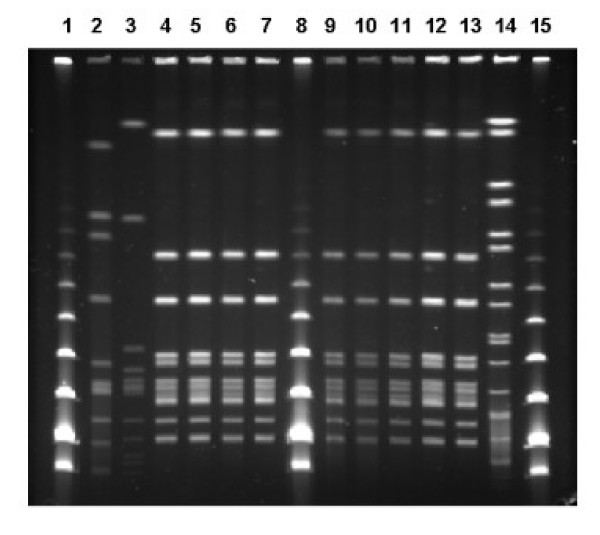
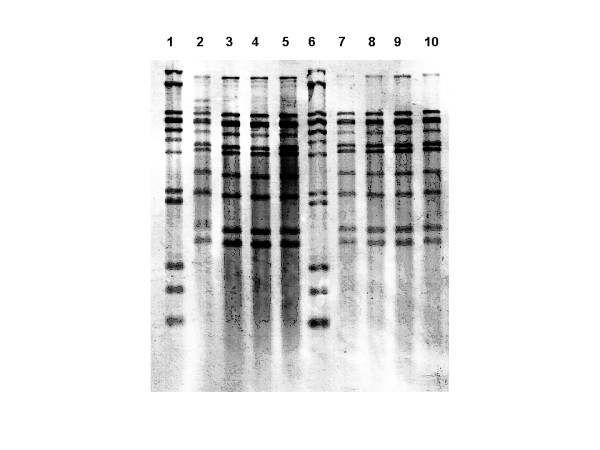
Seven persons met the case definition; six had septicaemia and one had purulent arthritis. Five were women; the median age was 70 years (range 54-93). None of the cases were immunocompromized and none died. Six cases were identified in TaYS, and one in another university hospital in southern Finland. All had eaten goat cheese produced on the implicated farm. S. equi subsp. zooepidemicus was isolated from throat swabs, fresh goat cheese, milk tank, and vaginal samples of one goat. All human and environmental strains were indistinguishable by ribotyping and PFGE.
The outbreak was caused by goat cheese produced from unpasteurized milk. Outbreaks caused by S. equi subsp. zooepidemicus may not be detected if streptococcal strains are only typed to the group level. S. equi subsp. zooepidemicus may be a re-emerging disease if unpasteurized milk is increasingly used for food production. Facilities using unpasteurized milk should be carefully monitored to prevent this type of outbreaks.
马链球菌兽疫亚种是一种人类罕见感染病,与接触马匹或食用未杀菌奶制品有关。2003年10月23日,国家公共卫生研究所接到警报,一周内有三人因马链球菌兽疫亚种败血症入住坦佩雷大学中心医院(TaYS)。他们都食用了位于一个农场的小型奶制品厂生产的新鲜山羊奶酪。我们开展了一项调查以确定此次疫情的源头和范围。
从国家传染病登记册中识别病例。病例为从通常无菌部位分离出马链球菌兽疫亚种且发病时间在2003年10月15日至31日的人。所有病例均通过标准问卷进行电话访谈,并从患者病历中提取临床信息。环境和食品样本包括奶制品厂两名工作人员的咽拭子、山羊奶和生牛奶储存罐中的牛奶、用未杀菌牛奶制作的奶酪、山羊的阴道样本以及井水。分离株通过核糖体分型和脉冲场凝胶电泳(PFGE)进行特征分析。
七人符合病例定义;六人患败血症,一人患化脓性关节炎。五人为女性;年龄中位数为70岁(范围54 - 93岁)。所有病例均无免疫功能低下情况,也无死亡病例。六例在TaYS被确诊,一例在芬兰南部的另一家大学医院被确诊。他们都食用了涉事农场生产的山羊奶酪。从咽拭子、新鲜山羊奶酪、牛奶储存罐以及一只山羊的阴道样本中分离出马链球菌兽疫亚种。通过核糖体分型和PFGE分析,所有人类和环境菌株均无法区分。
此次疫情由未杀菌牛奶制作的山羊奶酪引起。如果仅将链球菌菌株分型到组水平,可能无法检测出马链球菌兽疫亚种引起的疫情。如果越来越多地使用未杀菌牛奶进行食品生产,马链球菌兽疫亚种可能会再次出现。应仔细监测使用未杀菌牛奶的场所,以预防此类疫情爆发。