Zahorsky-Reeves Joanne L, Gregory Clare R, Cramer Donald V, Patanwala Insiyyah Y, Kyles Andrew E, Borie Dominic C, Kearns-Jonker Mary K
Cardiothoracic Surgery Research, The Saban Research Institute of Childrens Hospital, The Keck School of Medicine, University of Southern California, Los Angeles, CA 90027, USA.
BMC Immunol. 2006 Mar 20;7:3. doi: 10.1186/1471-2172-7-3.
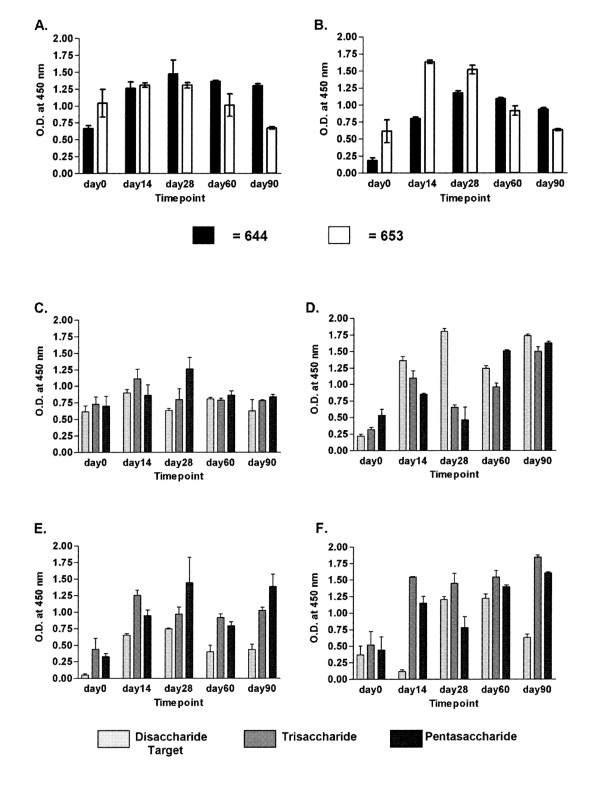
The use of porcine cells and organs as a source of xenografts for human patients would vastly increase the donor pool; however, both humans and Old World primates vigorously reject pig tissues due to xenoantibodies that react with the polysaccharide galactose alpha (1,3) galactose (alphaGal) present on the surface of many porcine cells. We previously examined the xenoantibody response in patients exposed to porcine hepatocytes via treatment(s) with bioartficial liver devices (BALs), composed of porcine cells in a support matrix. We determined that xenoantibodies in BAL-treated patients are predominantly directed at porcine alphaGal carbohydrate epitopes, and are encoded by a small number of germline heavy chain variable region (VH) immunoglobulin genes. The studies described in this manuscript were designed to identify whether the xenoantibody responses and the IgVH genes encoding antibodies to porcine hepatocytes in non-human primates used as preclinical models are similar to those in humans. Adult non-immunosuppressed rhesus monkeys (Macaca mulatta) were injected intra-portally with porcine hepatocytes or heterotopically transplanted with a porcine liver lobe. Peripheral blood leukocytes and serum were obtained prior to and at multiple time points after exposure, and the immune response was characterized, using ELISA to evaluate the levels and specificities of circulating xenoantibodies, and the production of cDNA libraries to determine the genes used by B cells to encode those antibodies.
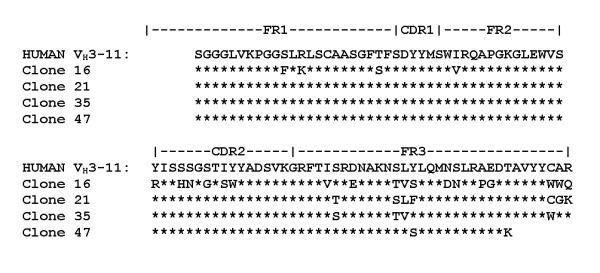
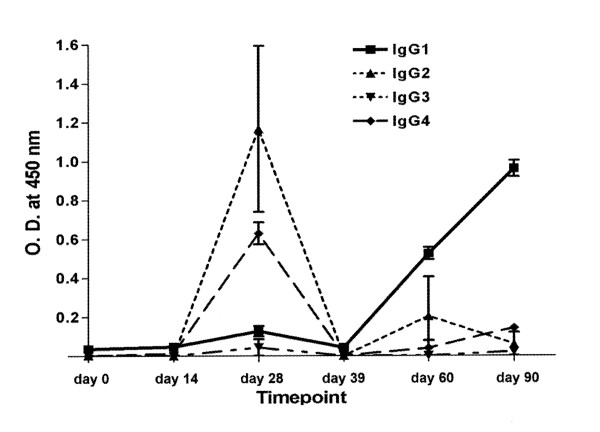
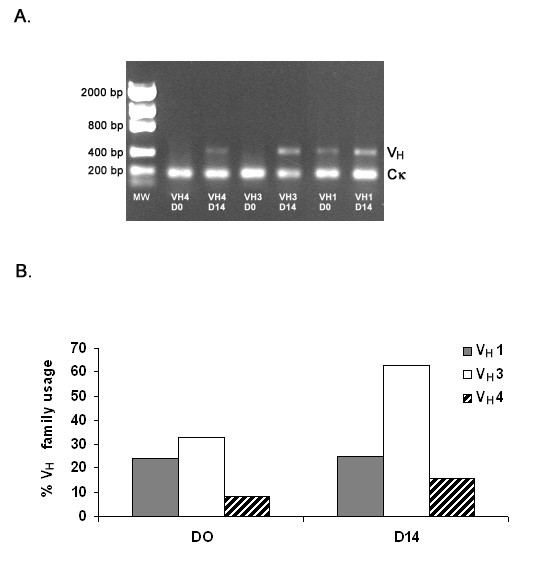
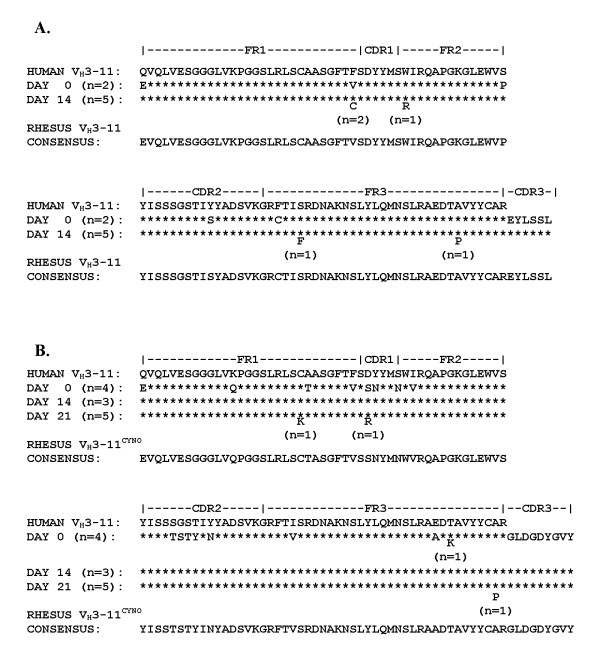
Xenoantibodies produced following exposure to isolated hepatocytes and solid organ liver grafts were predominantly encoded by genes in the VH3 family, with a minor contribution from the VH4 family. Immunoglobulin heavy-chain gene (VH) cDNA library screening and gene sequencing of IgM libraries identified the genes as most closely-related to the IGHV3-11 and IGHV4-59 germline progenitors. One of the genes most similar to IGHV3-11, VH3-11cyno, has not been previously identified, and encodes xenoantibodies at later time points post-transplant. Sequencing of IgG clones revealed increased usage of the monkey germline progenitor most similar to human IGHV3-11 and the onset of mutations.
The small number of IGVH genes encoding xenoantibodies to porcine hepatocytes in non-human primates and humans is highly conserved. Rhesus monkeys are an appropriate preclinical model for testing novel reagents such as those developed using structure-based drug design to target and deplete antibodies to porcine xenografts.
将猪细胞和器官用作人类患者异种移植物的来源将极大地增加供体库;然而,人类和旧世界灵长类动物会强烈排斥猪组织,这是因为异种抗体能与许多猪细胞表面存在的多糖半乳糖α(1,3)半乳糖(αGal)发生反应。我们之前通过使用生物人工肝装置(BAL)对患者进行治疗来研究其对猪肝细胞的异种抗体反应,该装置由支持基质中的猪细胞组成。我们确定,接受BAL治疗的患者体内的异种抗体主要针对猪αGal碳水化合物表位,并且由少数种系重链可变区(VH)免疫球蛋白基因编码。本手稿中描述的研究旨在确定在用作临床前模型的非人灵长类动物中,针对猪肝细胞的异种抗体反应以及编码抗体的IgVH基因是否与人类相似。成年未免疫抑制的恒河猴(猕猴)经门静脉注射猪肝细胞或异位移植猪肝叶。在接触前和接触后的多个时间点采集外周血白细胞和血清,并对免疫反应进行表征,使用酶联免疫吸附测定(ELISA)评估循环异种抗体的水平和特异性,并构建cDNA文库以确定B细胞用于编码这些抗体的基因。
接触分离的肝细胞和实体器官肝移植后产生的异种抗体主要由VH3家族的基因编码,VH4家族的贡献较小。免疫球蛋白重链基因(VH)cDNA文库筛选和IgM文库的基因测序确定这些基因与IGHV3 - 11和IGHV4 - 59种系祖细胞关系最为密切。与IGHV3 - 11最相似的基因之一VH3 - 11cyno此前未被鉴定,它在移植后的较晚时间点编码异种抗体。IgG克隆的测序显示,与人类IGHV3 - 11最相似的猴种系祖细胞的使用增加以及突变的开始。
在非人灵长类动物和人类中,编码针对猪肝细胞的异种抗体的少数IGVH基因高度保守。恒河猴是测试新型试剂(如使用基于结构的药物设计开发的用于靶向和清除针对猪异种移植物的抗体的试剂)的合适临床前模型。