
特定的热休克蛋白被运送到叶绿体中。
Specific heat shock proteins are transported into chloroplasts.
机构信息
Department of Botany, University of Georgia, Athens, GA 30602.
出版信息
Proc Natl Acad Sci U S A. 1986 Jan;83(2):361-5. doi: 10.1073/pnas.83.2.361.
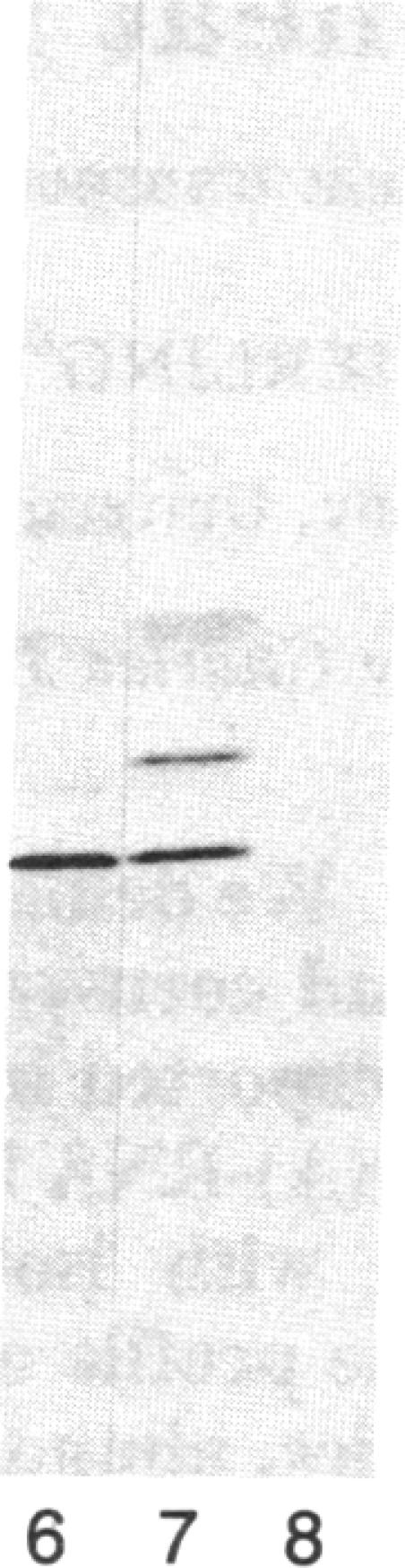
We demonstrate that in three plant species-soybean, pea, and corn-certain nuclear-encoded heat shock proteins are transported into chloroplasts. In vitro translation products of poly(A)-RNA from control or heat-shocked plants were incubated with isolated intact pea chloroplasts and differences in the profile of imported proteins were analyzed. In all three species, abundant polypeptides between 21 and 27 kDa are present in the heat shock sample and absent in the controls. These polypeptides are protected from trypsin and chymotrypsin digestion after their import into chloroplasts and are recovered primarily with the soluble chloroplast protein fraction. Chloroplasts isolated from pea or corn leaves labeled in vivo at heat shock temperatures, but not at normal growth temperatures, contain the same polypeptides observed in vitro. Synthesis of the heat shock polypeptides can be inhibited in vivo by cycloheximide but not by chloramphenicol, further indicating they are products of cytoplasmic protein synthesis. The in vitro transport experiments demonstrate that synthesis of the chloroplast-localized heat shock proteins results from heat-induced accumulation of the corresponding poly(A)-RNAs. The same mRNAs are also produced in response to heat shock by a nonphotosynthetic tissue, the etiolated soybean hypocotyl.
我们证明,在三种植物物种——大豆、豌豆和玉米中,某些核编码的热休克蛋白被运入叶绿体。来自对照或热激植物的 poly(A)-RNA 的体外翻译产物与分离的完整豌豆叶绿体一起孵育,并分析了导入蛋白的图谱差异。在所有三种植物中,丰富的 21 到 27 kDa 的多肽存在于热激样品中而不存在于对照中。这些多肽在导入叶绿体后对胰蛋白酶和糜蛋白酶消化具有抗性,并主要与可溶性叶绿体蛋白部分一起回收。在体内于热激温度而非正常生长温度下标记的豌豆或玉米叶片分离的叶绿体包含在体外观察到的相同多肽。体内的环已亚胺可以抑制热激多肽的合成,但氯霉素不能,这进一步表明它们是细胞质蛋白合成的产物。体外转运实验表明,叶绿体定位的热激蛋白的合成是由相应的 poly(A)-RNA 的热诱导积累引起的。同样的 mRNA 也可以通过非光合组织——黄化的大豆下胚轴,对热激做出响应。




 Zotero 插件