Sloan Erica K, Pouliot Normand, Stanley Kym L, Chia Jenny, Moseley Jane M, Hards Daphne K, Anderson Robin L
Peter MacCallum Cancer Centre, Melbourne, Victoria, Australia.
Breast Cancer Res. 2006;8(2):R20. doi: 10.1186/bcr1398. Epub 2006 Apr 11.
Studies in xenograft models and experimental models of metastasis have implicated several beta3 integrin-expressing cell populations, including endothelium, platelets and osteoclasts, in breast tumor progression. Since orthotopic human xenograft models of breast cancer are poorly metastatic to bone and experimental models bypass the formation of a primary tumor, however, the precise contribution of tumor-specific alphavbeta3 to the spontaneous metastasis of breast tumors from the mammary gland to bone remains unclear.
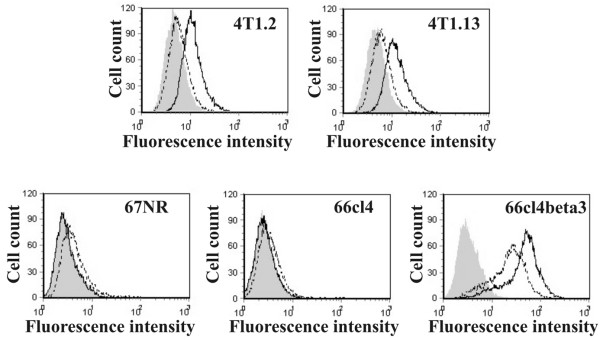
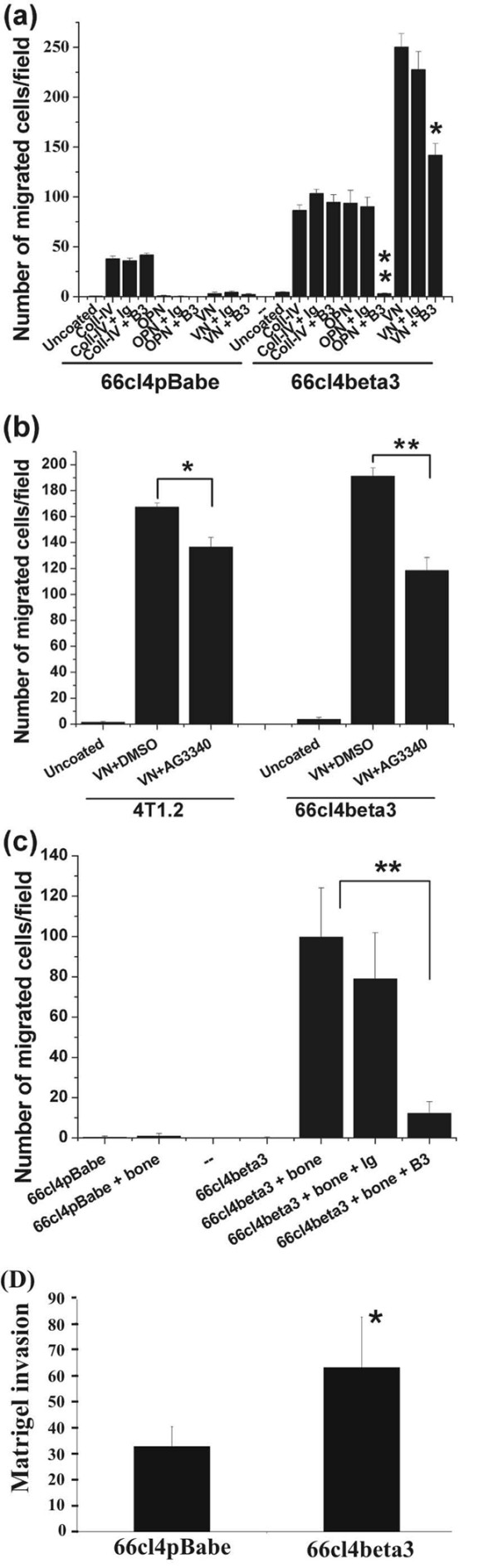
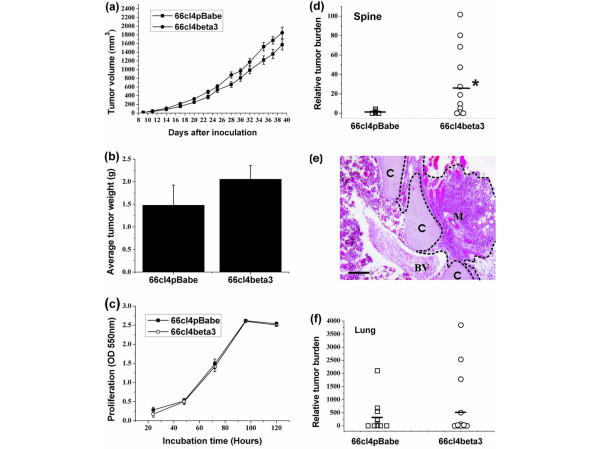
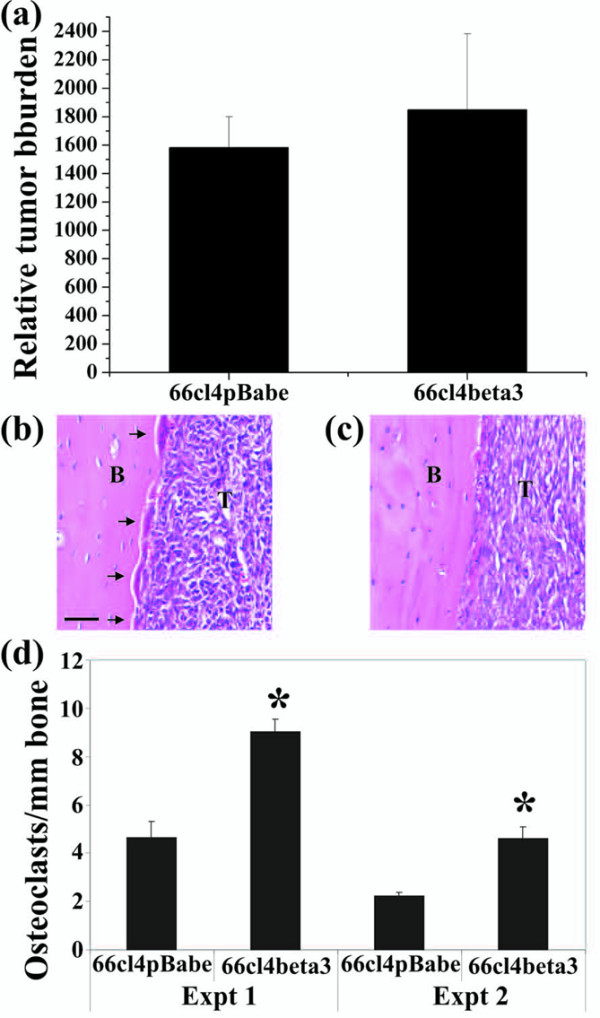
We used a syngeneic orthotopic model of spontaneous breast cancer metastasis to test whether exogenous expression of alphavbeta3 in a mammary carcinoma line (66cl4) that metastasizes to the lung, but not to bone, was sufficient to promote its spontaneous metastasis to bone from the mammary gland. The tumor burden in the spine and the lung following inoculation of alphavbeta3-expressing 66cl4 (66cl4beta3) tumor cells or control 66cl4pBabe into the mammary gland was analyzed by real-time quantitative PCR. The ability of these cells to grow and form osteolytic lesions in bone was determined by histology and tartrate-resistant acid phosphatase staining of bone sections following intratibial injection of tumor cells. The adhesive, migratory and invasive properties of 66cl4pBabe and 66cl4beta3 cells were evaluated in standard in vitro assays.
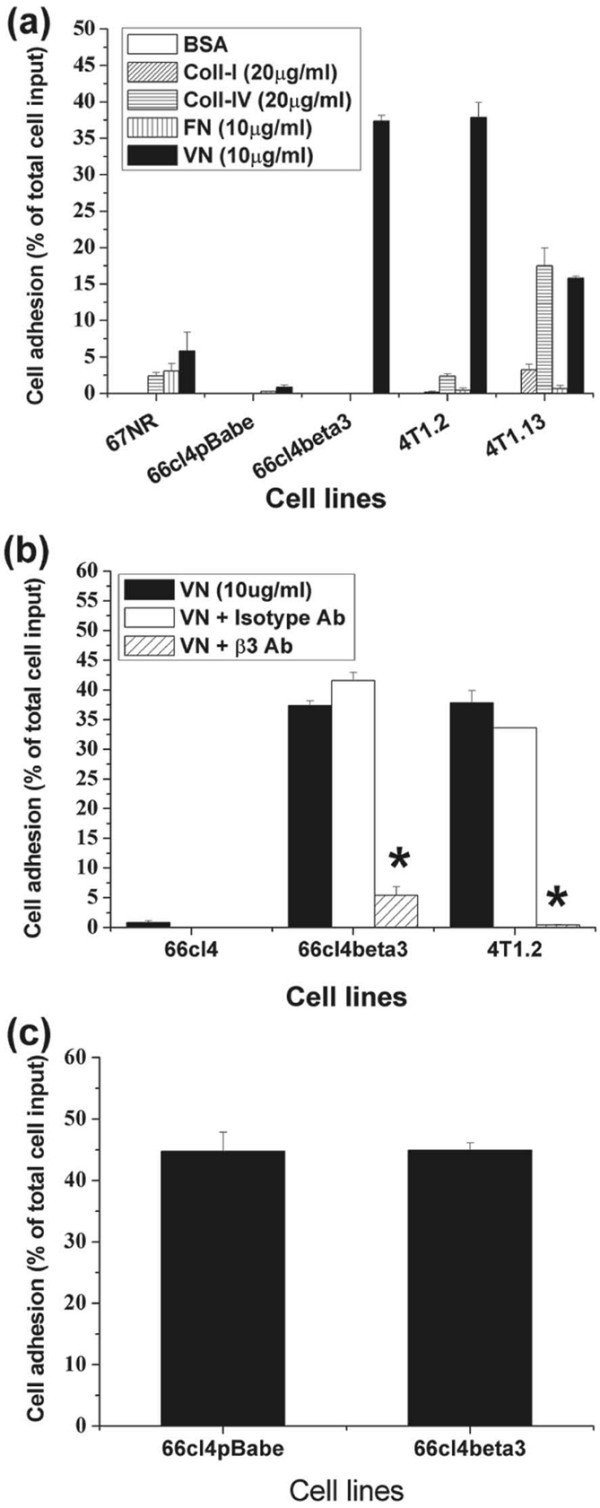
The 66cl4beta3 tumors showed a 20-fold increase in metastatic burden in the spine compared with 66cl4pBabe. A similar trend in lung metastasis was observed. alphavbeta3 did not increase the proliferation of 66cl4 cells in vitro or in the mammary gland in vivo. Similarly, alphavbeta3 is not required for the proliferation of 66cl4 cells in bone as both 66cl4pBabe and 66cl4beta3 proliferated to the same extent when injected directly into the tibia. 66cl4beta3 tumor growth in the tibia, however, increased osteoclast recruitment and bone resorption compared with 66cl4 tumors. Moreover, alphavbeta3 increased 66cl4 tumor cell adhesion and alphavbeta3-dependent haptotactic migration towards bone matrix proteins, as well as their chemotactic response to bone-derived soluble factors in vitro.
These results demonstrate for the first time that tumor-specific alphavbeta3 contributes to spontaneous metastasis of breast tumors to bone and suggest a critical role for this receptor in mediating chemotactic and haptotactic migration towards bone factors.
在异种移植模型和转移实验模型的研究中,已表明包括内皮细胞、血小板和破骨细胞在内的几个表达β3整合素的细胞群体与乳腺肿瘤进展有关。然而,由于原位人乳腺癌异种移植模型向骨转移的能力较差,且实验模型绕过了原发性肿瘤的形成,因此肿瘤特异性αvβ3对乳腺肿瘤从乳腺向骨的自发转移的确切作用仍不清楚。
我们使用了一种自发性乳腺癌转移的同基因原位模型,以测试在一个转移至肺但不转移至骨的乳腺癌细胞系(66cl4)中外源表达αvβ3是否足以促进其从乳腺向骨的自发转移。通过实时定量PCR分析将表达αvβ3的66cl4(66cl4β3)肿瘤细胞或对照66cl4pBabe接种到乳腺后脊柱和肺中的肿瘤负荷。通过组织学和对胫骨内注射肿瘤细胞后的骨切片进行抗酒石酸酸性磷酸酶染色来确定这些细胞在骨中生长并形成溶骨性病变的能力。在标准体外试验中评估66cl4pBabe和66cl4β3细胞的黏附、迁移和侵袭特性。
与66cl4pBabe相比,66cl4β3肿瘤在脊柱中的转移负荷增加了20倍。在肺转移方面观察到类似趋势。αvβ3在体外或体内乳腺中均未增加66cl4细胞的增殖。同样,当直接注射到胫骨中时,66cl4细胞在骨中的增殖不需要αvβ3,因为66cl4pBabe和66cl4β3的增殖程度相同。然而,与66cl4肿瘤相比,66cl4β3肿瘤在胫骨中的生长增加了破骨细胞募集和骨吸收。此外,αvβ3增加了66cl4肿瘤细胞的黏附以及αvβ3依赖性向骨基质蛋白的趋触性迁移,以及它们在体外对骨源性可溶性因子的趋化反应。
这些结果首次证明肿瘤特异性αvβ3有助于乳腺肿瘤向骨的自发转移,并表明该受体在介导向骨因子的趋化和趋触性迁移中起关键作用。