Massberg Steffen, Konrad Ildiko, Schürzinger Katrin, Lorenz Michael, Schneider Simon, Zohlnhoefer Dietlind, Hoppe Katharina, Schiemann Matthias, Kennerknecht Elisabeth, Sauer Susanne, Schulz Christian, Kerstan Sandra, Rudelius Martina, Seidl Stefan, Sorge Falko, Langer Harald, Peluso Mario, Goyal Pankaj, Vestweber Dietmar, Emambokus Nikla R, Busch Dirk H, Frampton Jon, Gawaz Meinrad
Deutsches Herzzentrum and Medizinische Klinik, Technical University of Munich, D-80636 Munich, Germany.
J Exp Med. 2006 May 15;203(5):1221-33. doi: 10.1084/jem.20051772. Epub 2006 Apr 17.
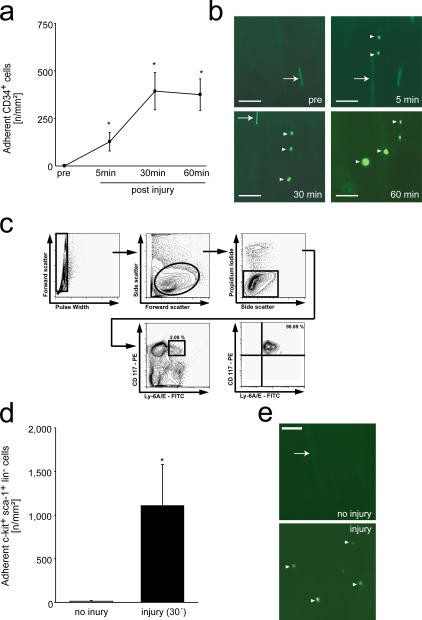
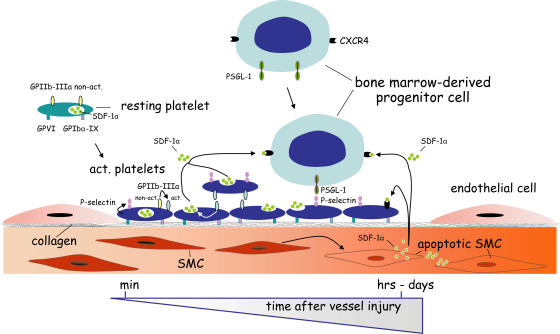
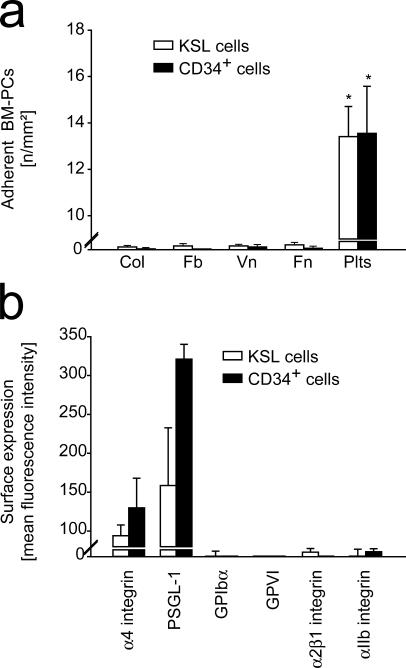
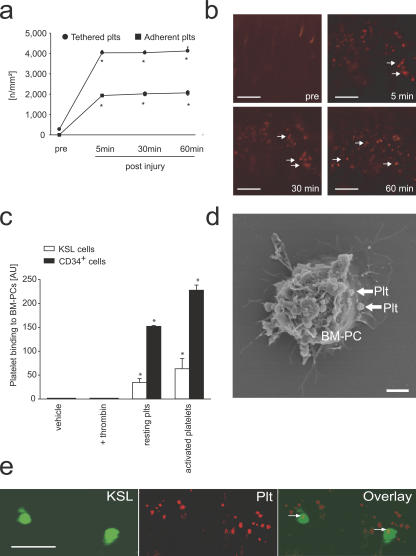
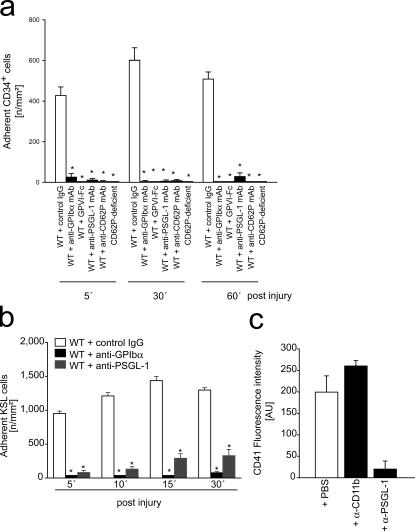
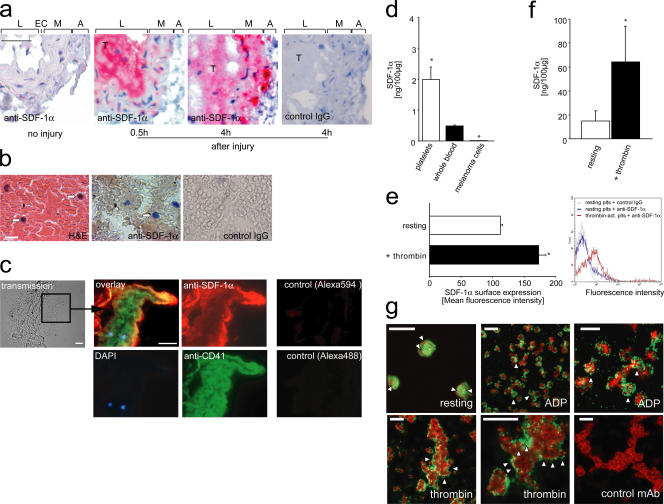
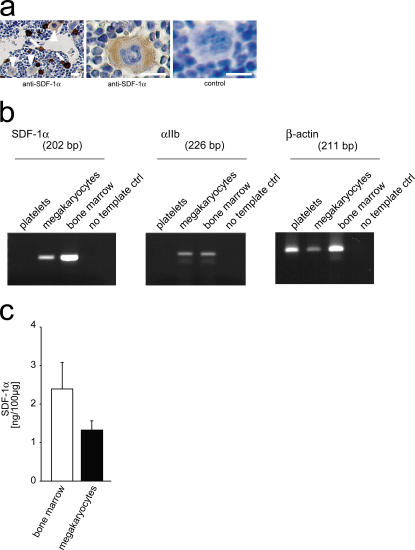
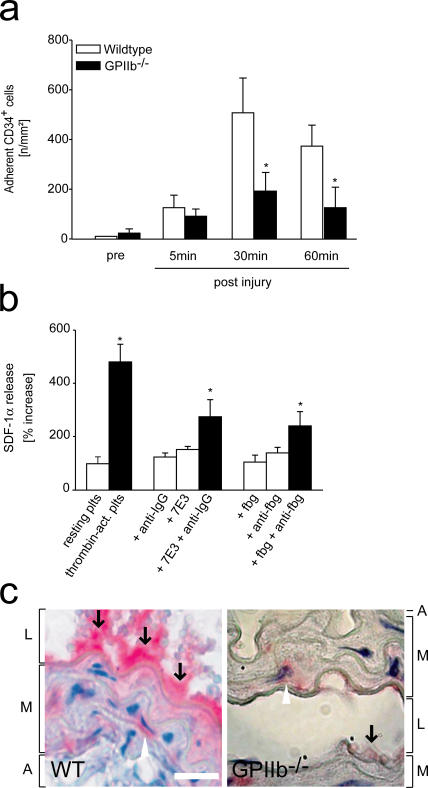
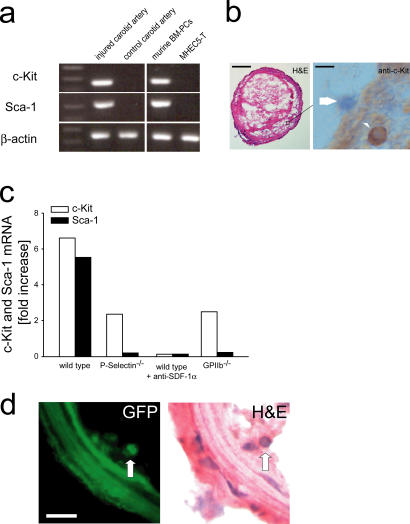
The accumulation of smooth muscle and endothelial cells is essential for remodeling and repair of injured blood vessel walls. Bone marrow-derived progenitor cells have been implicated in vascular repair and remodeling; however, the mechanisms underlying their recruitment to the site of injury remain elusive. Here, using real-time in vivo fluorescence microscopy, we show that platelets provide the critical signal that recruits CD34+ bone marrow cells and c-Kit+ Sca-1+ Lin- bone marrow-derived progenitor cells to sites of vascular injury. Correspondingly, specific inhibition of platelet adhesion virtually abrogated the accumulation of both CD34+ and c-Kit+ Sca-1+ Lin- bone marrow-derived progenitor cells at sites of endothelial disruption. Binding of bone marrow cells to platelets involves both P-selectin and GPIIb integrin on platelets. Unexpectedly, we found that activated platelets secrete the chemokine SDF-1alpha, thereby supporting further primary adhesion and migration of progenitor cells. These findings establish the platelet as a major player in the initiation of vascular remodeling, a process of fundamental importance for vascular repair and pathological remodeling after vascular injury.
平滑肌细胞和内皮细胞的积累对于受损血管壁的重塑和修复至关重要。骨髓来源的祖细胞与血管修复和重塑有关;然而,其被招募至损伤部位的潜在机制仍不清楚。在此,我们使用实时体内荧光显微镜技术,发现血小板提供了关键信号,将CD34+骨髓细胞和c-Kit+ Sca-1+ Lin-骨髓来源的祖细胞招募至血管损伤部位。相应地,特异性抑制血小板黏附实际上消除了CD34+和c-Kit+ Sca-1+ Lin-骨髓来源的祖细胞在内皮损伤部位的积累。骨髓细胞与血小板的结合涉及血小板上的P-选择素和GPIIb整合素。出乎意料的是,我们发现活化的血小板分泌趋化因子SDF-1α,从而支持祖细胞的进一步初始黏附和迁移。这些发现确立了血小板在血管重塑起始过程中的主要作用,血管重塑是血管损伤后血管修复和病理重塑的一个至关重要的过程。