Currier Jeffrey R, Visawapoka Unchalee, Tovanabutra Sodsai, Mason Carl J, Birx Deborah L, McCutchan Francine E, Cox Josephine H
The US Military HIV Research Program, Rockville, MD 20850, USA.
BMC Immunol. 2006 Apr 18;7:8. doi: 10.1186/1471-2172-7-8.
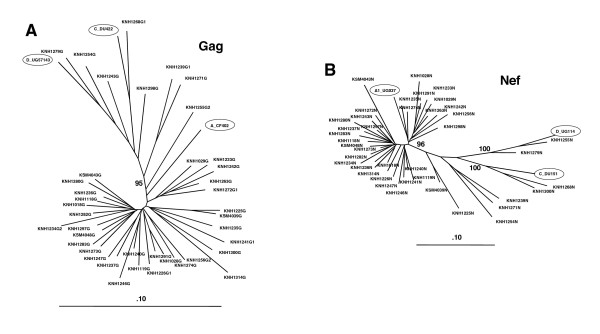
Subtype A is a major strain in the HIV-1 pandemic in eastern Europe, central Asia and in certain regions of east Africa, notably in rural Kenya. While considerable effort has been focused upon mapping and defining immunodominant CTL epitopes in HIV-1 subtype B and subtype C infections, few epitope mapping studies have focused upon subtype A.
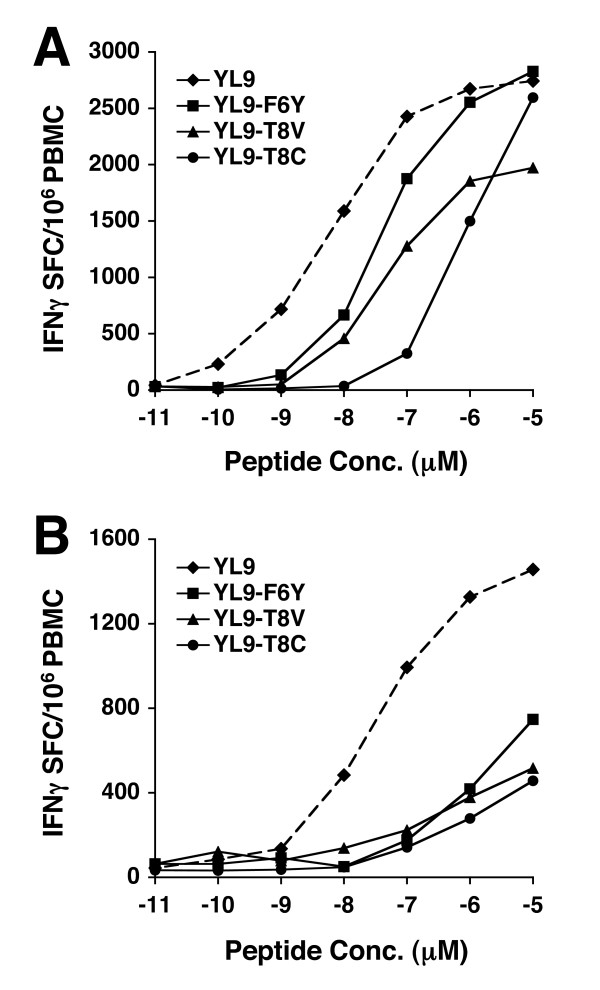
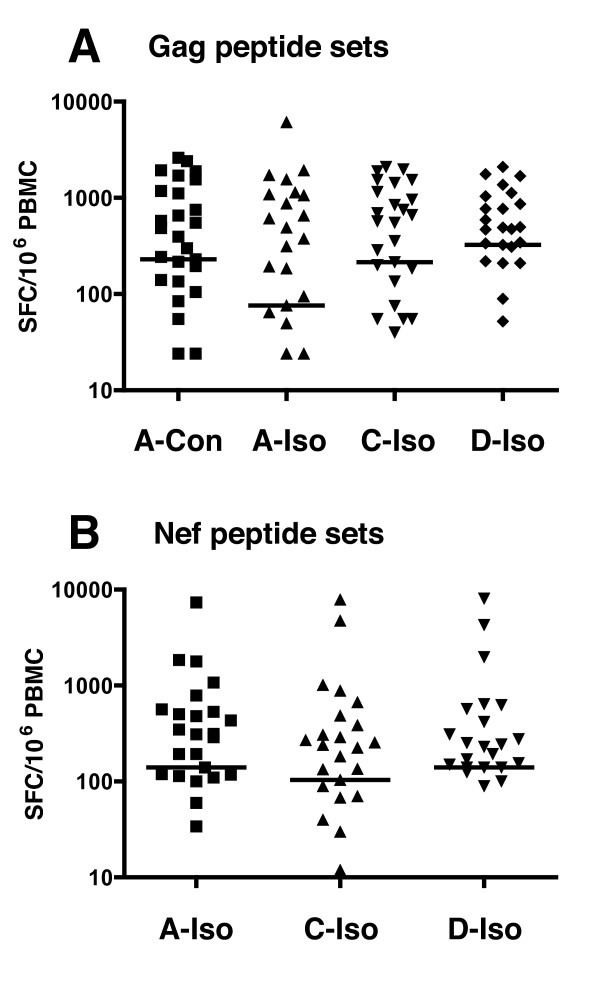
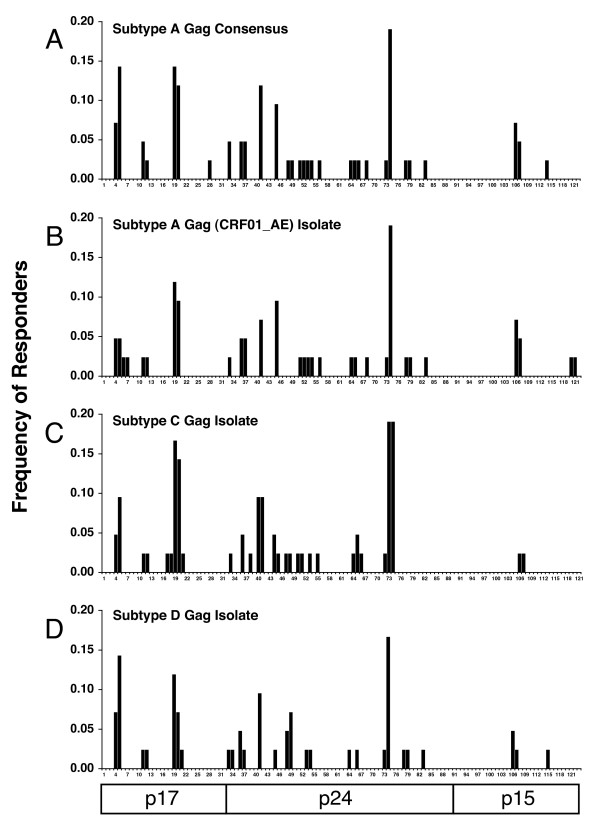
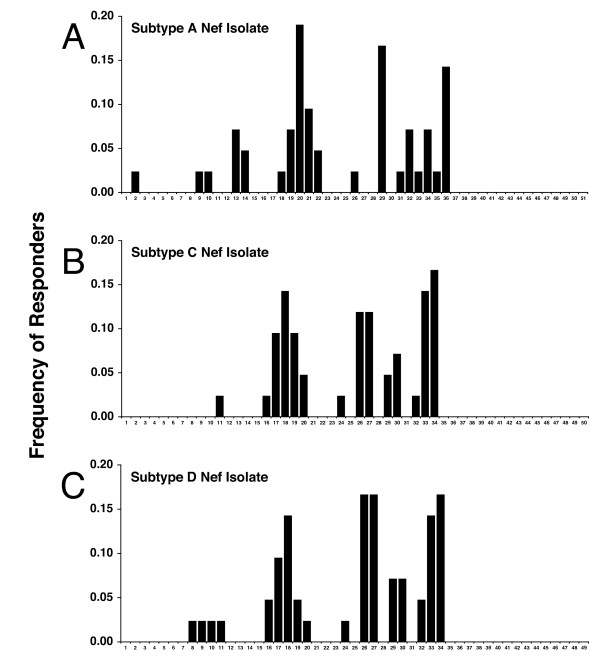
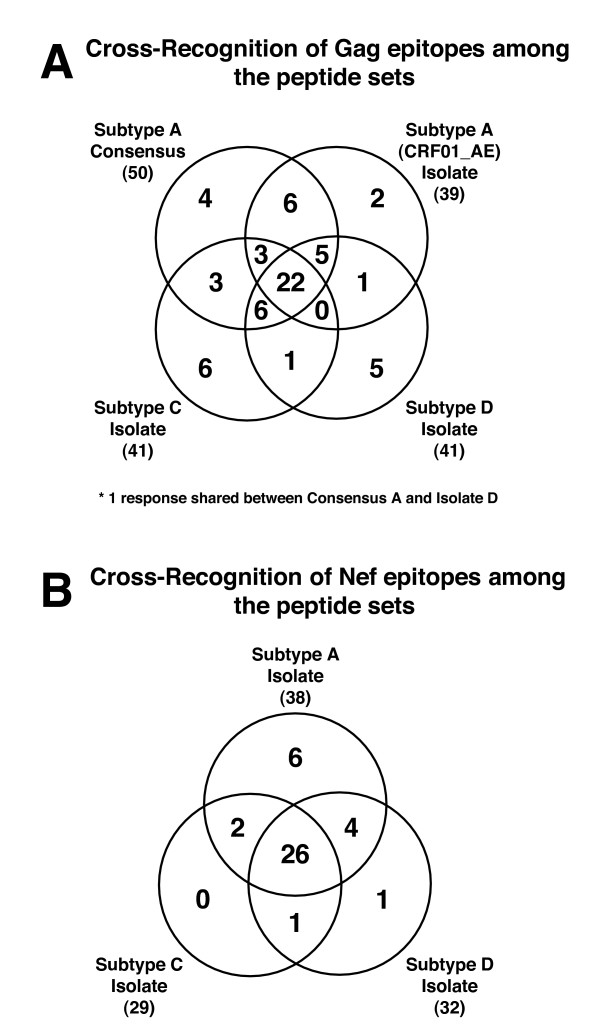
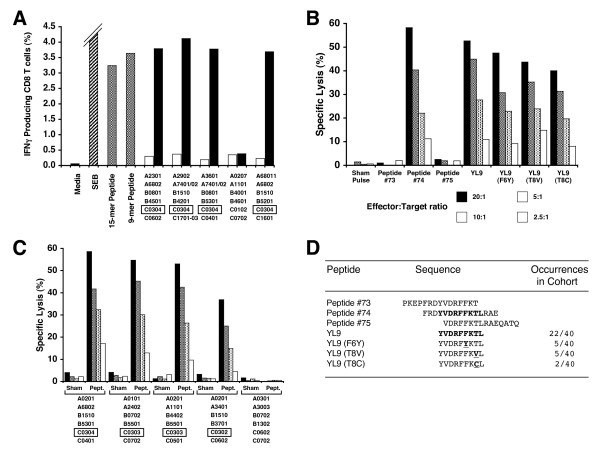
We have used the IFN-gamma ELIspot assay and overlapping peptide pools to show that the pattern of CTL recognition of the Gag and Nef proteins in subtype A infection is similar to that seen in subtypes B and C. The p17 and p24 proteins of Gag and the central conserved region of Nef were targeted by CTL from HIV-1-infected Kenyans. Several epitope/HLA associations commonly seen in subtype B and C infection were also observed in subtype A infections. Notably, an immunodominant HLA-C restricted epitope (Gag 296-304; YL9) was observed, with 8/9 HLA-CW0304 subjects responding to this epitope. Screening the cohort with peptide sets representing subtypes A, C and D (the three most prevalent HIV-1 subtypes in east Africa), revealed that peptide sets based upon an homologous subtype (either isolate or consensus) only marginally improved the capacity to detect CTL responses. While the different peptide sets detected a similar number of responses (particularly in the Gag protein), each set was capable of detecting unique responses not identified with the other peptide sets.
Hence, screening with multiple peptide sets representing different sequences, and by extension different epitope variants, can increase the detectable breadth of the HIV-1-specific CTL response. Interpreting the true extent of cross-reactivity may be hampered by the use of 15-mer peptides at a single concentration and a lack of knowledge of the sequence that primed any given CTL response. Therefore, reagent choice and knowledge of the exact sequences that prime CTL responses will be important factors in experimentally defining cross-reactive CTL responses and their role in HIV-1 disease pathogenesis and validating vaccines aimed at generating broadly cross-reactive CTL responses.
A亚型是东欧、中亚以及东非某些地区(尤其是肯尼亚农村)HIV-1大流行中的主要毒株。虽然大量研究致力于绘制和定义HIV-1 B亚型和C亚型感染中的免疫显性CTL表位,但针对A亚型的表位绘制研究却很少。
我们使用γ干扰素ELIspot检测法和重叠肽库表明,A亚型感染中CTL对Gag和Nef蛋白的识别模式与B亚型和C亚型相似。HIV-1感染的肯尼亚人的CTL靶向Gag的p17和p24蛋白以及Nef的中央保守区域。在A亚型感染中也观察到了一些在B亚型和C亚型感染中常见的表位/HLA关联。值得注意的是,观察到一个免疫显性的HLA-C限制性表位(Gag 296-304;YL9),9名HLA-CW0304受试者中有8名对该表位有反应。用代表A、C和D亚型(东非三种最流行的HIV-1亚型)的肽组对队列进行筛查,结果显示基于同源亚型(分离株或共识序列)的肽组仅略微提高了检测CTL反应的能力。虽然不同的肽组检测到的反应数量相似(特别是在Gag蛋白中),但每组都能够检测到其他肽组未识别的独特反应。
因此,用代表不同序列以及不同表位变体的多个肽组进行筛查,可以增加HIV-1特异性CTL反应的可检测广度。使用单一浓度的15聚体肽以及缺乏引发任何给定CTL反应的序列知识,可能会妨碍对交叉反应真实程度的解读。因此,试剂选择以及引发CTL反应的确切序列知识,将是实验确定交叉反应性CTL反应及其在HIV-1疾病发病机制中的作用以及验证旨在产生广泛交叉反应性CTL反应的疫苗的重要因素。