Karimi Khalil, Sarir Hadi, Mortaz Esmaeil, Smit Joost J, Hosseini Hossein, De Kimpe Sjef J, Nijkamp Frans P, Folkerts Gert
Department of Pharmacology and Pathophysiology, Utrecht Institute for Pharmaceutical Sciences, Utrecht University, PO BOX 80,082, 3508 TB Utrecht, The Netherlands.
Respir Res. 2006 Apr 19;7(1):66. doi: 10.1186/1465-9921-7-66.
The major risk factor for the development of COPD is cigarette smoking. Smoking causes activation of resident cells and the recruitment of inflammatory cells into the lungs, which leads to release of pro-inflammatory cytokines, chemotactic factors, oxygen radicals and proteases. In the present study evidence is found for a new cellular mechanism that refers to a link between smoking and inflammation in lungs.
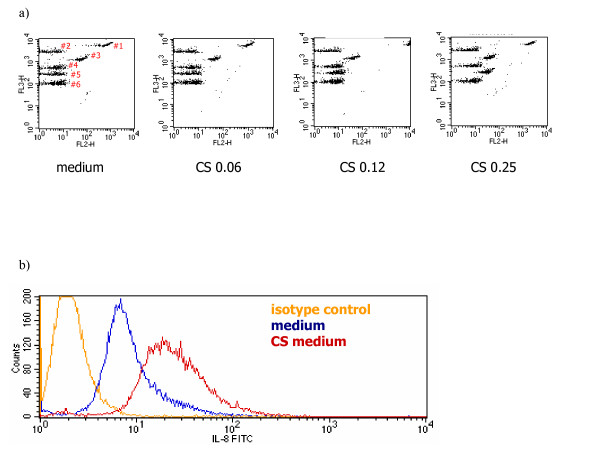
Employing human monocyte-derived macrophages, different techniques including FACS analysis, Cytometric Bead Array Assay and ELISA were achieved to evaluate the effects of CS on pro-inflammatory cytokine secretion including IL-8. Then, Toll-like receptor neutralization was performed to study the involvement of Toll-like receptor-4 in IL-8 production. Finally, signaling pathways in macrophages after exposure to CS medium were investigated performing ELISA and Western analysis.
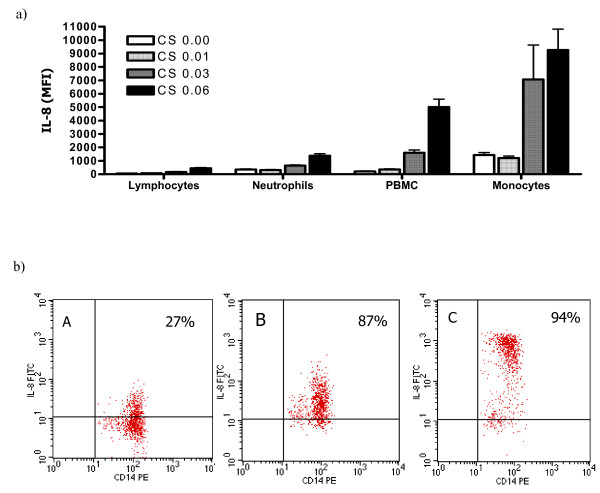
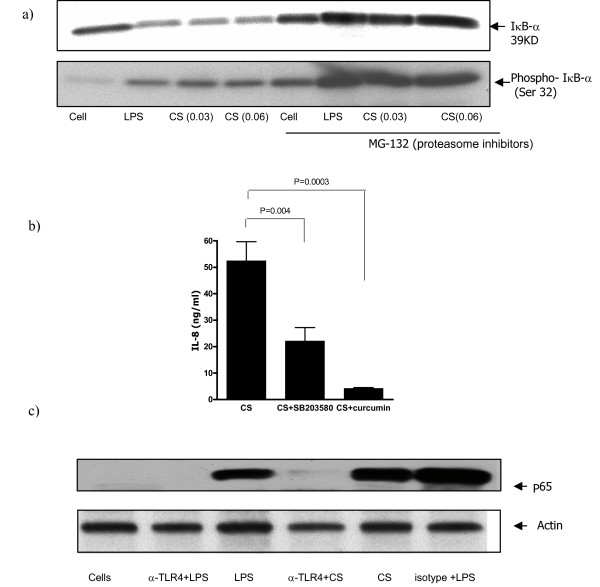
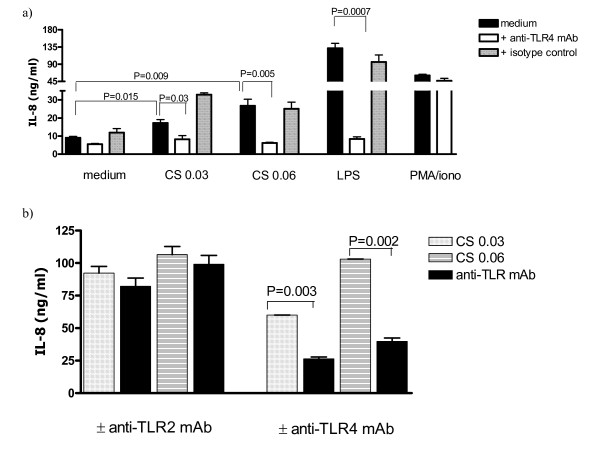
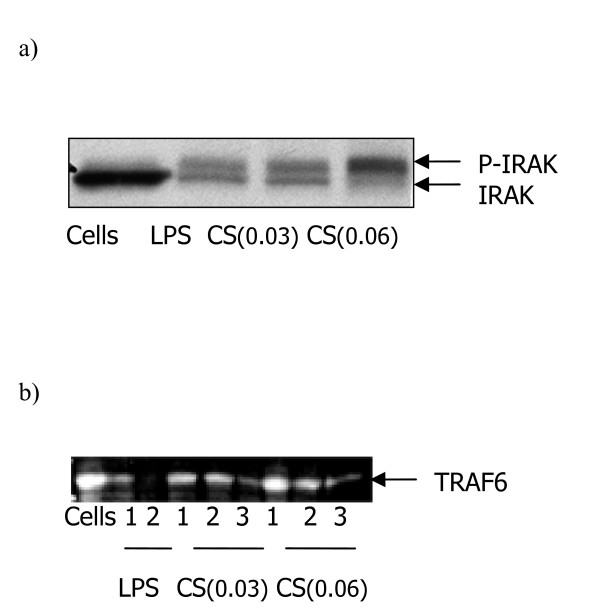
We demonstrate that especially human monocytes are sensitive to produce IL-8 upon cigarette smoke stimulation compared to lymphocytes or neutrophils. Moreover, monocyte-derived macrophages produce high amounts of the cytokine. The IL-8 production is dependent on Toll-like receptor 4 stimulation and LPS is not involved. Further research resolved the cellular mechanism by which cigarette smoke induces cytokine production in monocyte-derived macrophages. Cigarette smoke causes subsequently a concentration-dependent phosphorylation of IRAK and degradation of TRAF6. Moreover, IkappaBalpha was phosphorylated which suggests involvement of NF-kappaB. In addition, NFkappaB-inhibitor blocked cigarette smoke-induced IL-8 production.
These findings link cigarette smoke to inflammation and lead to new insights/therapeutic strategies in the pathogenesis of lung emphysema.
慢性阻塞性肺疾病(COPD)发展的主要风险因素是吸烟。吸烟会导致肺内驻留细胞活化以及炎症细胞募集,进而引发促炎细胞因子、趋化因子、氧自由基和蛋白酶的释放。在本研究中,发现了一种新的细胞机制,该机制涉及吸烟与肺部炎症之间的联系。
利用人单核细胞衍生的巨噬细胞,采用包括流式细胞术分析、细胞计数珠阵列分析和酶联免疫吸附测定(ELISA)在内的不同技术,评估香烟烟雾(CS)对包括白细胞介素-8(IL-8)在内的促炎细胞因子分泌的影响。然后,进行Toll样受体中和实验,以研究Toll样受体4在IL-8产生中的作用。最后,通过ELISA和蛋白质免疫印迹分析,研究巨噬细胞暴露于CS培养基后的信号通路。
我们证明,与淋巴细胞或中性粒细胞相比,尤其是人单核细胞在香烟烟雾刺激下对产生IL-8敏感。此外,单核细胞衍生的巨噬细胞会产生大量这种细胞因子。IL-8的产生依赖于Toll样受体4的刺激,且与脂多糖(LPS)无关。进一步的研究揭示了香烟烟雾在单核细胞衍生的巨噬细胞中诱导细胞因子产生的细胞机制。香烟烟雾随后导致白细胞介素-1受体相关激酶(IRAK)的浓度依赖性磷酸化和肿瘤坏死因子受体相关因子6(TRAF6)的降解。此外,核因子κB抑制蛋白α(IkappaBalpha)被磷酸化,这表明核因子κB(NF-κB)参与其中。此外,NF-κB抑制剂可阻断香烟烟雾诱导的IL-8产生。
这些发现将香烟烟雾与炎症联系起来,并为肺气肿发病机制提供了新的见解/治疗策略。