Gao Feng, Watanabe Masahiro, Matsuzawa Teruo
Graduate School of Information Science, Japan Advanced Institute of Science and Technology, 1-1 Asahidai, Nomi, Ishikawa, 923-1292, Japan.
Biomed Eng Online. 2006 Apr 24;5:25. doi: 10.1186/1475-925X-5-25.
Many cardiovascular diseases, such as aortic dissection, frequently occur on the aortic arch and fluid-structure interactions play an important role in the cardiovascular system. Mechanical stress is crucial in the functioning of the cardiovascular system; therefore, stress analysis is a useful tool for understanding vascular pathophysiology. The present study is concerned with the stress distribution in a layered aortic arch model with interaction between pulsatile flow and the wall of the blood vessel.
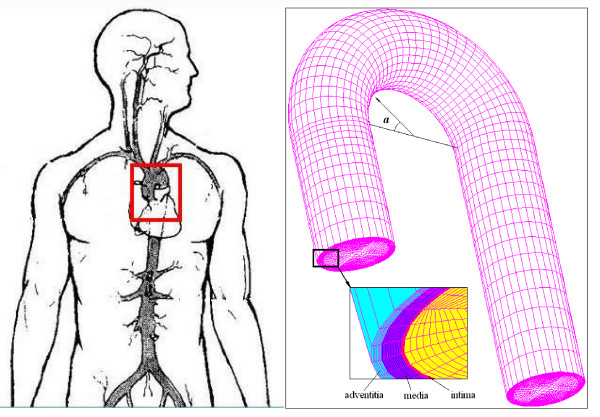
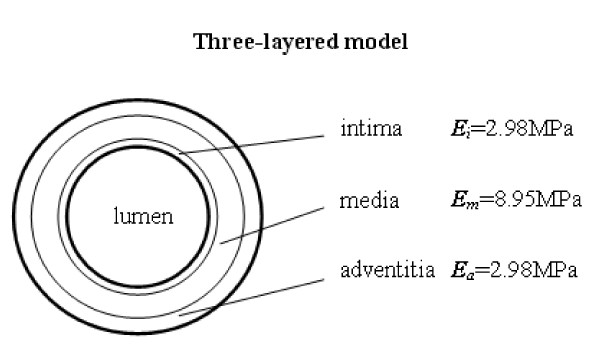
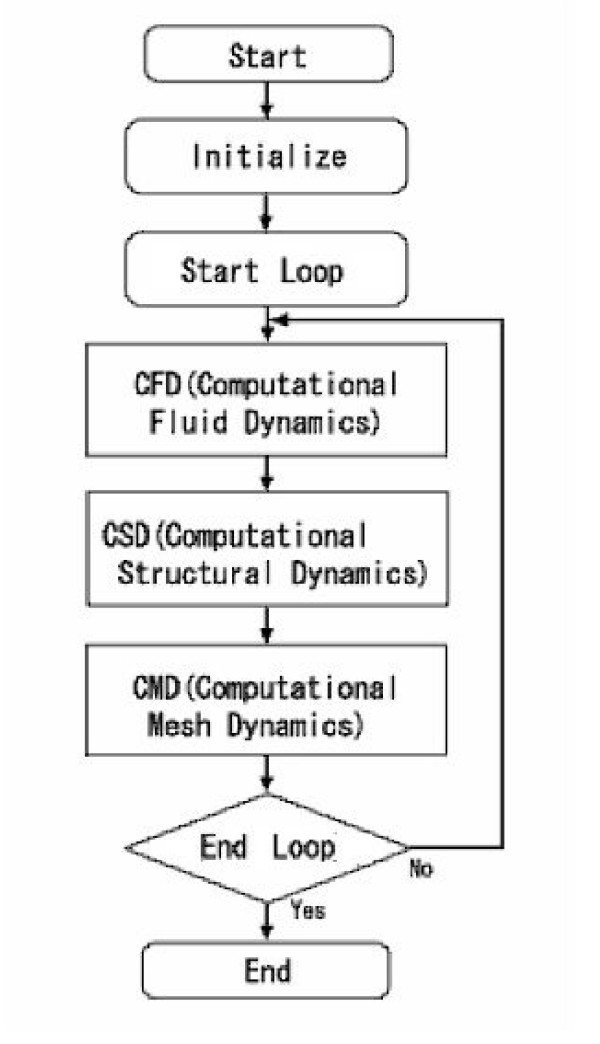
A three-dimensional (3D) layered aortic arch model was constructed based on the aortic wall structure and arch shape. The complex mechanical interaction between pulsatile blood flow and wall dynamics in the aortic arch model was simulated by means of computational loose coupling fluid-structure interaction analyses.
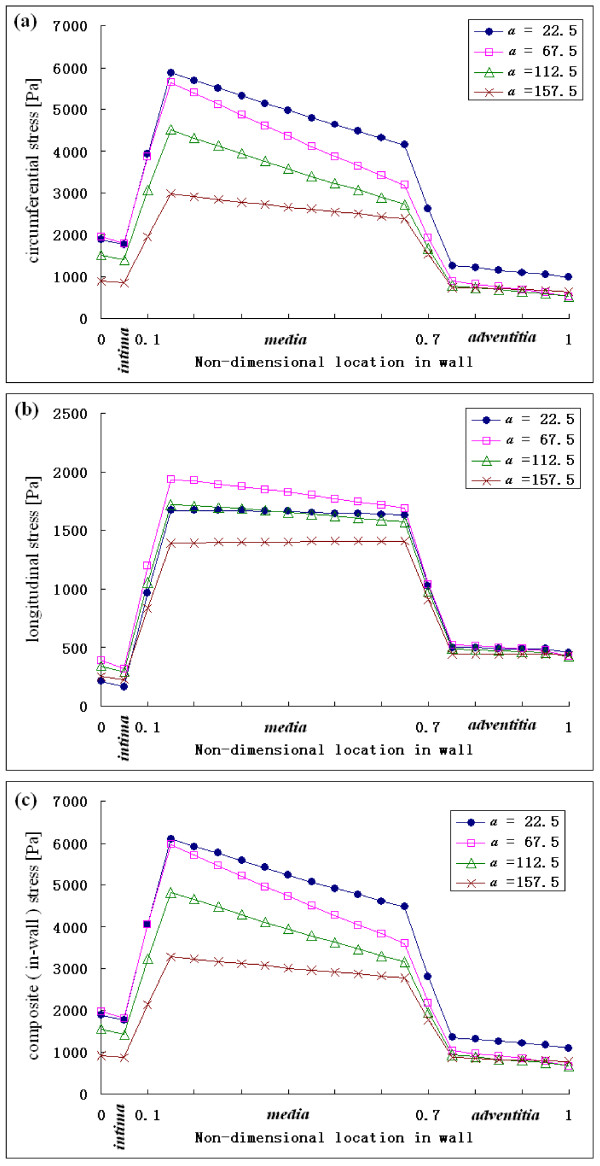
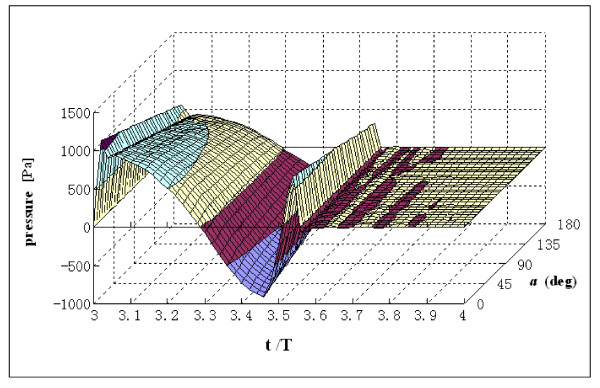
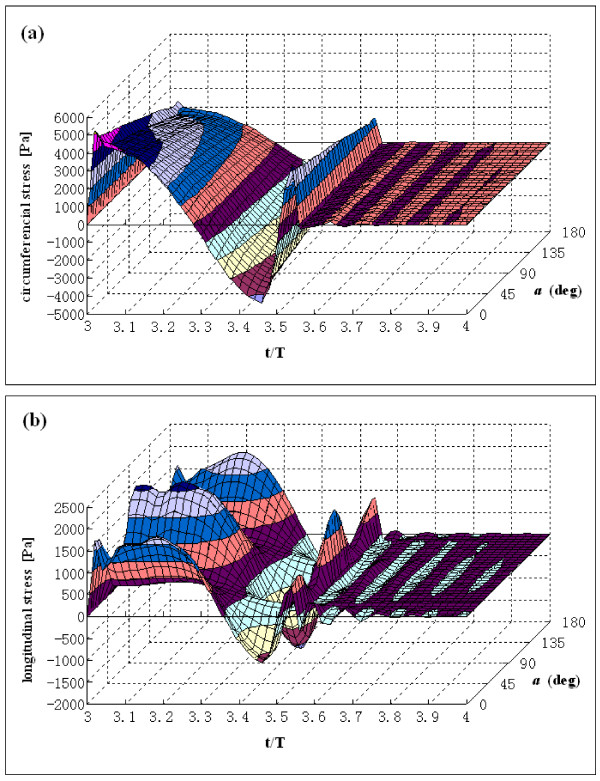
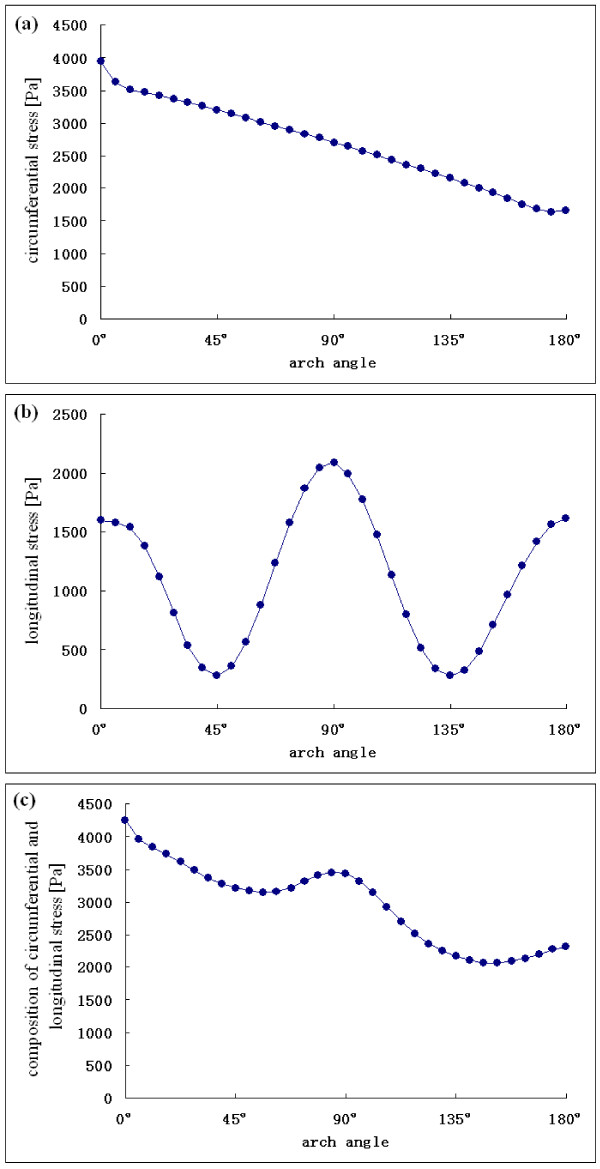
The results showed the variations of mechanical stress along the outer wall of the arch during the cardiac cycle. Variations of circumferential stress are very similar to variations of pressure. Composite stress in the aortic wall plane is high at the ascending portion of the arch and along the top of the arch, and is higher in the media than in the intima and adventitia across the wall thickness.
Our analysis indicates that circumferential stress in the aortic wall is directly associated with blood pressure, supporting the clinical importance of blood pressure control. High stress in the aortic wall could be a risk factor in aortic dissections. Our numerical layered aortic model may prove useful for biomechanical analyses and for studying the pathogeneses of aortic dissection.
许多心血管疾病,如主动脉夹层,经常发生在主动脉弓,且流固相互作用在心血管系统中起着重要作用。机械应力在心血管系统功能中至关重要;因此,应力分析是理解血管病理生理学的有用工具。本研究关注的是具有脉动血流与血管壁相互作用的分层主动脉弓模型中的应力分布。
基于主动脉壁结构和弓形状构建三维(3D)分层主动脉弓模型。通过计算松散耦合流固相互作用分析模拟主动脉弓模型中脉动血流与壁动力学之间复杂的机械相互作用。
结果显示了心动周期中弓外壁机械应力的变化。周向应力的变化与压力变化非常相似。主动脉壁平面中的复合应力在弓的升部和弓顶处较高,并且在整个壁厚上,中膜的应力高于内膜和外膜。
我们的分析表明,主动脉壁中的周向应力与血压直接相关,支持了控制血压的临床重要性。主动脉壁中的高应力可能是主动脉夹层的危险因素。我们的数值分层主动脉模型可能证明对生物力学分析和研究主动脉夹层的发病机制有用。