Department of Biology, Revelle College, University of California, San Diego, La Jolla, California 92037.
Plant Physiol. 1971 Oct;48(4):407-12. doi: 10.1104/pp.48.4.407.
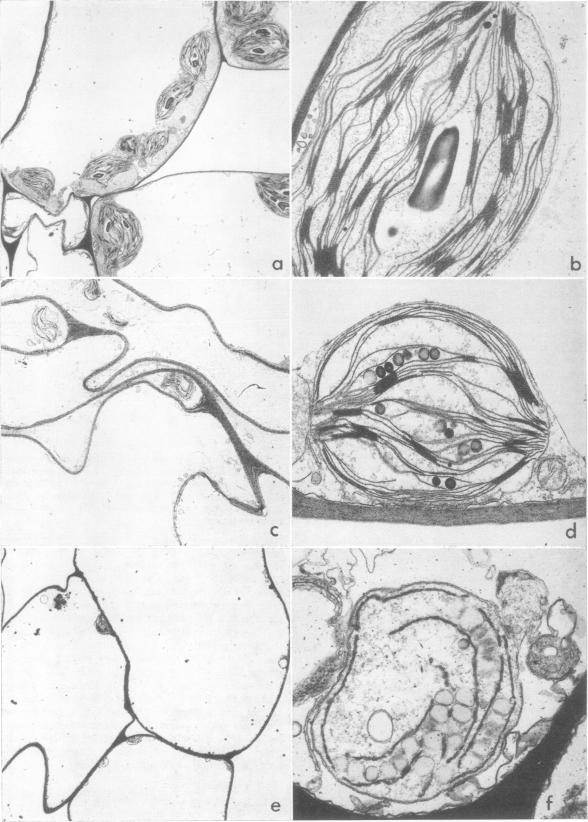
Mature green tissue of Marchantia polymorpha L. bleaches markedly when placed in continuous darkness for 4 days but remains green when given daily 1-hour photoperiods of white light. The tissue, however, is induced to bleach when each daily 1-hour photoperiod is terminated with a brief irradiation with far red light. The bleaching does not occur when each irradiation with far red light is followed by a brief irradiation with red light. The bleaching is taken as an index of senescence since the loss of chlorophyll in the bleached tissue is accompanied by a breakdown of cell organelles and cytoplasm. Phytochrome is clearly implicated in the control of senescence by light. It was also found that 5 minutes of red light given once a day was as effective as the 1-hour photoperiods with white light in preventing the bleaching and that bleaching was induced when each daily 5-minute irradiation with red light was followed by a 10-minute irradiation with far red light.
地钱(Marchantia polymorpha L.)成熟的绿色组织在连续黑暗中放置 4 天后会明显褪色,但如果每天给予 1 小时的白光光周期,则仍保持绿色。然而,当每天 1 小时的光周期结束时,用远红光短暂照射会诱导组织褪色。当每次远红光照射后紧接着进行短暂的红光照射时,褪色不会发生。由于在褪色组织中叶绿素的损失伴随着细胞器官和细胞质的解体,因此这种褪色被视为衰老的指标。显然,光敏色素参与了光对衰老的控制。还发现,每天给予 5 分钟的红光与用白光进行 1 小时的光周期一样有效,可以防止褪色,并且当每天用红光进行 5 分钟的照射后紧接着进行 10 分钟的远红光照射时,会诱导褪色。