Division of Natural Sciences, University of California, Santa Cruz, California 95064.
Plant Physiol. 1976 Dec;58(6):710-6. doi: 10.1104/pp.58.6.710.
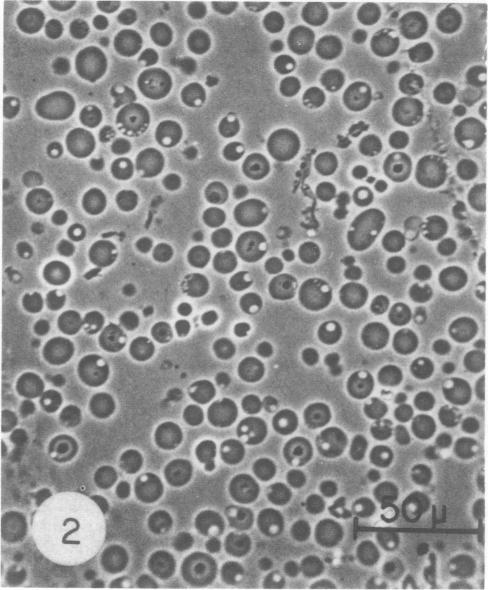
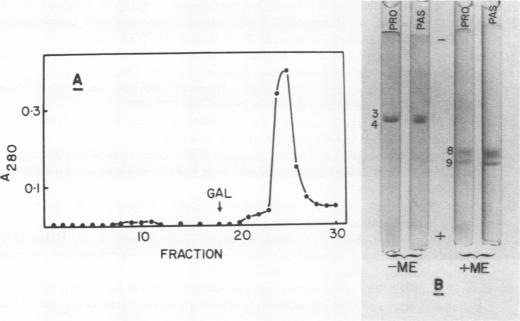
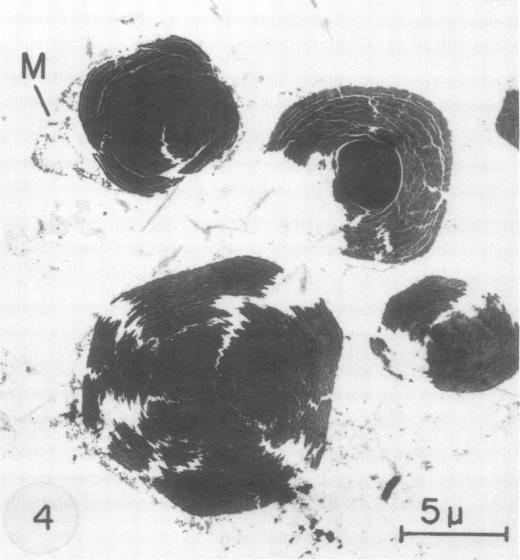
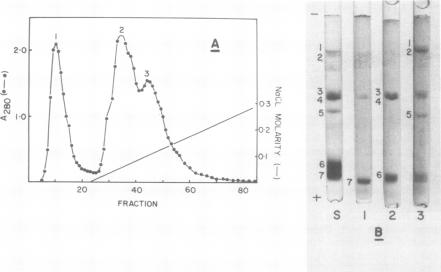
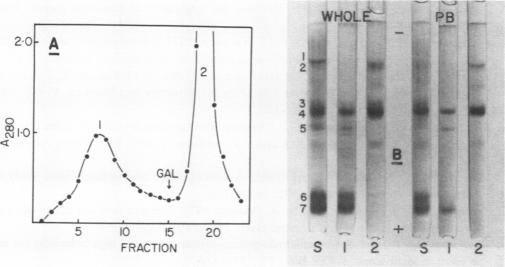
Protein bodies in the endosperm of castor bean seeds (Ricinus communis L.) contain phytin globoids and protein crystalloids embedded in an amorphous proteinaceous matrix. The protein bodies are apparently surrounded by a single membrane. The protein bodies were isolated by grinding and centrifuging in glycerol. Such isolated protein bodies were almost identical (after cytological fixation) to those observed in situ, except that the globoids were lost. However, membrane-like structures appear to have surrounded the globoids. Histochemical analysis of the isolated protein bodies showed that carbohydrates (glycoproteins) are localized only in the matrix region.Addition of water to protein bodies in glycerol caused dissolution of the matrix, and release of the globoids and crystalloids. When the crystalloids were centrifuged on sucrose density gradients, they were recovered at an equilibrium density of 1.29 to 1.30 g/ml. The crystalloids were only slightly soluble in most aqueous buffers but were very soluble in sodium dodecyl sulfate, urea, or NaOH solutions.Polyacrylamide gel electrophoresis in the presence of sodium dodecyl sulfate and chromatography on ion exchange celluloses show that the protein bodies are composed of one major and several minor anodic proteins. The major protein, along with a few of the minor proteins, is localized in the crystalloids.The major protein (molecular weight 65,000) was converted by mercaptoethanol into subunits with molecular weights of 32,000 and 15,800. It is proposed that the protein is made up of two of the smaller subunits and one of the larger, linked by disulfide bridges. None of the crystalloid proteins appear to be glycosylated.The water-soluble matrix fraction is composed mainly of two proteins, with molecular weights of 12,500 and 10,300 on the gels. Neither is a glycoprotein, and neither can be reduced with mercaptoethanol to give subunits. The soluble fraction also contains other lesser components among which are several glycoprotein lectins. One of these is ricin D, which is the main glycoprotein in the protein bodies.
蓖麻种子胚乳中的蛋白体(Ricinus communis L.)含有植酸球蛋白和蛋白结晶嵌入无定形蛋白质基质中。蛋白体显然被单层膜包围。通过在甘油中研磨和离心分离蛋白体。如此分离的蛋白体与原位观察到的蛋白体几乎相同(经过细胞化学固定后),只是球蛋白丢失了。然而,似乎有膜状结构围绕着球蛋白。对分离的蛋白体的组织化学分析表明,碳水化合物(糖蛋白)仅存在于基质区域。在甘油中的蛋白体中加水会导致基质溶解,并释放出球蛋白和结晶。当结晶在蔗糖密度梯度上离心时,它们在 1.29 到 1.30 g/ml 的平衡密度处回收。结晶在大多数水性缓冲液中仅略有溶解性,但在十二烷基硫酸钠、尿素或 NaOH 溶液中非常可溶。在十二烷基硫酸钠存在下进行聚丙烯酰胺凝胶电泳和离子交换纤维素上的色谱分析表明,蛋白体由一种主要和几种次要的阳极蛋白组成。主要蛋白与几种次要蛋白一起定位于结晶中。主要蛋白(分子量 65,000)在巯基乙醇存在下转化为分子量为 32,000 和 15,800 的亚基。据推测,该蛋白由两个较小的亚基和一个较大的亚基组成,通过二硫键连接。结晶蛋白似乎都没有糖基化。水溶性基质部分主要由两种蛋白质组成,凝胶上的分子量分别为 12,500 和 10,300。两者都不是糖蛋白,也都不能用巯基乙醇还原成亚基。可溶性部分还含有其他较少的成分,其中包括几种糖蛋白凝集素。其中一种是蓖麻毒素 D,它是蛋白体中的主要糖蛋白。