Drobni Mirva, Hallberg Kristina, Ohman Ulla, Birve Anna, Persson Karina, Johansson Ingegerd, Strömberg Nicklas
Department of Odontology/Cariology, Umeå University, SE-901 87 Umeå, Sweden.
BMC Microbiol. 2006 May 10;6:43. doi: 10.1186/1471-2180-6-43.
Actinomyces naeslundii genospecies 1 and 2 express type-2 fimbriae (FimA subunit polymers) with variant Galbeta binding specificities and Actinomyces odontolyticus a sialic acid specificity to colonize different oral surfaces. However, the fimbrial nature of the sialic acid binding property and sequence information about FimA proteins from multiple strains are lacking.
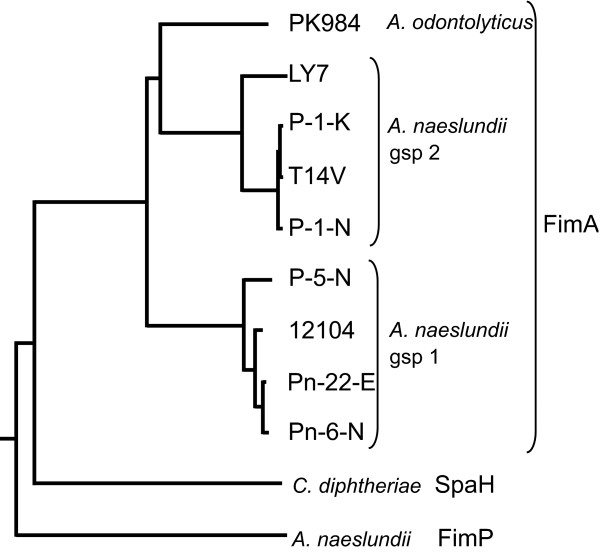
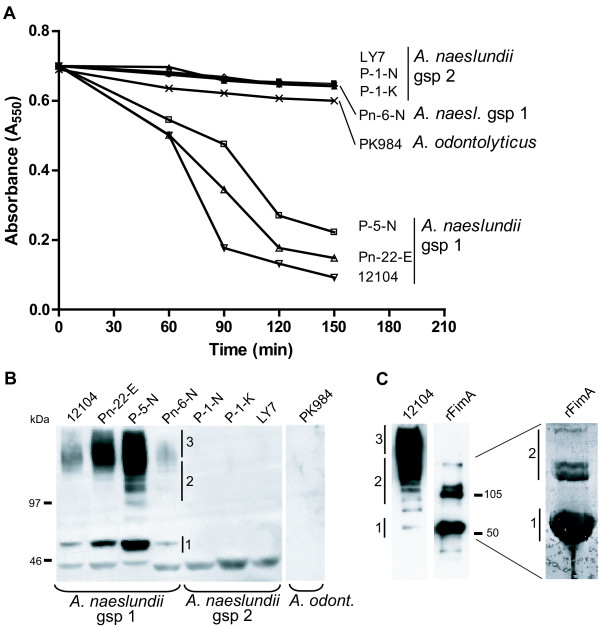
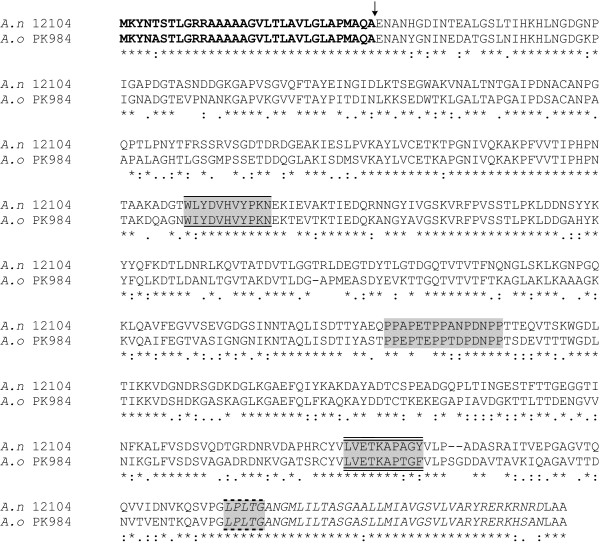
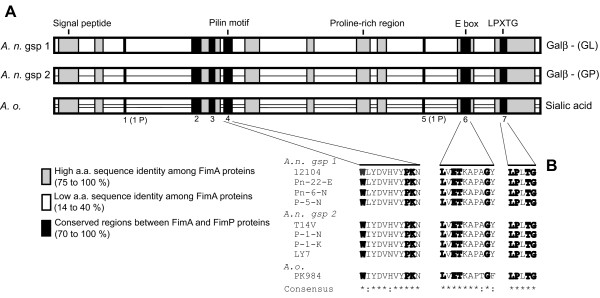
Here we have sequenced fimA genes from strains of A.naeslundii genospecies 1 (n = 4) and genospecies 2 (n = 4), both of which harboured variant Galbeta-dependent hemagglutination (HA) types, and from A.odontolyticus PK984 with a sialic acid-dependent HA pattern. Three unique subtypes of FimA proteins with 63.8-66.4% sequence identity were present in strains of A. naeslundii genospecies 1 and 2 and A. odontolyticus. The generally high FimA sequence identity (> 97.2%) within a genospecies revealed species specific sequences or segments that coincided with binding specificity. All three FimA protein variants contained a signal peptide, pilin motif, E box, proline-rich segment and an LPXTG sorting motif among other conserved segments for secretion, assembly and sorting of fimbrial proteins. The highly conserved pilin, E box and LPXTG motifs are present in fimbriae proteins from other Gram-positive bacteria. Moreover, only strains of genospecies 1 were agglutinated with type-2 fimbriae antisera derived from A. naeslundii genospecies 1 strain 12104, emphasizing that the overall folding of FimA may generate different functionalities. Western blot analyses with FimA antisera revealed monomers and oligomers of FimA in whole cell protein extracts and a purified recombinant FimA preparation, indicating a sortase-independent oligomerization of FimA.
The genus Actinomyces involves a diversity of unique FimA proteins with conserved pilin, E box and LPXTG motifs, depending on subspecies and associated binding specificity. In addition, a sortase independent oligomerization of FimA subunit proteins in solution was indicated.
内氏放线菌1型和2型表达具有不同半乳糖β结合特异性的2型菌毛(菌毛A亚基聚合物),而溶牙放线菌具有唾液酸特异性,以定殖于不同的口腔表面。然而,缺乏唾液酸结合特性的菌毛性质以及来自多个菌株的菌毛A蛋白的序列信息。
在这里,我们对内氏放线菌1型(n = 4)和2型(n = 4)菌株的菌毛A基因进行了测序,这两种菌株都具有不同的半乳糖β依赖性血凝(HA)类型,并且对具有唾液酸依赖性HA模式的溶牙放线菌PK984菌株进行了测序。内氏放线菌1型和2型菌株以及溶牙放线菌中存在三种独特的菌毛A蛋白亚型,序列同一性为63.8 - 66.4%。一个菌种内通常较高的菌毛A序列同一性(> 97.2%)揭示了与结合特异性一致的物种特异性序列或片段。所有三种菌毛A蛋白变体都含有一个信号肽、菌毛蛋白基序、E框、富含脯氨酸的片段以及一个LPXTG分选基序,以及其他用于菌毛蛋白分泌、组装和分选的保守片段。高度保守的菌毛蛋白、E框和LPXTG基序存在于其他革兰氏阳性细菌的菌毛蛋白中。此外,只有1型菌种的菌株被源自内氏放线菌1型菌株12104的2型菌毛抗血清凝集,强调菌毛A的整体折叠可能产生不同的功能。用菌毛A抗血清进行的蛋白质印迹分析显示全细胞蛋白提取物和纯化的重组菌毛A制剂中菌毛A的单体和寡聚体,表明菌毛A的分选酶非依赖性寡聚化。
放线菌属涉及多种具有保守菌毛蛋白、E框和LPXTG基序的独特菌毛A蛋白,这取决于亚种和相关的结合特异性。此外,表明溶液中菌毛A亚基蛋白存在分选酶非依赖性寡聚化。