Davies G C, Ryan P E, Rahman L, Zajac-Kaye M, Lipkowitz S
Laboratory of Cellular and Molecular Biology, Center for Cancer Research, National Cancer Institute, National Institutes of Health, Bethesda, MD 20892-4255, USA.
Oncogene. 2006 Oct 19;25(49):6497-509. doi: 10.1038/sj.onc.1209662. Epub 2006 May 15.
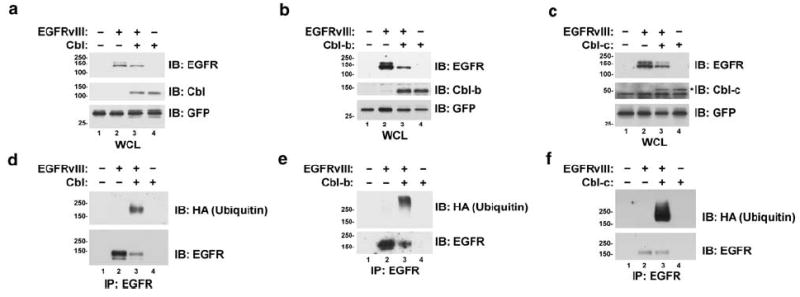
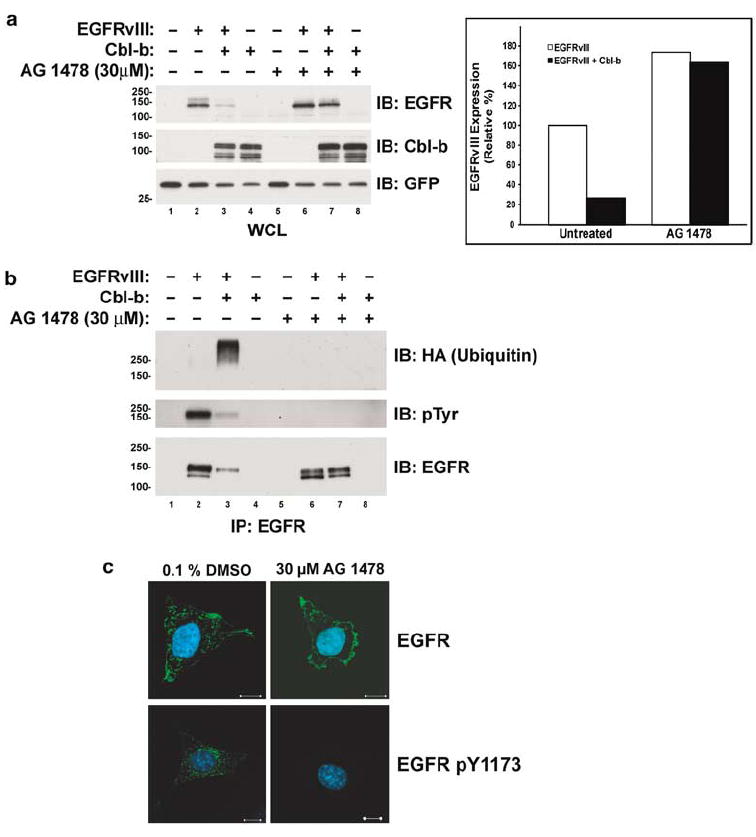
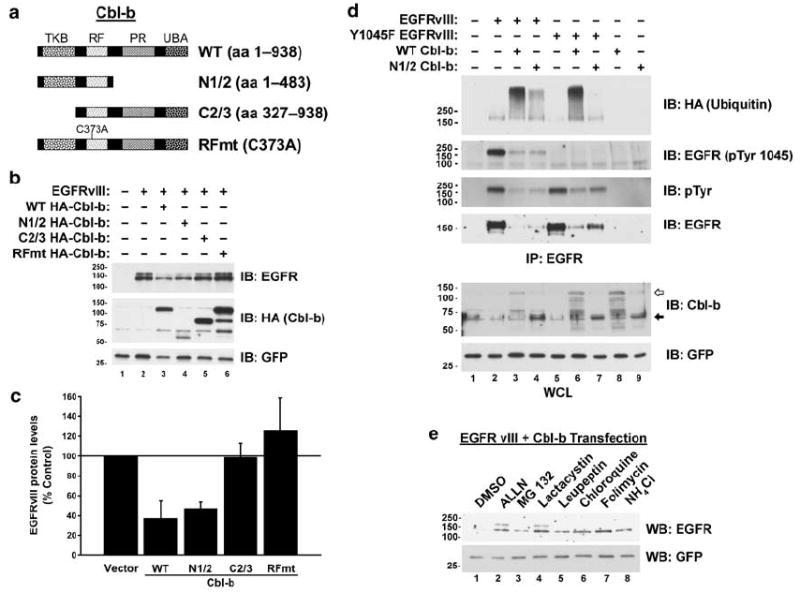
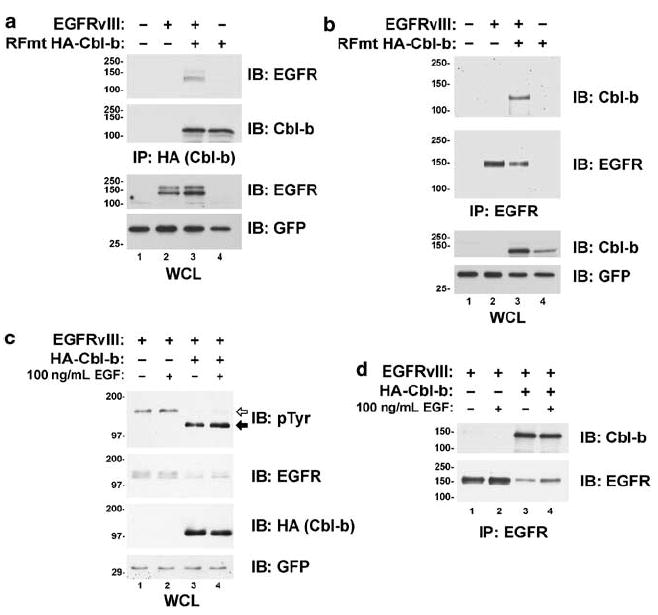
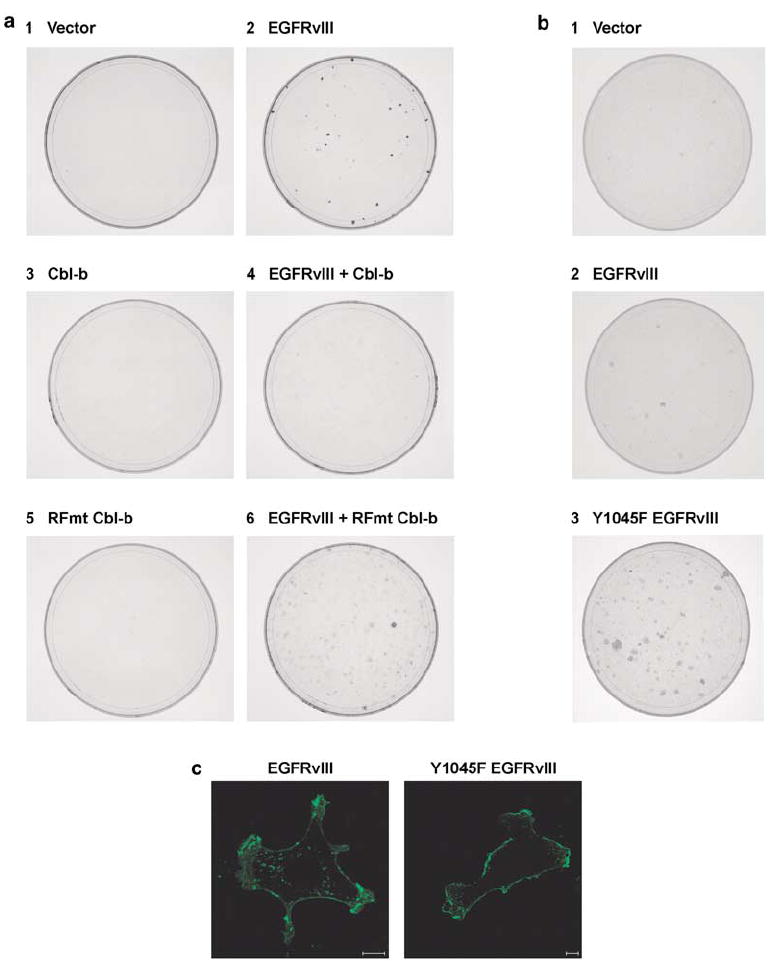
The overexpression or mutation of tyrosine kinases (TKs), such as the epidermal growth factor receptor (EGFR), can lead to the development of cancer. The most common mutation of the EGFR in glioblastomas is the deletion of exons 2-7 known as the EGFRvIII. This mutant receptor cannot bind EGF but, instead, is constitutively active. The Cbl family of ubiquitin ligases (Cbl, Cbl-b, and Cbl-c) targets the activated EGFR for degradation. As the EGFRvIII is transforming, we investigated whether it could be downregulated by the Cbl proteins. The overexpression of all three Cbl proteins resulted in the ubiquitination and degradation of the EGFRvIII. As with the wild-type EGFR, the TK-binding domain and the RING finger of Cbl-b are sufficient for the downregulation of the EGFRvIII. Also, we found that Cbl-b is recruited to the EGFRvIII and inhibits the transformation of NIH 3T3 cells by the EGFRvIII. Mutation of the Cbl-binding site (Y1045F) in the EGFRvIII inhibits its ubiquitination and downregulation by Cbl-b and enhances its ability to transform. Furthermore, the EGFR TK inhibitor, AG 1478, prevents the downregulation of the EGFRvIII by the Cbl proteins and antagonizes the ability of an immunotoxin directed against the EGFRvIII to kill cells expressing this receptor. In conclusion, the EGFRvIII does not transform by escaping regulation by Cbl proteins and this activation-induced downregulation of the EGFRvIII has an important role in mediating the toxicity of anti-EGFRvIII immunotoxins.
酪氨酸激酶(TKs)的过表达或突变,如表皮生长因子受体(EGFR),可导致癌症的发生。胶质母细胞瘤中EGFR最常见的突变是外显子2 - 7的缺失,即EGFRvIII。这种突变受体不能结合表皮生长因子(EGF),而是持续处于激活状态。泛素连接酶的Cbl家族(Cbl、Cbl - b和Cbl - c)将激活的EGFR作为靶点进行降解。由于EGFRvIII具有转化作用,我们研究了它是否能被Cbl蛋白下调。所有三种Cbl蛋白的过表达均导致EGFRvIII的泛素化和降解。与野生型EGFR一样,Cbl - b的TK结合结构域和环状结构域足以下调EGFRvIII。此外,我们发现Cbl - b被招募到EGFRvIII,并抑制EGFRvIII对NIH 3T3细胞的转化。EGFRvIII中Cbl结合位点(Y1045F)的突变抑制了其被Cbl - b泛素化和下调,并增强了其转化能力。此外,EGFR酪氨酸激酶抑制剂AG 1478可阻止Cbl蛋白对EGFRvIII的下调,并拮抗针对EGFRvIII的免疫毒素杀死表达该受体细胞的能力。总之,EGFRvIII并非通过逃避Cbl蛋白的调控而发生转化,这种激活诱导的EGFRvIII下调在介导抗EGFRvIII免疫毒素的毒性中起重要作用。