von Delwig Alexei, Hilkens Catharien M U, Altmann Daniel M, Holmdahl Rikard, Isaacs John D, Harding Clifford V, Robertson Helen, McKie Norman, Robinson John H
Musculoskeletal Research Group, Clinical Medical Sciences, University of Newcastle upon Tyne, Framlington Place, Newcastle upon Tyne, UK.
Arthritis Res Ther. 2006;8(4):R93. doi: 10.1186/ar1964.
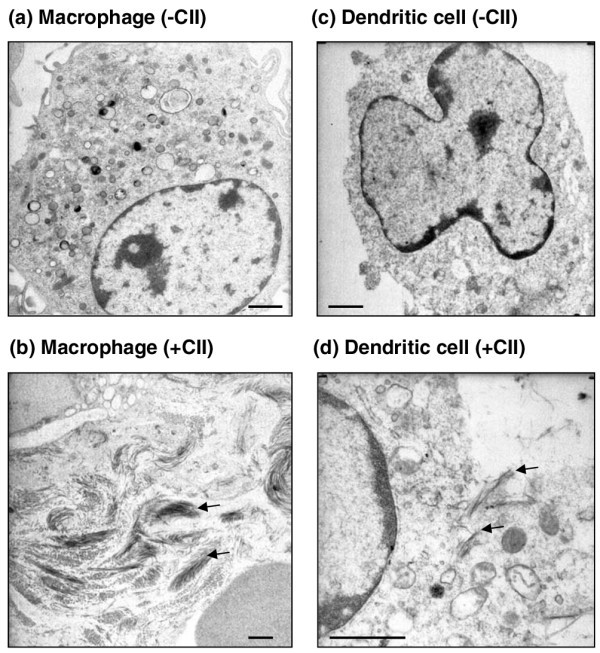
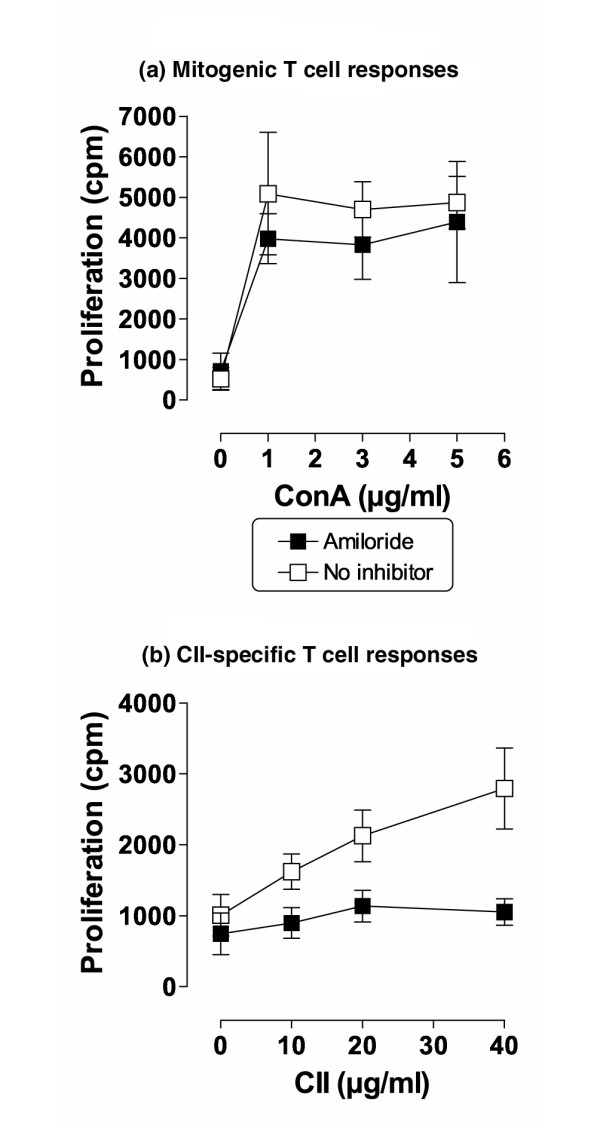
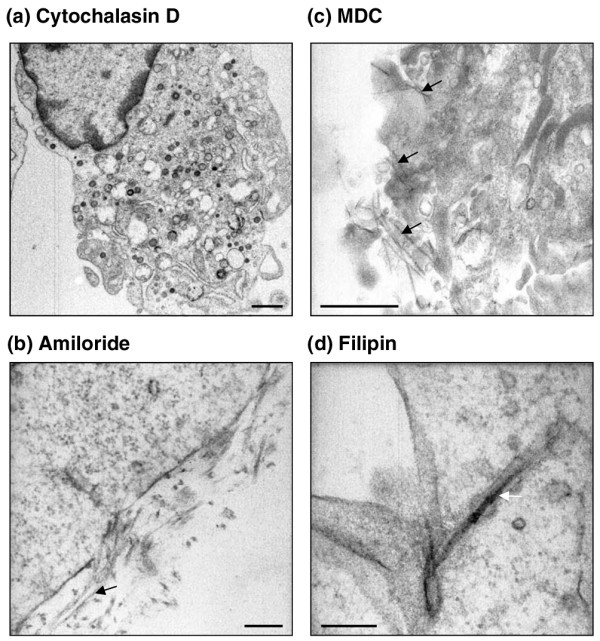
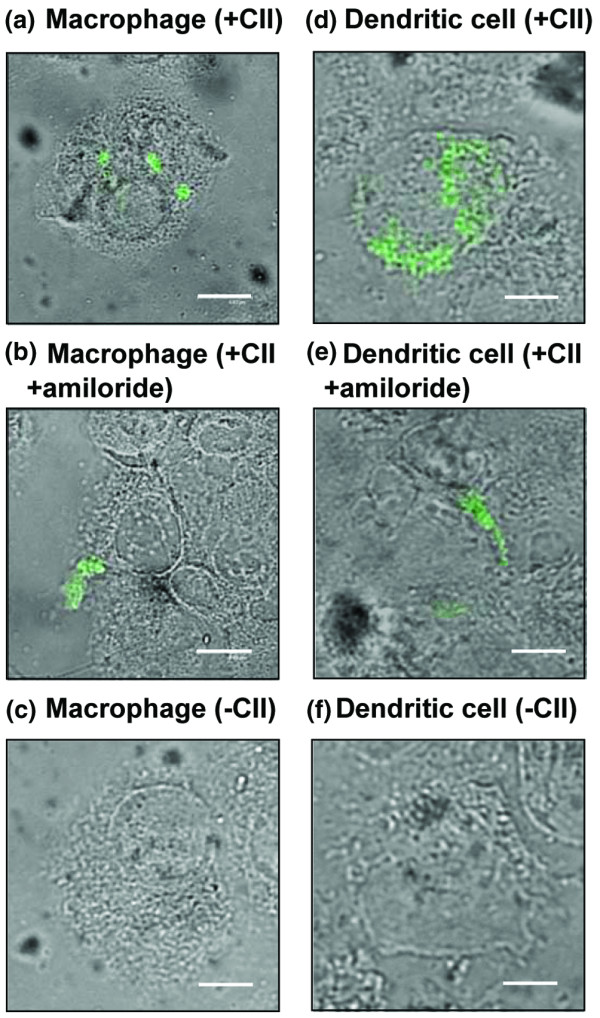
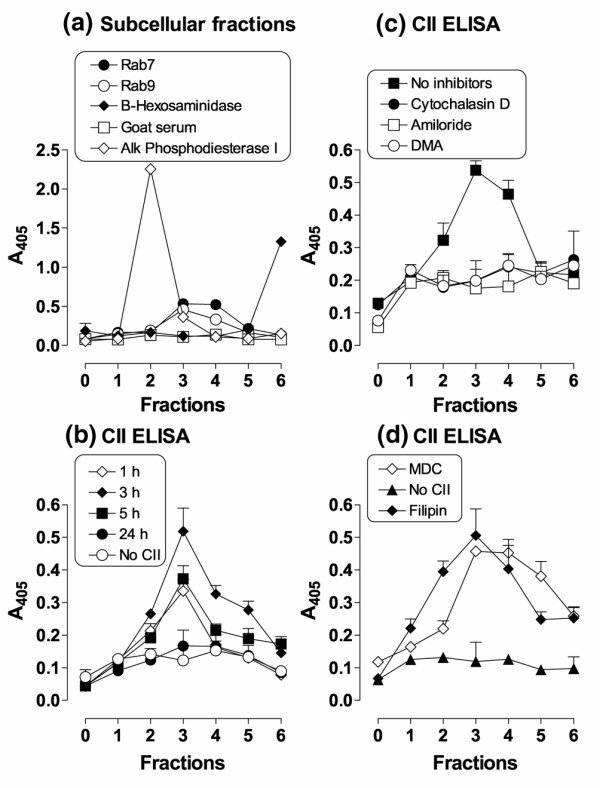
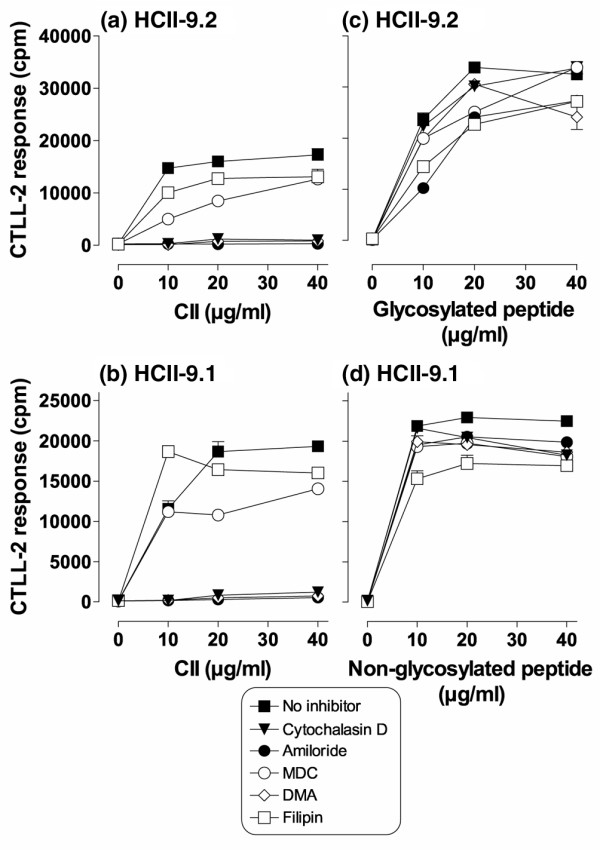
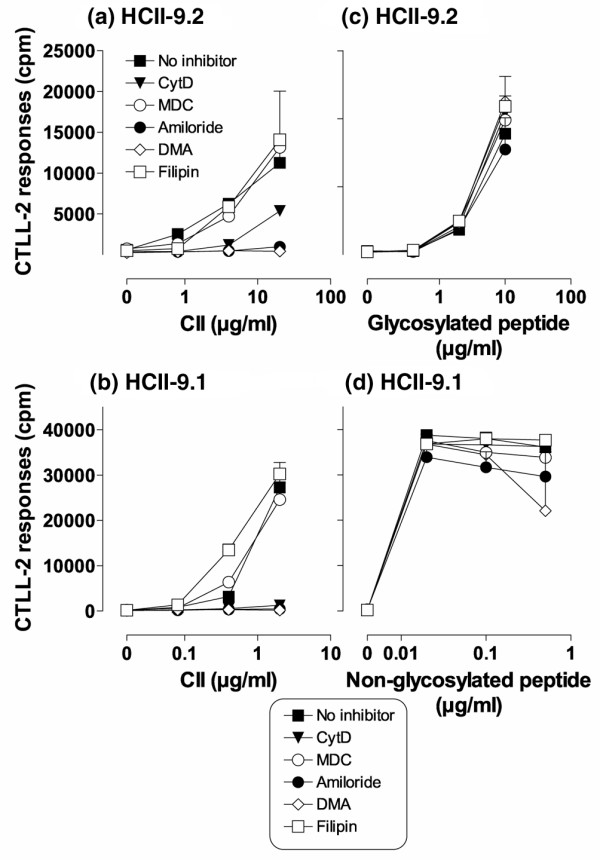
Professional antigen-presenting cells, such as dendritic cells, macrophages and B cells have been implicated in the pathogenesis of rheumatoid arthritis, constituting a possible target for antigen-specific immunotherapy. We addressed the possibility of blocking antigen presentation of the type II collagen (CII)-derived immunodominant arthritogenic epitope CII259-273 to specific CD4 T cells by inhibition of antigen uptake in HLA-DR1-transgenic mice in vitro and in vivo. Electron microscopy, confocal microscopy, subcellular fractionation and antigen presentation assays were used to establish the mechanisms of uptake, intracellular localization and antigen presentation of CII by dendritic cells and macrophages. We show that CII accumulated in membrane fractions of intermediate density corresponding to late endosomes. Treatment of dendritic cells and macrophages with cytochalasin D or amiloride prevented the intracellular appearance of CII and blocked antigen presentation of CII259-273 to HLA-DR1-restricted T cell hybridomas. The data suggest that CII was taken up by dendritic cells and macrophages predominantly via macropinocytosis. Administration of amiloride in vivo prevented activation of CII-specific polyclonal T cells in the draining popliteal lymph nodes. This study suggests that selective targeting of CII internalization in professional antigen-presenting cells prevents activation of autoimmune T cells, constituting a novel therapeutic strategy for the immunotherapy of rheumatoid arthritis.
专业抗原呈递细胞,如树突状细胞、巨噬细胞和B细胞,已被认为与类风湿性关节炎的发病机制有关,构成了抗原特异性免疫治疗的一个可能靶点。我们探讨了通过在体外和体内抑制HLA-DR1转基因小鼠的抗原摄取,来阻断II型胶原(CII)衍生的免疫显性致关节炎表位CII259-273向特异性CD4 T细胞呈递抗原的可能性。利用电子显微镜、共聚焦显微镜、亚细胞分级分离和抗原呈递试验,来确定树突状细胞和巨噬细胞摄取CII、细胞内定位及抗原呈递的机制。我们发现CII积聚在对应于晚期内体的中等密度膜组分中。用细胞松弛素D或阿米洛利处理树突状细胞和巨噬细胞,可阻止CII在细胞内出现,并阻断CII259-273向HLA-DR1限制性T细胞杂交瘤的抗原呈递。数据表明,CII主要通过巨吞饮作用被树突状细胞和巨噬细胞摄取。在体内给予阿米洛利可阻止引流腘窝淋巴结中CII特异性多克隆T细胞的激活。这项研究表明,在专业抗原呈递细胞中选择性靶向CII内化可防止自身免疫性T细胞的激活,这构成了类风湿性关节炎免疫治疗的一种新策略。