Monkiedje Adolphe, Spiteller Michael
Laboratory of General Biology, Department of Animal Biology and Physiology, Faculty of Science, University of Yaounde I, P.O. Box 812, Cameroon.
Int J Environ Res Public Health. 2005 Aug;2(2):272-85. doi: 10.3390/ijerph2005020011.
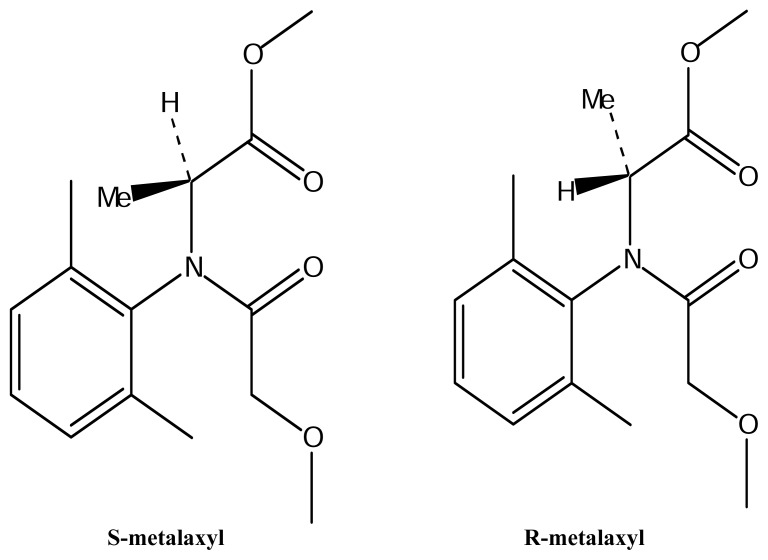
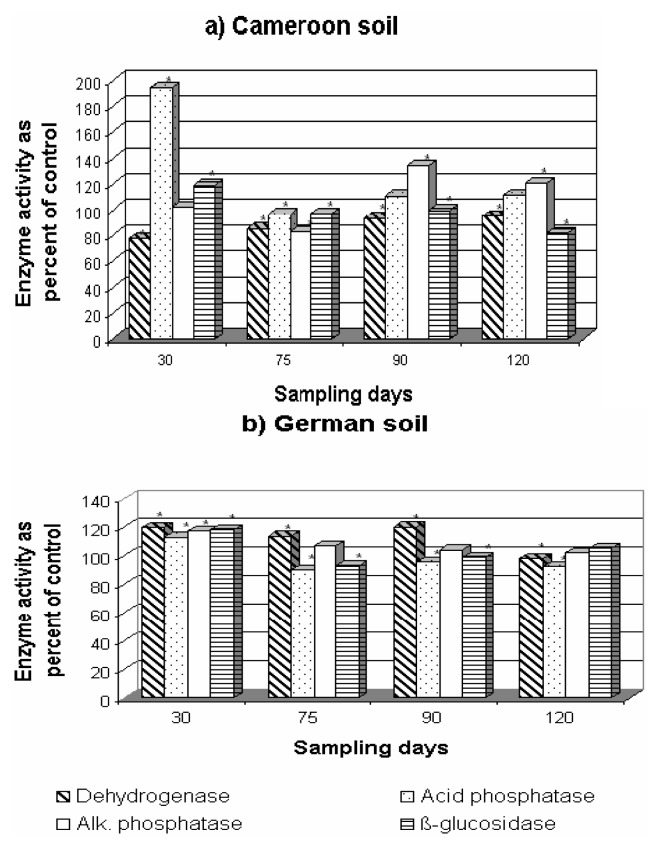
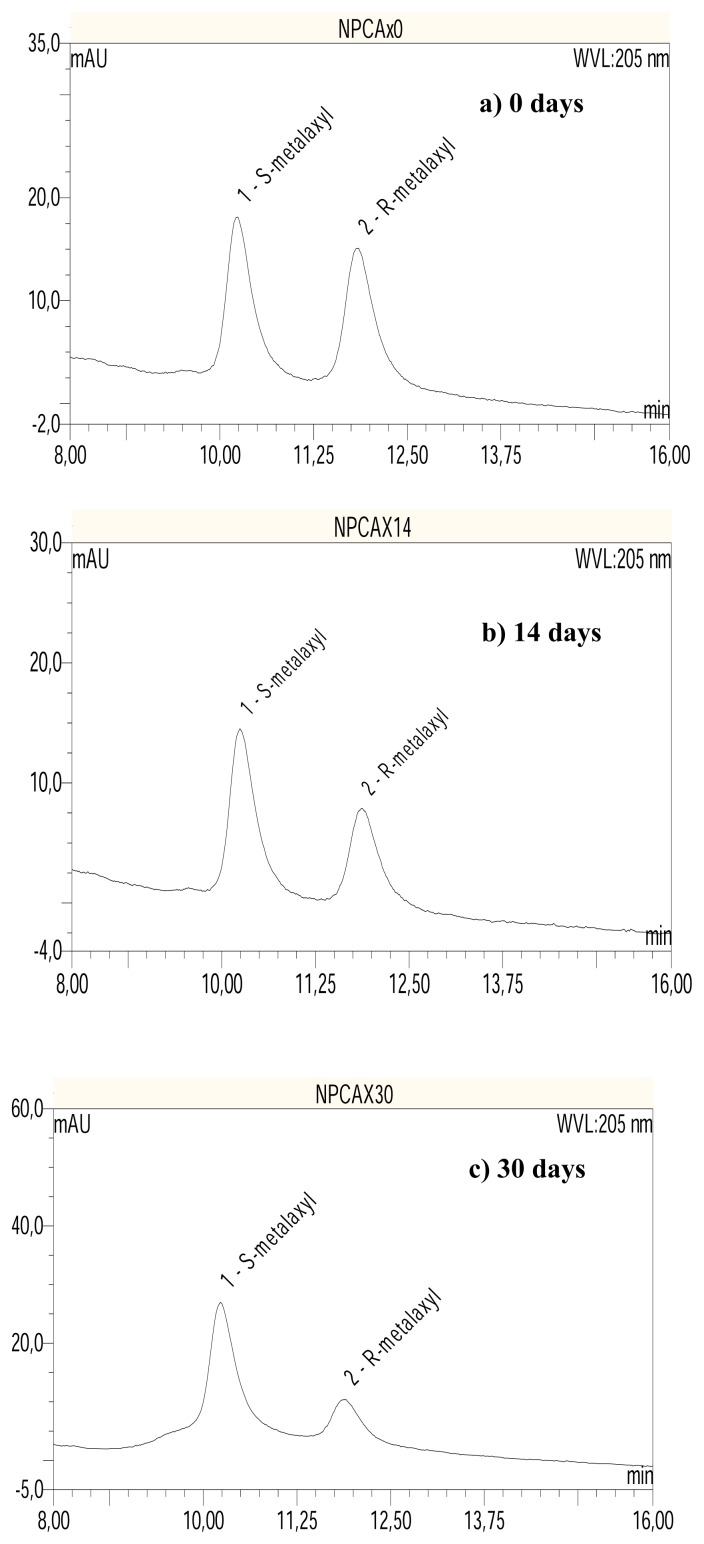
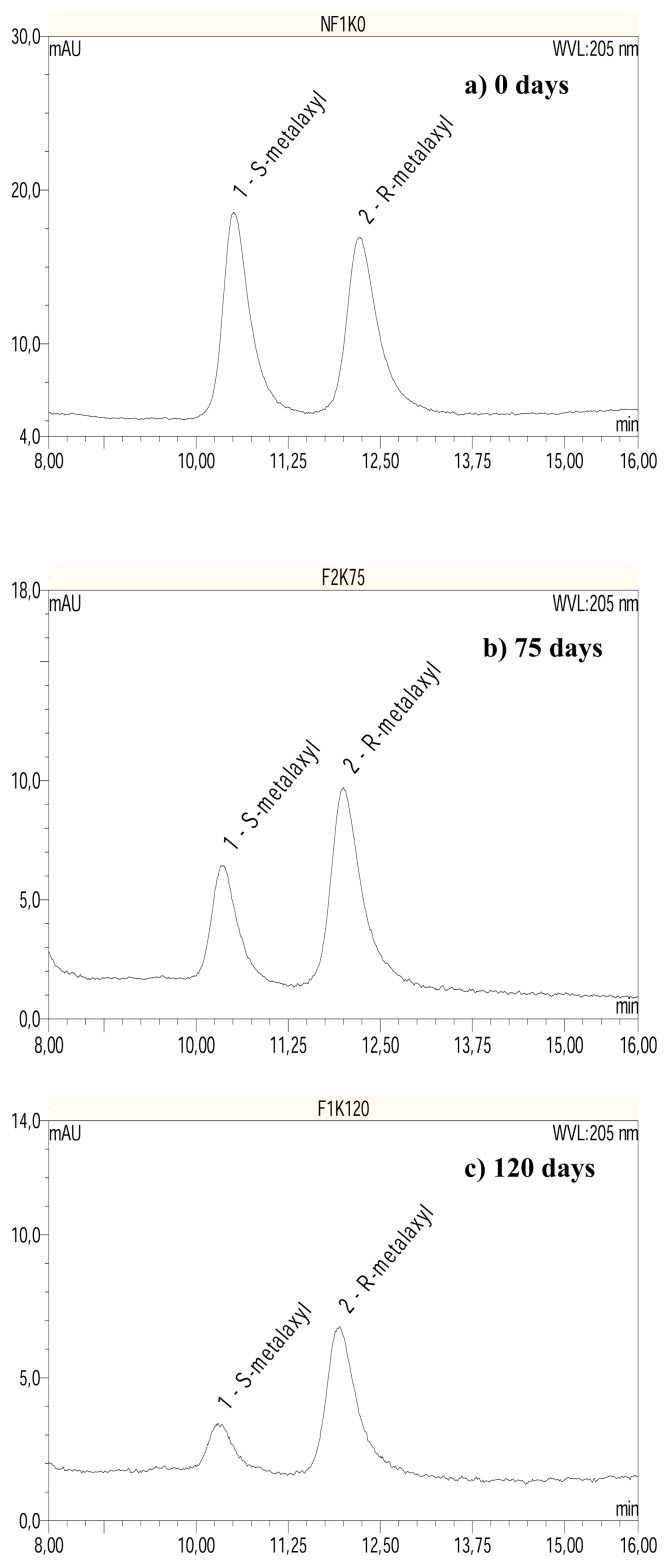
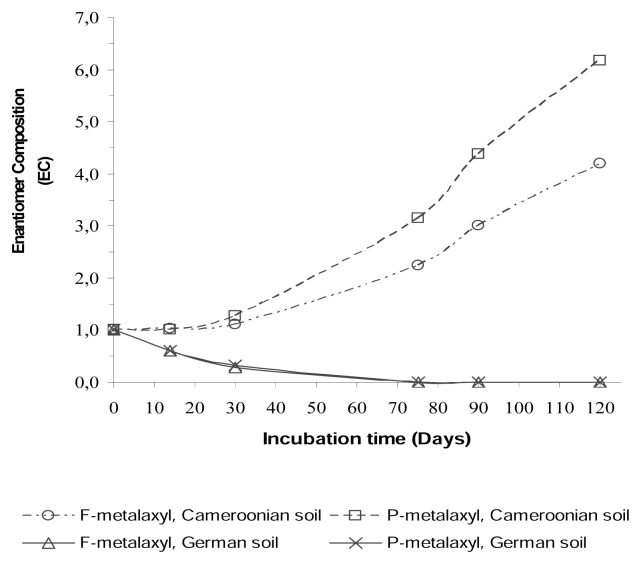
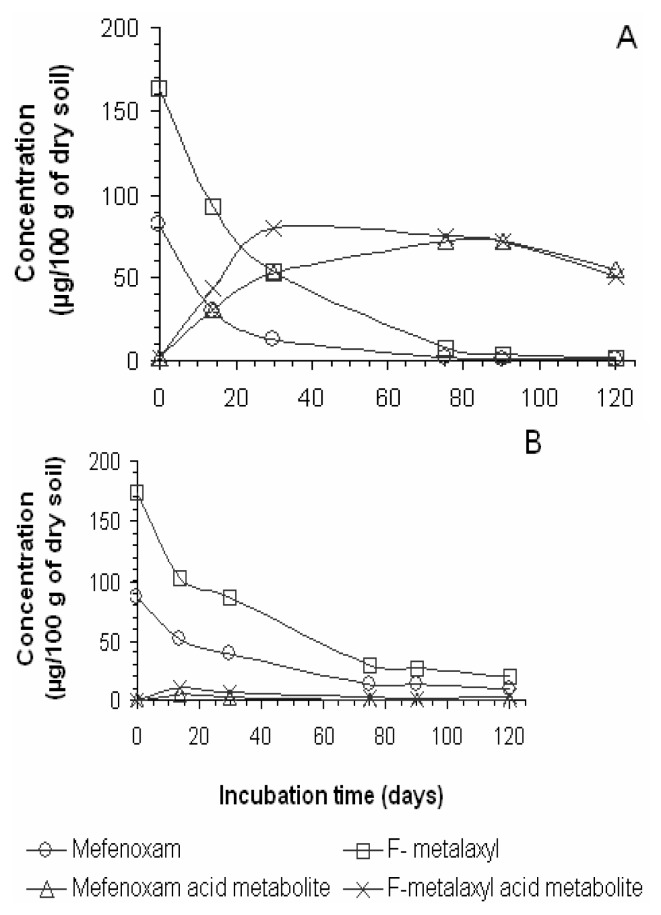
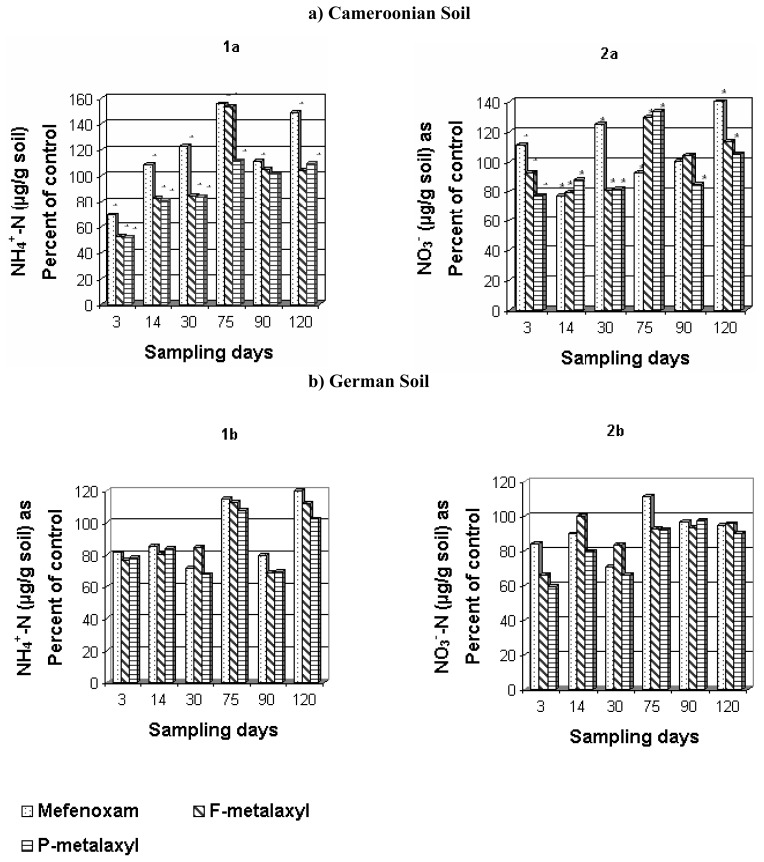
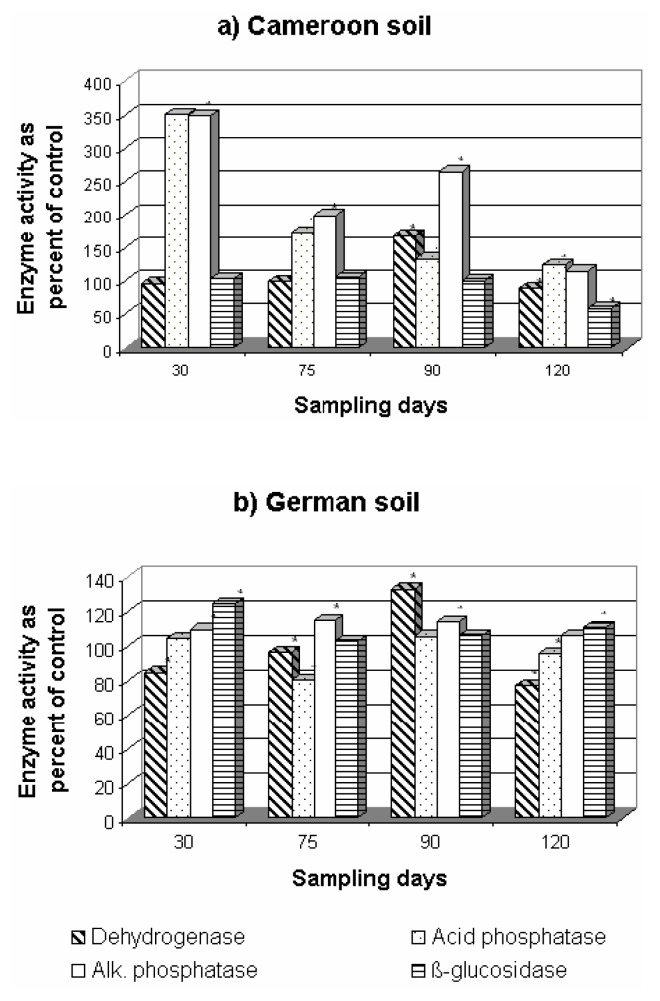
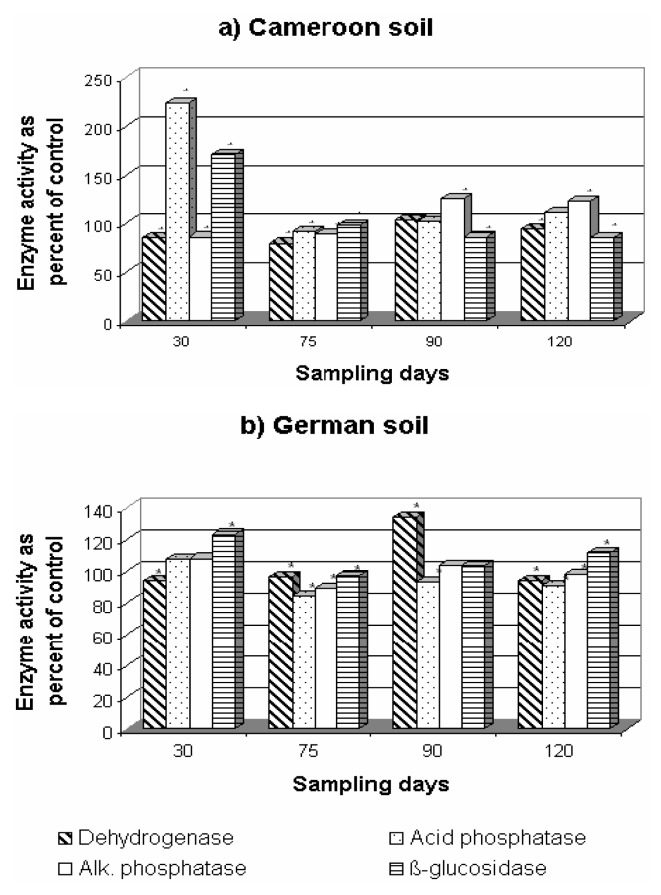
The degradation of various formulations of the racemic mixture and the enantiomers (including mefenoxam) of metalaxyl in typical soils from Germany and Cameroon in controlled incubation experiments was studied. The kinetics of the degradation or transformation was determined by means of reversed phase HPLC, while the enantiomeric ratios were measured by HPLC with a chiral Whelk O1 column. The dynamics of the quantitative changes in microbiological properties induced by the addition of these fungicides at their recommended field rates were determined in the soils during a 120-day incubation experiment. The degradation followed first-order kinetics (R > or = 0.96). Higher metalaxyl acid metabolite concentrations were found in German than in Cameroonian soils. The enantiomers of the fungicide had different degradation rates in both soils, with half-lives ranging from 17 to 38 days. All forms of metalaxyl had lower degradation rates in the Cameroonian soil than in the German soil. The degradation of the R-enantiomer was much faster than the S-enantiomer in the German soil and slower than the S-enantiomer in the Cameroonian soil, suggesting that different microbial populations, which may be using different enzymes, have different degradation preferences. The type of soil significantly influenced the effect of these fungicides on the soil parameters studied. Incorporation of these fungicides resulted in a change in the ecophysiological status of the soil microbial community as expressed by microbial activities. The activity of phosphatases and fl-glucosidase, the mineralization and availability of N and most plant nutrients in soils were stimulated, whereas the activity of dehydrogenase and the availability of NO3-, were generally adversely affected. The soil NH4+, NO3-, and enzymes activities values in general did not correlate with the degradation of metalaxyl in both soils. However, the degradation of formulated and unformulated metalaxyl was positively correlated to the activity of acid phosphatase in the German soil (R, 0.84 and 0.94 respectively) and in the Cameroonian soil (R, 0.97 and 0.96 respectively).
在可控的培养实验中,研究了甲霜灵外消旋混合物及其对映体(包括甲霜灵锰锌)在德国和喀麦隆典型土壤中的降解情况。通过反相高效液相色谱法测定降解或转化的动力学,而对映体比例则使用配备手性Whelk O1柱的高效液相色谱法进行测量。在为期120天的培养实验中,测定了在土壤中按照推荐田间施用量添加这些杀菌剂后,微生物特性定量变化的动态情况。降解遵循一级动力学(R≥0.96)。在德国土壤中发现的甲霜灵酸代谢物浓度高于喀麦隆土壤。该杀菌剂的对映体在两种土壤中的降解速率不同,半衰期在17至38天之间。所有形式的甲霜灵在喀麦隆土壤中的降解速率均低于德国土壤。在德国土壤中,R-对映体的降解速度比S-对映体快得多,而在喀麦隆土壤中则比S-对映体慢,这表明不同的微生物群体可能使用不同的酶,具有不同的降解偏好。土壤类型显著影响了这些杀菌剂对所研究土壤参数的作用。添加这些杀菌剂导致土壤微生物群落的生态生理状态发生变化,这通过微生物活性得以体现。土壤中磷酸酶和β-葡萄糖苷酶的活性、氮及大多数植物养分的矿化和有效性均受到刺激,而脱氢酶的活性以及NO3-的有效性通常受到不利影响。总体而言,土壤中NH4+、NO3-和酶活性值与两种土壤中甲霜灵的降解并无关联。然而,在德国土壤(R分别为0.84和0.94)和喀麦隆土壤(R分别为0.97和0.96)中,制剂和未制剂甲霜灵的降解与酸性磷酸酶的活性呈正相关。