Hu Valerie W, Frank Bryan C, Heine Shannon, Lee Norman H, Quackenbush John
The George Washington University Medical Center, Dept. of Biochemistry and Molecular Biology, 2300 Eye St, N.W. Washington, DC 20037, USA.
BMC Genomics. 2006 May 18;7:118. doi: 10.1186/1471-2164-7-118.
The autism spectrum encompasses a set of complex multigenic developmental disorders that severely impact the development of language, non-verbal communication, and social skills, and are associated with odd, stereotyped, repetitive behavior and restricted interests. To date, diagnosis of these neurologically based disorders relies predominantly upon behavioral observations often prompted by delayed speech or aberrant behavior, and there are no known genes that can serve as definitive biomarkers for the disorders.
Here we demonstrate, for the first time, that lymphoblastoid cell lines from monozygotic twins discordant with respect to severity of autism and/or language impairment exhibit differential gene expression patterns on DNA microarrays. Furthermore, we show that genes important to the development, structure, and/or function of the nervous system are among the most differentially expressed genes, and that many of these genes map closely in silico to chromosomal regions containing previously reported autism candidate genes or quantitative trait loci.
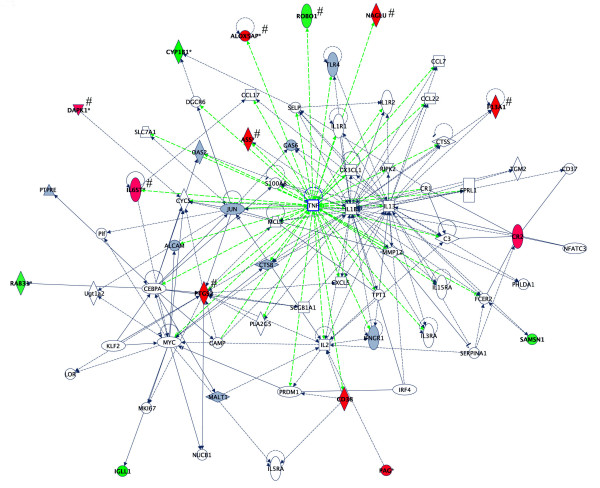
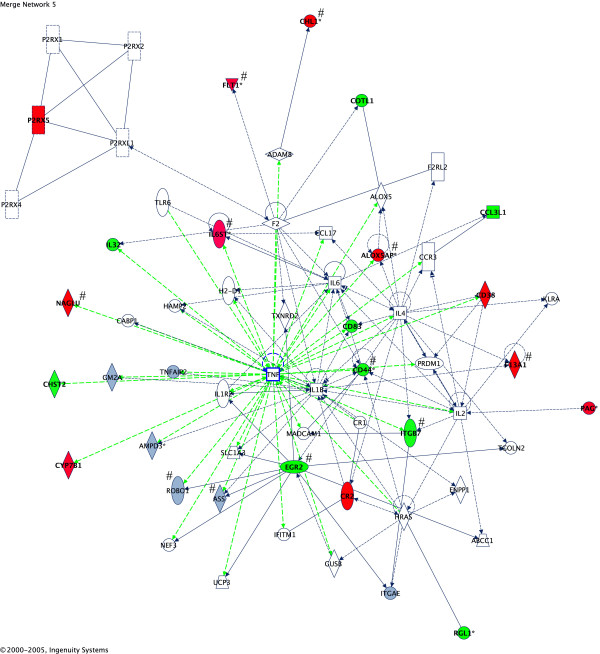
Our results provide evidence that novel candidate genes for autism may be differentially expressed in lymphoid cell lines from individuals with autism spectrum disorders. This finding further suggests the possibility of developing a molecular screen for autism based on expressed biomarkers in peripheral blood lymphocytes, an easily accessible tissue. In addition, gene networks are identified that may play a role in the pathophysiology of autism.
自闭症谱系障碍包含一系列复杂的多基因发育障碍,严重影响语言、非语言沟通和社交技能的发展,并与怪异、刻板、重复行为及兴趣受限有关。迄今为止,这些基于神经学的障碍的诊断主要依赖于通常由言语延迟或异常行为引发的行为观察,且尚无已知基因可作为这些障碍的确切生物标志物。
在此,我们首次证明,来自同卵双胞胎且在自闭症严重程度和/或语言障碍方面存在差异的淋巴母细胞系在DNA微阵列上呈现出不同的基因表达模式。此外,我们表明,对神经系统发育、结构和/或功能重要的基因是差异表达最显著的基因之一,且其中许多基因在计算机模拟中与包含先前报道的自闭症候选基因或数量性状位点的染色体区域紧密映射。
我们的结果提供了证据,表明自闭症的新候选基因可能在自闭症谱系障碍个体的淋巴样细胞系中差异表达。这一发现进一步表明,基于外周血淋巴细胞(一种易于获取的组织)中表达的生物标志物开发自闭症分子筛查方法具有可能性。此外,还确定了可能在自闭症病理生理学中起作用的基因网络。