Cui Mingxue, Kim E Bridget, Han Min
Howard Hughes Medical Institute and Department of Molecular, Cellular, and Developmental Biology, University of Colorado, Boulder, Colorado, USA.
PLoS Genet. 2006 May;2(5):e74. doi: 10.1371/journal.pgen.0020074. Epub 2006 May 19.
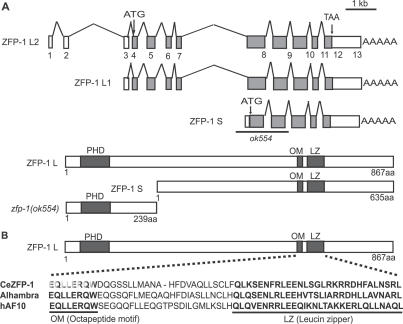
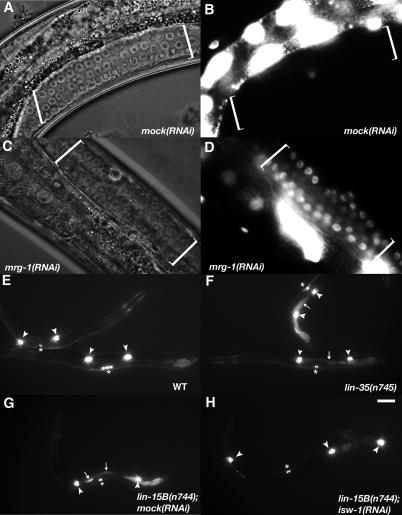
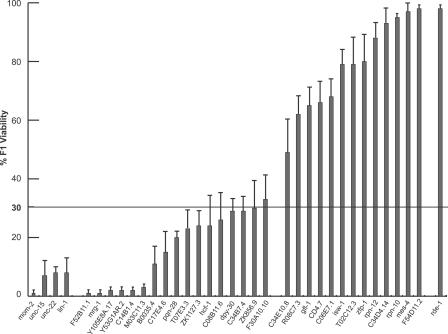
In Caenorhabditis elegans, vulval cell-fate specification involves the activities of multiple signal transduction and regulatory pathways that include a receptor tyrosine kinase/Ras/mitogen-activated protein kinase pathway and synthetic multivulva (SynMuv) pathways. Many genes in the SynMuv pathways encode transcription factors including the homologs of mammalian Rb, E2F, and components of the nucleosome-remodeling deacetylase complex. To further elucidate the functions of the SynMuv genes, we performed a genome-wide RNA interference (RNAi) screen to search for genes that antagonize the SynMuv gene activities. Among those that displayed a varying degree of suppression of the SynMuv phenotype, 32 genes are potentially involved in chromatin remodeling (called SynMuv suppressor genes herein). Genetic mutations of two representative genes (zfp-1 and mes-4) were used to further characterize their positive roles in vulval induction and relationships with Ras function. Our analysis revealed antagonistic roles of the SynMuv suppressor genes and the SynMuv B genes in germline-soma distinction, RNAi, somatic transgene silencing, and tissue specific expression of pgl-1 and the lag-2/Delta genes. The opposite roles of these SynMuv B and SynMuv suppressor genes on transcriptional regulation were confirmed in somatic transgene silencing. We also report the identifications of ten new genes in the RNAi pathway and six new genes in germline silencing. Among the ten new RNAi genes, three encode homologs of proteins involved in both protein degradation and chromatin remodeling. Our findings suggest that multiple chromatin remodeling complexes are involved in regulating the expression of specific genes that play critical roles in developmental decisions.
在秀丽隐杆线虫中,外阴细胞命运的决定涉及多种信号转导和调控途径的活动,其中包括受体酪氨酸激酶/Ras/丝裂原活化蛋白激酶途径和合成多外阴(SynMuv)途径。SynMuv途径中的许多基因编码转录因子,包括哺乳动物Rb、E2F的同源物以及核小体重塑去乙酰化酶复合物的组分。为了进一步阐明SynMuv基因的功能,我们进行了全基因组RNA干扰(RNAi)筛选,以寻找拮抗SynMuv基因活性的基因。在那些对SynMuv表型表现出不同程度抑制作用的基因中,有32个基因可能参与染色质重塑(本文中称为SynMuv抑制基因)。使用两个代表性基因(zfp-1和mes-4)的基因突变来进一步表征它们在外阴诱导中的积极作用以及与Ras功能的关系。我们的分析揭示了SynMuv抑制基因和SynMuv B基因在生殖系-体细胞区分、RNAi、体细胞转基因沉默以及pgl-1和lag-2/Delta基因的组织特异性表达中的拮抗作用。这些SynMuv B基因和SynMuv抑制基因在转录调控上的相反作用在体细胞转基因沉默中得到了证实。我们还报告了在RNAi途径中鉴定出的10个新基因和在生殖系沉默中鉴定出的6个新基因。在这10个新的RNAi基因中,有3个编码参与蛋白质降解和染色质重塑的蛋白质的同源物。我们的研究结果表明,多种染色质重塑复合物参与调控在发育决定中起关键作用的特定基因的表达。