Yeldandi A V, Tan X D, Dwivedi R S, Subbarao V, Smith D D, Scarpelli D G, Rao M S, Reddy J K
Department of Pathology, Northwestern University Medical School, Chicago, IL 60611.
Proc Natl Acad Sci U S A. 1990 Feb;87(3):881-5. doi: 10.1073/pnas.87.3.881.
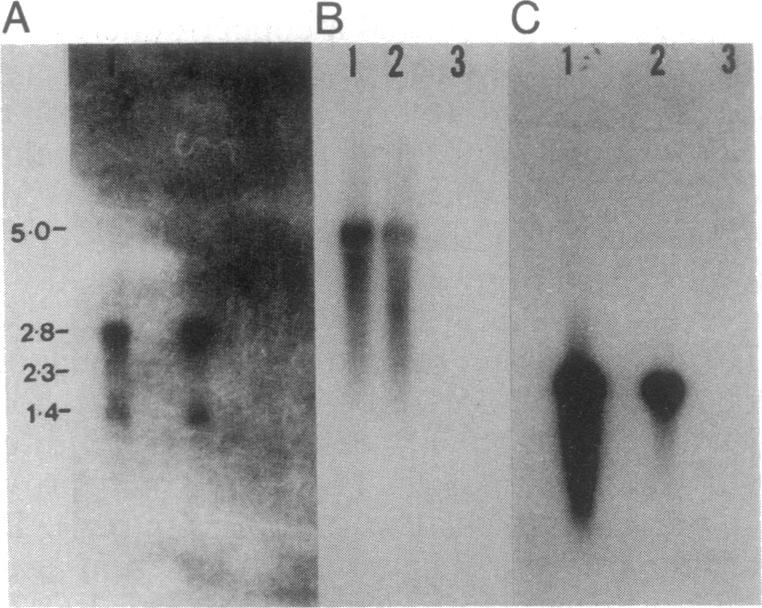
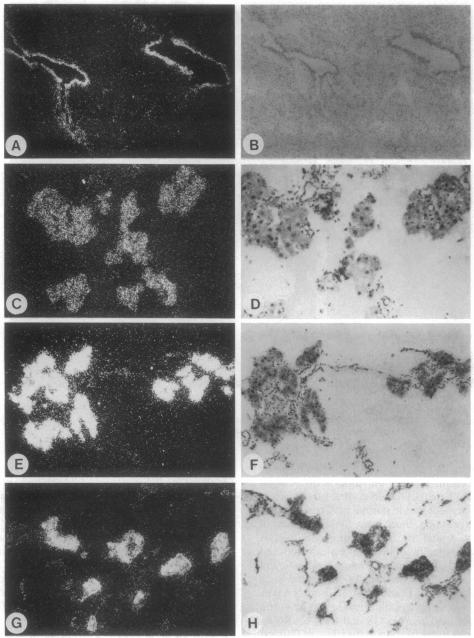
In the mammalian liver the distribution of ammonia-detoxifying enzymes, glutamine synthetase (GS) and carbamoylphosphate synthase I (ammonia) (CPS-I), is mutually exclusive in that these enzymes are expressed in two distinct populations of hepatocytes that are zonally demarcated in the liver acinus. In the present study we examined the distribution of GS and CPS-I in pancreatic hepatocytes to ascertain if the expression of these two genes in these hepatocytes is also mutually exclusive. Multiple foci of hepatocytes showing no clear acinar organization develop in the adult rat pancreas as a result of a change in the differentiation commitment after dietary copper deficiency. Unlike liver, GS and CPS-I are detected by immunofluorescence in all pancreatic hepatocytes. In situ hybridization revealed that all pancreatic hepatocytes contain GS and CPS-I mRNAs. The sizes of these two mRNAs in pancreas with hepatocytes are similar to those of the liver. The concomitant expression of GS and CPS-I genes in pancreatic hepatocytes may be attributed, in part, to the absence of portal blood supply to the pancreas vis-à-vis the lack of hormonal/metabolic gradients as well as to possible matrix homogeneity in the pancreas.
在哺乳动物肝脏中,氨解毒酶谷氨酰胺合成酶(GS)和氨甲酰磷酸合成酶I(氨)(CPS-I)的分布是相互排斥的,因为这些酶在肝腺泡中按区域划分的两种不同肝细胞群体中表达。在本研究中,我们检测了胰腺肝细胞中GS和CPS-I的分布,以确定这两个基因在这些肝细胞中的表达是否也相互排斥。成年大鼠胰腺中由于饮食性铜缺乏后分化承诺的改变,会出现多个无明显腺泡组织的肝细胞灶。与肝脏不同,通过免疫荧光在所有胰腺肝细胞中都能检测到GS和CPS-I。原位杂交显示,所有胰腺肝细胞都含有GS和CPS-I mRNA。胰腺中含有肝细胞时这两种mRNA的大小与肝脏中的相似。GS和CPS-I基因在胰腺肝细胞中的共同表达可能部分归因于胰腺缺乏门静脉血供,相对于缺乏激素/代谢梯度以及胰腺中可能的基质同质性。