Westerhout Ellen M, ter Brake Olivier, Berkhout Ben
Laboratory of Experimental Virology, Department of Medical Microbiology, Center for Infection and Immunity Amsterdam (CINIMA), Academic Medical Center, University of Amsterdam, The Netherlands. Westerhout:
Retrovirology. 2006 Sep 4;3:57. doi: 10.1186/1742-4690-3-57.
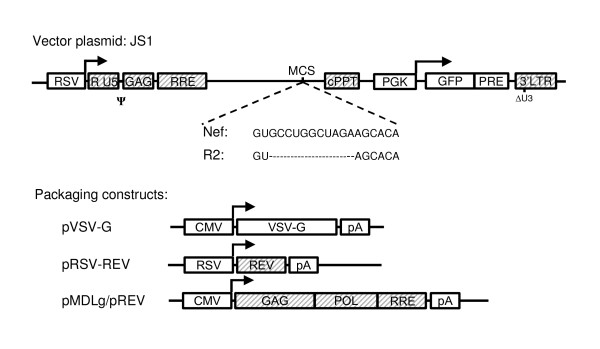
RNA interference (RNAi) has proven to be a powerful tool to suppress gene expression and can be used as a therapeutic strategy against human pathogenic viruses such as human immunodeficiency virus type 1 (HIV-1). Theoretically, RNAi-mediated inhibition can occur at two points in the replication cycle, upon viral entry before reverse transcription of the RNA genome, and on the newly transcribed viral RNA transcripts. There have been conflicting results on whether RNAi can target the RNA genome of infecting HIV-1 particles. We have addressed this issue with HIV-1-based lentiviral vectors.
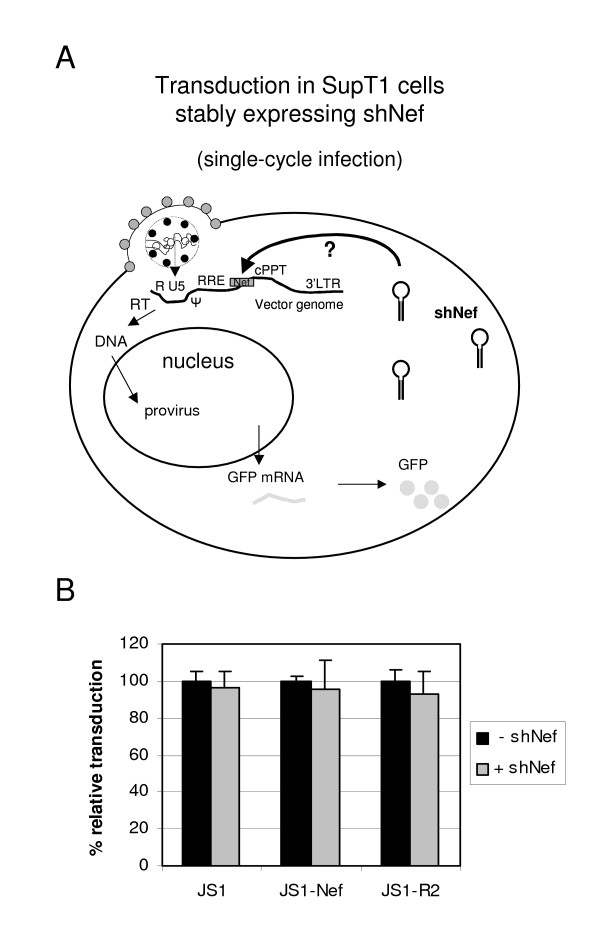
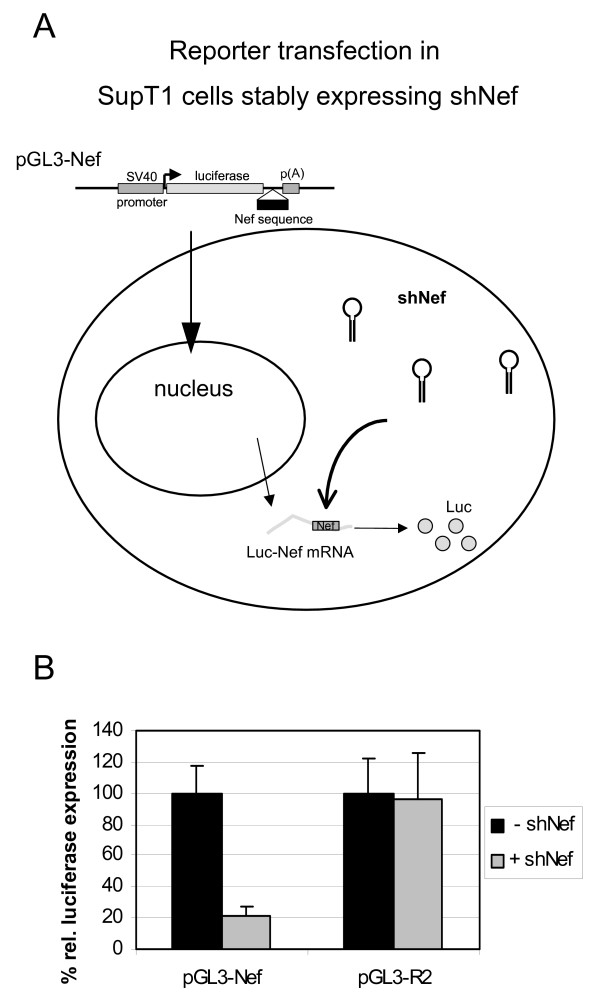
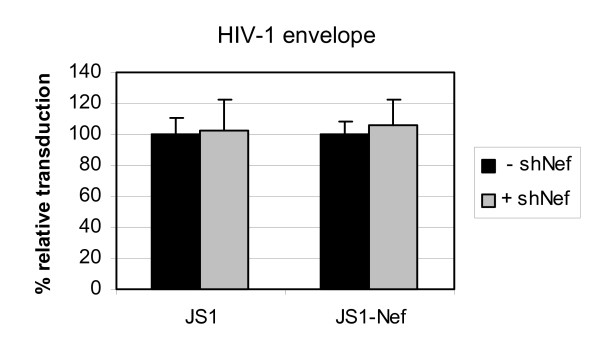
We determined the transduction efficiency of a lentiviral vector, as measured by GFP expressing cells, which reflects the number of successful integration events in a cell line stably expressing shNef. We did not observe a difference in the transduction efficiency comparing lentiviral vectors with or without the Nef target sequence in their genome. The results were similar with particles pseudotyped with either the VSV-G or HIV-1 envelope. Additionally, no reduced transduction efficiencies were observed with multiple other shRNAs targeting the vector genome or with synthetic siNef when transiently transfected prior to transduction.
Our findings indicate that the incoming HIV-1 RNA genome is not targeted by RNAi, probably due to inaccessibility to the RNAi machinery. Thus, therapeutic RNAi strategies aimed at preventing proviral integration should be targeting cellular receptors or co-factors involved in pre-integration events.
RNA干扰(RNAi)已被证明是一种抑制基因表达的强大工具,可作为针对人类致病病毒(如1型人类免疫缺陷病毒,HIV-1)的治疗策略。理论上,RNAi介导的抑制可在复制周期的两个点发生,即在病毒进入后RNA基因组逆转录之前,以及在新转录的病毒RNA转录本上。关于RNAi是否能靶向感染性HIV-1颗粒的RNA基因组,一直存在相互矛盾的结果。我们已利用基于HIV-1的慢病毒载体解决了这个问题。
我们通过表达绿色荧光蛋白(GFP)的细胞测定了慢病毒载体的转导效率,这反映了在稳定表达shNef的细胞系中的成功整合事件数量。我们没有观察到在基因组中有无Nef靶序列的慢病毒载体之间在转导效率上存在差异。用VSV-G或HIV-1包膜假型化的颗粒得到的结果相似。此外,在转导前瞬时转染时,针对载体基因组的多个其他shRNA或合成的siNef也未观察到转导效率降低。
我们的研究结果表明,进入的HIV-1 RNA基因组不会被RNAi靶向,这可能是由于RNAi机制无法触及。因此,旨在防止前病毒整合的治疗性RNAi策略应靶向参与整合前事件的细胞受体或辅助因子。