
人类癌胚抗原相关细胞黏附分子1(CEACAM1)的突变分析:受体多态性在增加宿主对细菌感染易感性方面的潜在作用。
Mutational analysis of human CEACAM1: the potential of receptor polymorphism in increasing host susceptibility to bacterial infection.
作者信息
Villullas Silvia, Hill Darryl J, Sessions Richard B, Rea Jon, Virji Mumtaz
机构信息
Department of Cellular and Molecular Medicine, University of Bristol, Bristol, BS8 1TD, UK.
出版信息
Cell Microbiol. 2007 Feb;9(2):329-46. doi: 10.1111/j.1462-5822.2006.00789.x. Epub 2006 Aug 31.
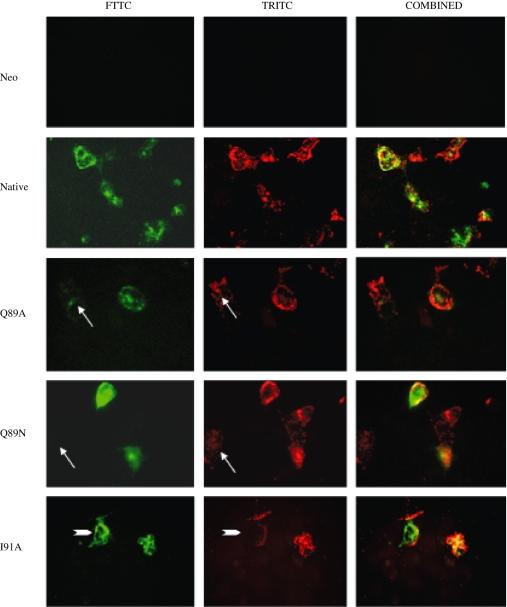
A common overlapping site on the N-terminal IgV-like domain of human carcinoembryonic antigen (CEA)-related cell adhesion molecules (CEACAMs) is targeted by several important human respiratory pathogens. These include Neisseria meningitidis (Nm) and Haemophilus influenzae (Hi) that can cause disseminated or persistent localized infections. To define the precise structural features that determine the binding of distinct pathogens with CEACAMs, we have undertaken molecular modelling and mutation of the receptor molecules at previously implicated key target residues required for bacterial binding. These include Ser-32, Tyr-34, Val-39, Gln-44 and Gln-89, in addition to Ile-91, the primary docking site for the pathogens. Most, but not all, of these residues located adjacent to each other in a previous N-domain model of human CEACAM1, which was based on REI, CD2 and CD4. In the current studies, we have refined this model based on the mouse CEACAM1 crystal structure, and observe that all of the above residues form an exposed continuous binding region on the N-domain. Examination of the model also suggested that substitution of two of these residues 34 and 89 could affect the accessibility of Ile-91 for ligand binding. By introducing selected mutations at the positions 91, 34 and 89, we confirmed the primary importance of Ile-91 in all bacterial binding to CEACAM1 despite the inter- and intraspecies structural differences between the bacterial CEACAM-binding ligands. The studies further indicated that the efficiency of binding was significantly enhanced for specific strains by mutations such as Y34F and Q89N, which also altered the hierarchy of Nm versus Hi strain binding. These studies imply that distinct polymorphisms in human epithelial CEACAMs have the potential to decrease or increase the risk of infection by the receptor-targeting pathogens.
人类癌胚抗原(CEA)相关细胞黏附分子(CEACAMs)N端免疫球蛋白V样结构域上的一个常见重叠位点是几种重要人类呼吸道病原体的靶向位点。这些病原体包括可引起播散性或持续性局部感染的脑膜炎奈瑟菌(Nm)和流感嗜血杆菌(Hi)。为了确定决定不同病原体与CEACAMs结合的精确结构特征,我们对受体分子进行了分子建模,并对先前涉及细菌结合所需的关键靶残基进行了突变。这些残基包括Ser-32、Tyr-34、Val-39、Gln-44和Gln-89,此外还有Ile-91,它是病原体的主要对接位点。在基于REI、CD2和CD4构建的人CEACAM1先前N结构域模型中,这些残基大多(但并非全部)彼此相邻。在当前研究中,我们基于小鼠CEACAM1晶体结构对该模型进行了优化,观察到上述所有残基在N结构域上形成了一个暴露的连续结合区域。对该模型的研究还表明,其中两个残基34和89的取代可能会影响Ile-91与配体结合的可及性。通过在91、34和89位点引入选定的突变,我们证实了Ile-91在所有细菌与CEACAM1结合中的首要重要性,尽管细菌CEACAM结合配体之间存在种间和种内结构差异。研究进一步表明,Y34F和Q89N等突变显著提高了特定菌株的结合效率,同时也改变了Nm与Hi菌株结合的层级关系。这些研究表明,人类上皮CEACAMs中不同的多态性有可能降低或增加受体靶向病原体感染的风险。


 Zotero 插件