Salas Tonatiuh Romero, Petruseva Irina, Lavrik Olga, Bourdoncle Anne, Mergny Jean-Louis, Favre Alain, Saintomé Carole
Institut Jacques Monod, CNRS-ParisVI-ParisVII-UMR 7592, 2 place Jussieu, 75251 Paris cedex 05, France.
Nucleic Acids Res. 2006;34(17):4857-65. doi: 10.1093/nar/gkl564. Epub 2006 Sep 14.
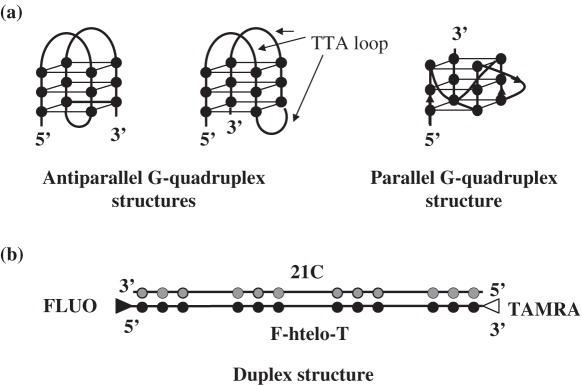
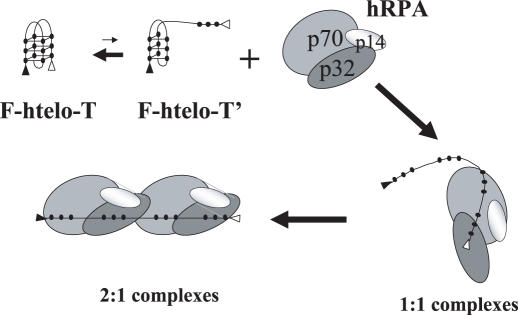
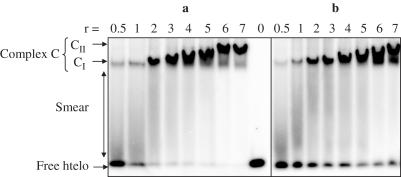
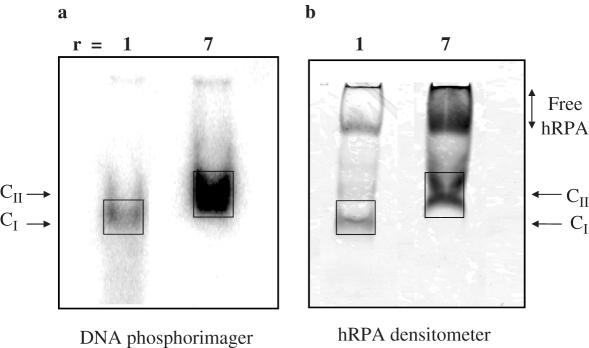
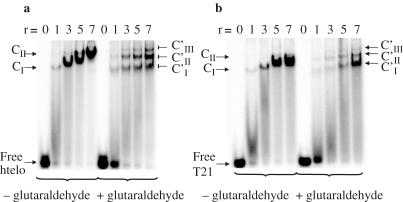
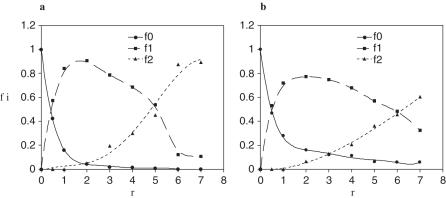
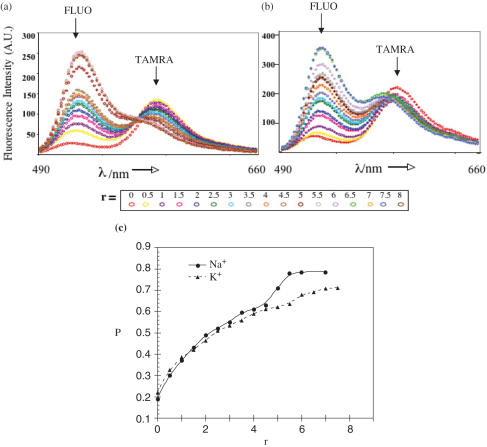
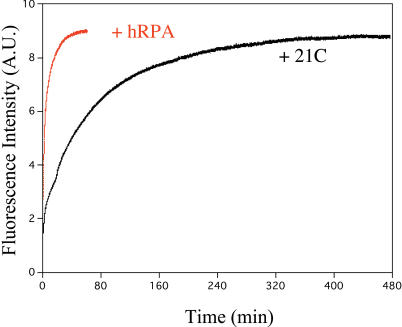
G-quadruplex structures inhibit telomerase activity and must be disrupted for telomere elongation during S phase. It has been suggested that the replication protein A (RPA) could unwind and maintain single-stranded DNA in a state amenable to the binding of telomeric components. We show here that under near-physiological in vitro conditions, human RPA is able to bind and unfold G-quadruplex structures formed from a 21mer human telomeric sequence. Analyses by native gel electrophoresis, cross-linking and fluorescence resonance energy transfer indicate the formation of both 1:1 and 2:1 complexes in which G-quadruplexes are unfolded. In addition, quadruplex opening by hRPA is much faster than observed with the complementary DNA, demonstrating that this protein efficiently unfolds G-quartets. A two-step mechanism accounting for the binding of hRPA to G-quadruplexes is proposed. These data point to the involvement of hRPA in regulation of telomere maintenance.
G-四链体结构可抑制端粒酶活性,在S期进行端粒延长时必须将其破坏。有人提出,复制蛋白A(RPA)可以解开并维持单链DNA处于适合端粒成分结合的状态。我们在此表明,在接近生理的体外条件下,人RPA能够结合并展开由21聚体人端粒序列形成的G-四链体结构。通过非变性凝胶电泳、交联和荧光共振能量转移分析表明,形成了1:1和2:1的复合物,其中G-四链体被展开。此外,hRPA使四链体打开的速度比互补DNA快得多,表明该蛋白能有效地展开G-四重体。提出了一种解释hRPA与G-四链体结合的两步机制。这些数据表明hRPA参与了端粒维持的调控。