Abdel-Moneim Ahmed S, El-Kady Magdy F, Ladman Brian S, Gelb Jack
Department of Virology, Faculty of Veterinary Medicine, Beni-Suef University, Beni-Suef 62511, Egypt.
Virol J. 2006 Sep 20;3:78. doi: 10.1186/1743-422X-3-78.
Infectious bronchitis is highly contagious and constitutes one of the most common and difficult poultry diseases to control. IBV is endemic in probably all countries that raise chickens. It exists as dozens of serotypes/genotypes. Only a few amino acid differences in the S1 protein of vaccine and challenge strains of IBV may result in poor protection. Tropism of IBV includes the respiratory tract tissues, proventriculus and caecal tonsils of the alimentary tract, the oviduct and the kidney.
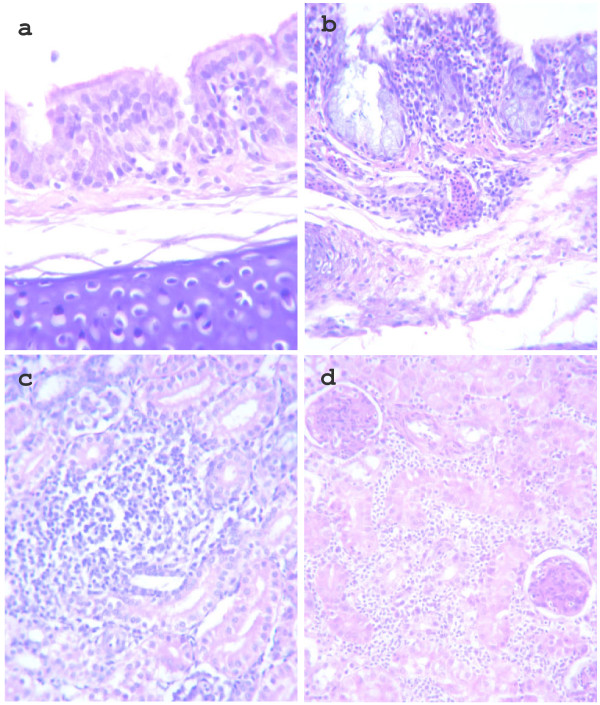
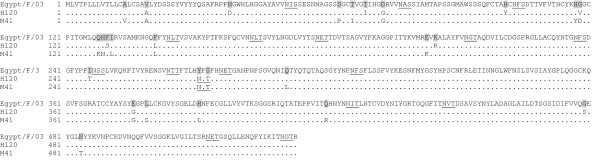
Infectious bronchitis virus (IBV) strain closely related to Massachusetts (Mass) serotype was isolated from broiler chickens suffering from severe renal and respiratory distresses. The isolate was serologically identified by Dot-ELISA and further characterized by RT-PCR then genotyped using S1 gene sequence analysis. Alignment of the S1 sequence of the isolate with 16 IBV strains revealed high homology to isolates related to Mass serotype. Inoculation with the strain reproduced the disease in experimental 1-day-old chickens and resulted in 20% mortality, severe renal and moderate respiratory distresses. Marked histopathological changes in both kidney and trachea were observed in experimentally infected chickens. A protection study using the H120 live attenuated vaccine showed low protection rate in spite of high S1 sequence homology (97%). Protection based criteria were: virus re-isolation attempts from trachea, tracheal and renal histopathology as well as IBV antigens detection by immunofluorescent antibody technique in kidney sections.
Periodical evaluation of cross-protective capabilities of IBV vaccine(s) versus recently recovered field isolates should be performed to ensure optimum control of IBV.
传染性支气管炎具有高度传染性,是最难控制的常见家禽疾病之一。传染性支气管炎病毒(IBV)可能在所有养鸡国家呈地方性流行。它以数十种血清型/基因型存在。IBV疫苗株和攻击株的S1蛋白仅有几个氨基酸差异,就可能导致保护效果不佳。IBV的嗜性包括呼吸道组织、消化道的腺胃和盲肠扁桃体、输卵管及肾脏。
从患有严重肾脏和呼吸道疾病的肉鸡中分离出与马萨诸塞州(Mass)血清型密切相关的传染性支气管炎病毒(IBV)毒株。通过斑点酶联免疫吸附测定(Dot-ELISA)对该分离株进行血清学鉴定,并通过逆转录聚合酶链反应(RT-PCR)进一步表征,然后使用S1基因序列分析进行基因分型。将该分离株的S1序列与16株IBV毒株进行比对,结果显示与Mass血清型相关的分离株具有高度同源性。用该毒株接种1日龄实验鸡可引发疾病,导致20%的死亡率、严重的肾脏病变和中度呼吸道疾病。在实验感染的鸡中观察到肾脏和气管均有明显的组织病理学变化。尽管S1序列同源性较高(97%),但使用H120活疫苗进行的保护试验显示保护率较低。保护的评判标准包括:从气管重新分离病毒、气管和肾脏的组织病理学检查以及通过免疫荧光抗体技术在肾脏切片中检测IBV抗原。
应定期评估IBV疫苗对最近分离的野毒株的交叉保护能力,以确保对IBV进行最佳控制。