De Preter Katleen, Vandesompele Jo, Heimann Pierre, Yigit Nurten, Beckman Siv, Schramm Alexander, Eggert Angelika, Stallings Raymond L, Benoit Yves, Renard Marleen, De Paepe Anne, Laureys Geneviève, Påhlman Sven, Speleman Frank
Center for Medical Genetics, Ghent University Hospital, De Pintelaan, B-9000 Ghent, Belgium.
Genome Biol. 2006;7(9):R84. doi: 10.1186/gb-2006-7-9-r84.
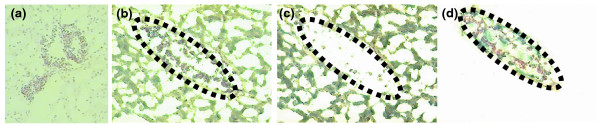
Neuroblastoma tumor cells are assumed to originate from primitive neuroblasts giving rise to the sympathetic nervous system. Because these precursor cells are not detectable in postnatal life, their transcription profile has remained inaccessible for comparative data mining strategies in neuroblastoma. This study provides the first genome-wide mRNA expression profile of these human fetal sympathetic neuroblasts. To this purpose, small islets of normal neuroblasts were isolated by laser microdissection from human fetal adrenal glands.
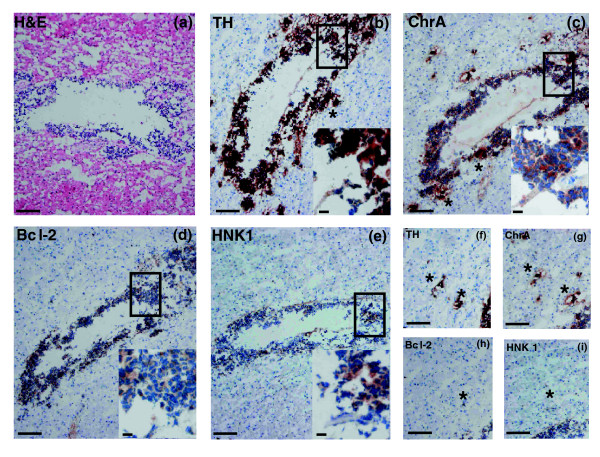
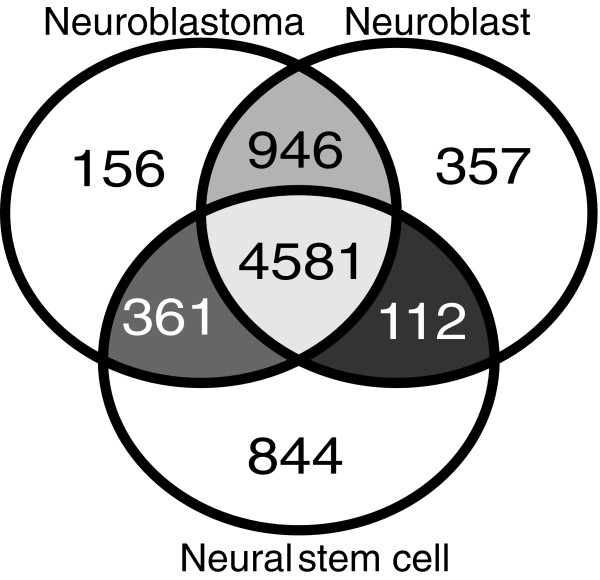
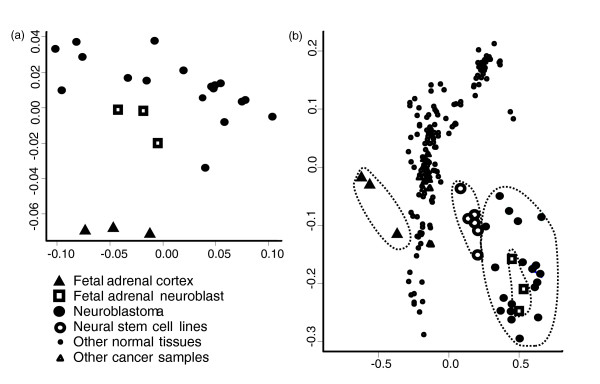
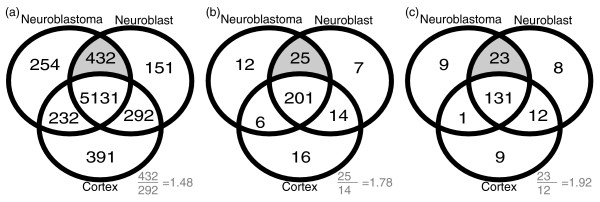
Expression of catecholamine metabolism genes, and neuronal and neuroendocrine markers in the neuroblasts indicated that the proper cells were microdissected. The similarities in expression profile between normal neuroblasts and malignant neuroblastomas provided strong evidence for the neuroblast origin hypothesis of neuroblastoma. Next, supervised feature selection was used to identify the genes that are differentially expressed in normal neuroblasts versus neuroblastoma tumors. This approach efficiently sifted out genes previously reported in neuroblastoma expression profiling studies; most importantly, it also highlighted a series of genes and pathways previously not mentioned in neuroblastoma biology but that were assumed to be involved in neuroblastoma pathogenesis.
This unique dataset adds power to ongoing and future gene expression studies in neuroblastoma and will facilitate the identification of molecular targets for novel therapies. In addition, this neuroblast transcriptome resource could prove useful for the further study of human sympathoadrenal biogenesis.
神经母细胞瘤肿瘤细胞被认为起源于产生交感神经系统的原始神经母细胞。由于这些前体细胞在出生后无法检测到,它们的转录谱对于神经母细胞瘤的比较数据挖掘策略来说仍然难以获取。本研究提供了这些人类胎儿交感神经母细胞的首个全基因组mRNA表达谱。为此,通过激光显微切割从人类胎儿肾上腺中分离出正常神经母细胞的小细胞团。
神经母细胞中儿茶酚胺代谢基因以及神经元和神经内分泌标志物的表达表明,已显微切割出了合适的细胞。正常神经母细胞与恶性神经母细胞瘤之间表达谱的相似性为神经母细胞瘤起源于神经母细胞这一假说提供了有力证据。接下来,使用监督特征选择来识别在正常神经母细胞与神经母细胞瘤肿瘤中差异表达的基因。这种方法有效地筛选出了先前在神经母细胞瘤表达谱研究中报道过的基因;最重要的是,它还突出了一系列先前在神经母细胞瘤生物学中未被提及但被认为与神经母细胞瘤发病机制有关的基因和途径。
这个独特的数据集为正在进行的和未来的神经母细胞瘤基因表达研究增添了助力,并将有助于识别新疗法的分子靶点。此外,这种神经母细胞转录组资源可能对人类交感肾上腺生物发生的进一步研究有用。