Sarbadhikari Suptendra N, Saha Asit K
TIFAC-CORE in Biomedical Technology, Amrita Vishwa Vidyapeetham, Amritapuri 690525, India.
Theor Biol Med Model. 2006 Sep 23;3:33. doi: 10.1186/1742-4682-3-33.
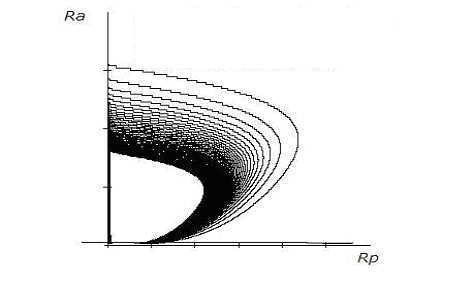
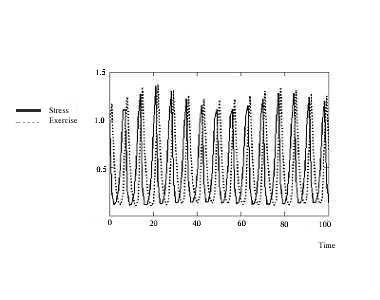
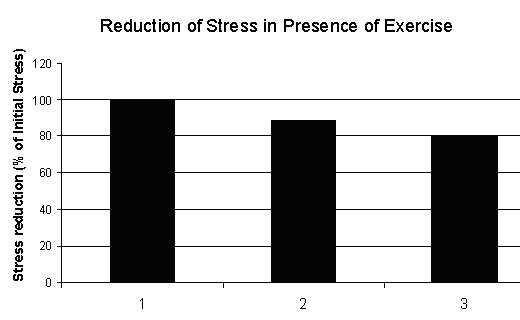
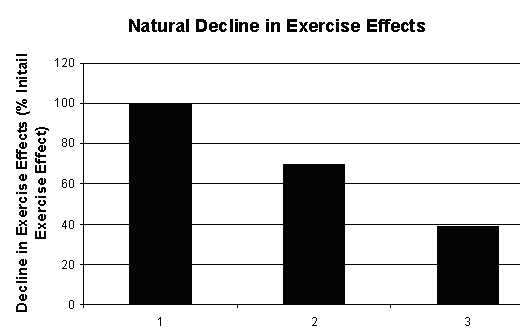
Regular, "moderate", physical exercise is an established non-pharmacological form of treatment for depressive disorders. Brain lateralization has a significant role in the progress of depression. External stimuli such as various stressors or exercise influence the higher functions of the brain (cognition and affect). These effects often do not follow a linear course. Therefore, nonlinear dynamics seem best suited for modeling many of the phenomena, and putative global pathways in the brain, attributable to such external influences.
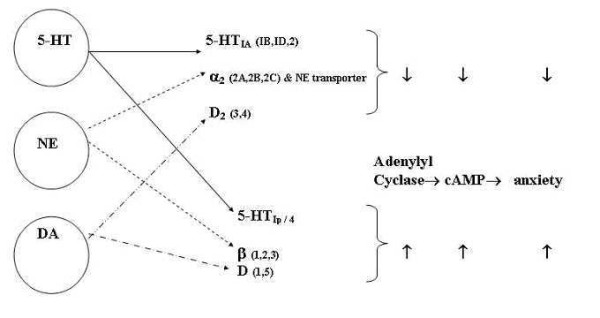
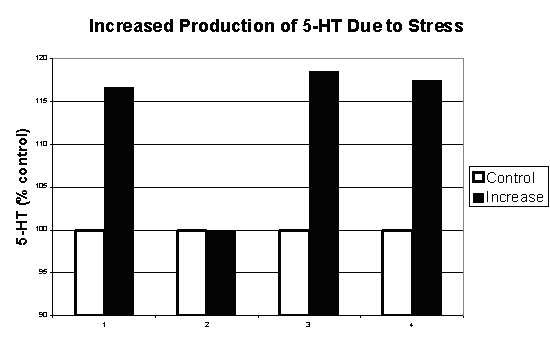
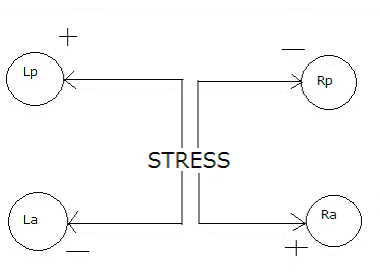
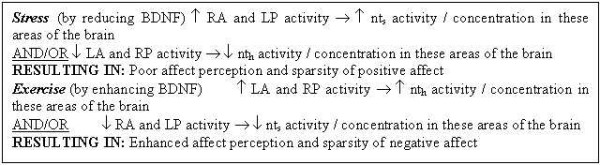
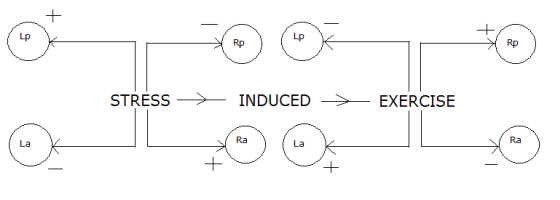
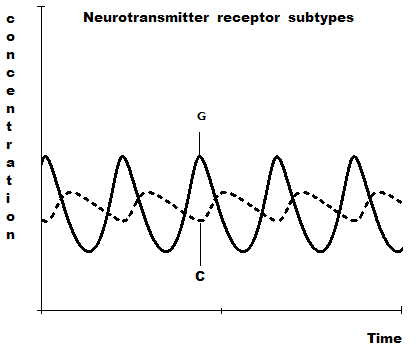
The general hypothesis presented here considers only the nonlinear aspects of the effects produced by "moderate" exercise and "chronic" stressors, but does not preclude the possibility of linear responses. In reality, both linear and nonlinear mechanisms may be involved in the final outcomes. The well-known neurotransmitters serotonin (5-HT), dopamine (D) and norepinephrine (NE) all have various receptor subtypes. The article hypothesizes that 'Stress' increases the activity/concentration of some particular subtypes of receptors (designated nts) for each of the known (and unknown) neurotransmitters in the right anterior (RA) and left posterior (LP) regions (cortical and subcortical) of the brain, and has the converse effects on a different set of receptor subtypes (designated nth). In contrast, 'Exercise' increases nth activity/concentration and/or reduces nts activity/concentration in the LA and RP areas of the brain. These effects may be initiated by the activation of Brain Derived Neurotrophic Factor (BDNF) (among others) in exercise and its suppression in stress.
On the basis of this hypothesis, a better understanding of brain neurodynamics might be achieved by considering the oscillations caused by single neurotransmitters acting on their different receptor subtypes, and the temporal pattern of recruitment of these subtypes. Further, appropriately designed and planned experiments will not only corroborate such theoretical models, but also shed more light on the underlying brain dynamics.
规律的“适度”体育锻炼是一种已确立的治疗抑郁症的非药物治疗方式。大脑偏侧化在抑郁症进展中具有重要作用。各种应激源或运动等外部刺激会影响大脑的高级功能(认知和情感)。这些影响通常不呈线性过程。因此,非线性动力学似乎最适合对许多可归因于此类外部影响的大脑现象及假定的全局通路进行建模。
此处提出的总体假设仅考虑“适度”运动和“慢性”应激源产生的影响的非线性方面,但不排除线性反应的可能性。实际上,线性和非线性机制可能都参与最终结果。众所周知的神经递质血清素(5 - HT)、多巴胺(D)和去甲肾上腺素(NE)都有多种受体亚型。本文假设“应激”会增加大脑右前(RA)和左后(LP)区域(皮质和皮质下)中每种已知(和未知)神经递质的某些特定受体亚型(称为nts)的活性/浓度,并对另一组不同的受体亚型(称为nth)产生相反影响。相比之下,“运动”会增加大脑左前(LA)和右后(RP)区域中nth的活性/浓度和/或降低nts的活性/浓度。这些影响可能由运动中脑源性神经营养因子(BDNF)(以及其他因素)的激活及其在应激中的抑制引发。
基于这一假设,通过考虑单个神经递质作用于其不同受体亚型所引起的振荡以及这些亚型募集随时间的模式,可能会更好地理解大脑神经动力学。此外,设计和规划得当的实验不仅会证实此类理论模型,还会更深入地揭示潜在的大脑动力学。