Duncan Jason E, Goldstein Lawrence S B
Howard Hughes Medical Institute, Department of Cellular and Molecular Medicine, School of Medicine, University of California San Diego, La Jolla, California, United States of America.
PLoS Genet. 2006 Sep 29;2(9):e124. doi: 10.1371/journal.pgen.0020124.
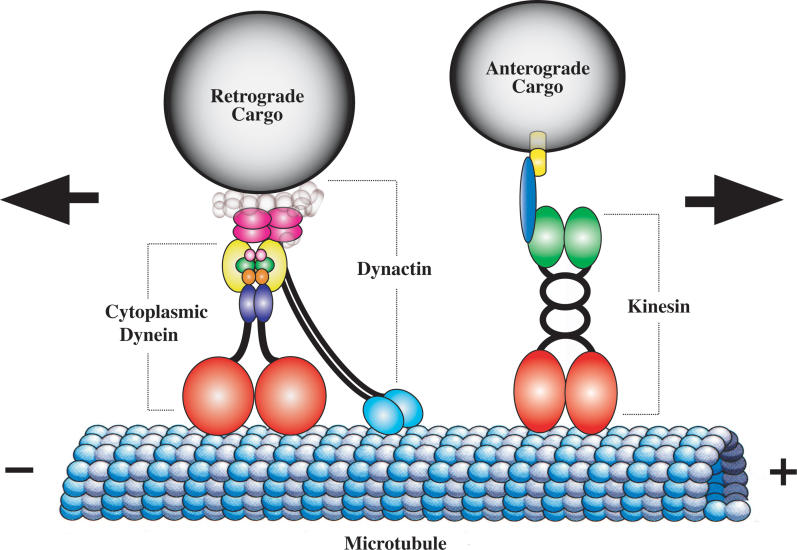
Neurons are specialized cells with a complex architecture that includes elaborate dendritic branches and a long, narrow axon that extends from the cell body to the synaptic terminal. The organized transport of essential biological materials throughout the neuron is required to support its growth, function, and viability. In this review, we focus on insights that have emerged from the genetic analysis of long-distance axonal transport between the cell body and the synaptic terminal. We also discuss recent genetic evidence that supports the hypothesis that disruptions in axonal transport may cause or dramatically contribute to neurodegenerative diseases.
神经元是具有复杂结构的特化细胞,其结构包括精细的树突分支以及从细胞体延伸至突触末端的细长轴突。为了支持神经元的生长、功能和生存能力,需要在整个神经元中对重要生物物质进行有组织的运输。在本综述中,我们聚焦于从对细胞体与突触末端之间长距离轴突运输的遗传分析中所获得的见解。我们还讨论了最近的遗传证据,这些证据支持轴突运输中断可能导致神经退行性疾病或对其产生重大影响这一假说。