Fukuda Isao, Kojoh Kanehisa, Tabata Noriko, Doi Nobuhide, Takashima Hideaki, Miyamoto-Sato Etsuko, Yanagawa Hiroshi
Department of Biosciences and Informatics, Keio University, 3-14-1 Hiyoshi, Kohoku-ku, Yokohama 223-8522, Japan.
Nucleic Acids Res. 2006;34(19):e127. doi: 10.1093/nar/gkl618. Epub 2006 Sep 29.
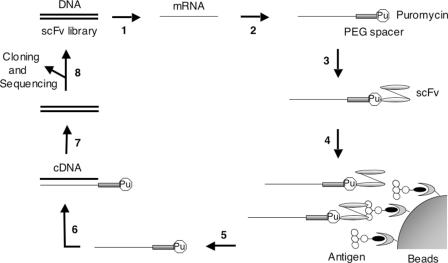
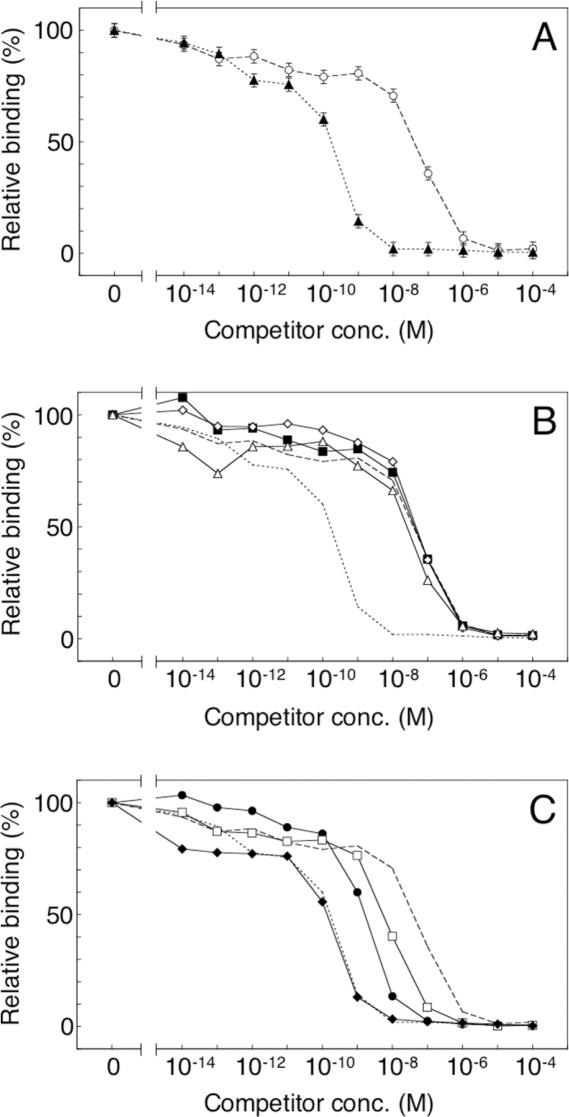
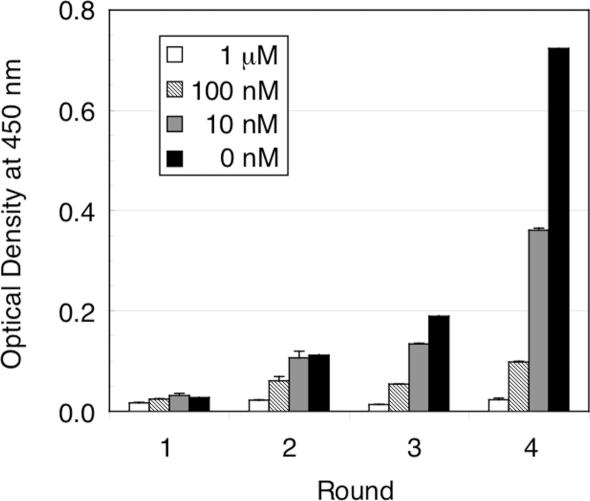
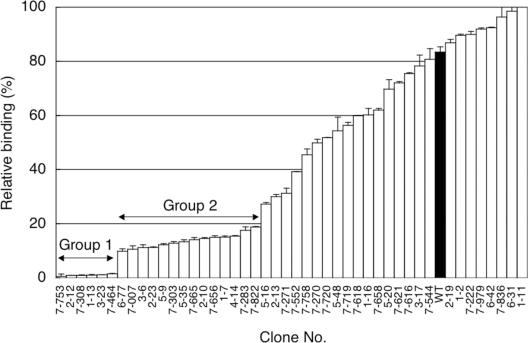
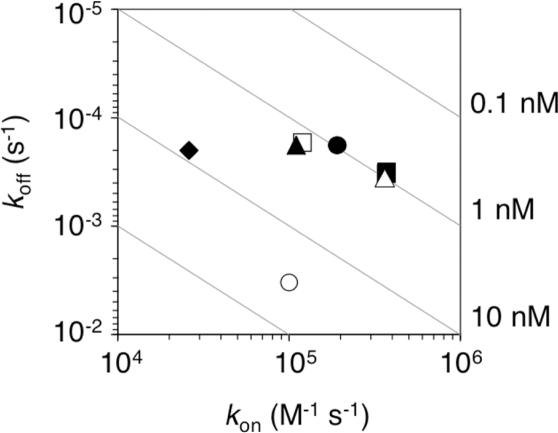
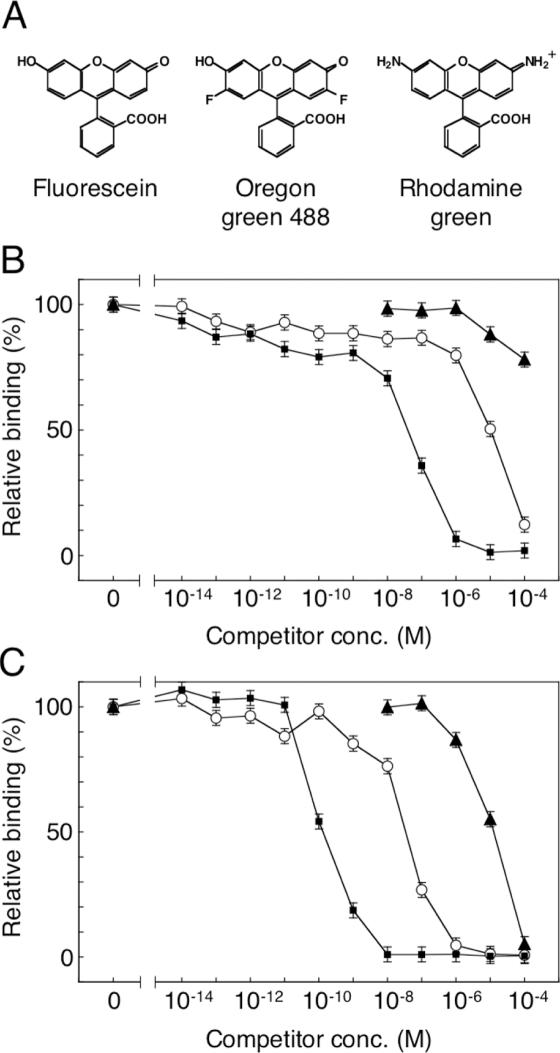
Here we describe the application of the in vitro virus mRNA display method, which involves covalent linkage of an in vitro-synthesized antibody (phenotype) to its encoding mRNA (genotype) through puromycin, for in vitro evolution of single-chain Fv (scFv) antibody fragments. To establish the validity of this approach to directed antibody evolution, we used random mutagenesis by error-prone DNA shuffling and off-rate selection to improve the affinity of an anti-fluorescein scFv as a model system. After four rounds of selection of the library of mRNA-displayed scFv mutants, we obtained six different sequences encoding affinity-matured mutants with five consensus mutations. Kinetic analysis of the mutant scFvs revealed that the off-rates have been decreased by more than one order of magnitude and the dissociation constants were improved approximately 30-fold. The antigen-specificity was not improved by affinity maturation, but remained similar to that of the wild type. Although the five consensus mutations of the high-affinity mutants were scattered over the scFv sequence, analysis by site-directed mutagenesis demonstrated that the critical mutations for improving affinity were the two that lay within the complementarity determining regions (CDRs). Thus, mRNA display is expected to be useful for rapid artificial evolution of high-affinity diagnostic and therapeutic antibodies by optimizing their CDRs.
在此,我们描述了体外病毒mRNA展示方法的应用,该方法涉及通过嘌呤霉素将体外合成的抗体(表型)与其编码mRNA(基因型)共价连接,用于单链Fv(scFv)抗体片段的体外进化。为了验证这种定向抗体进化方法的有效性,我们以易错DNA改组随机诱变和解离速率筛选为手段,来提高抗荧光素scFv的亲和力,以此作为一个模型系统。对mRNA展示的scFv突变体文库进行四轮筛选后,我们获得了六个不同的序列,这些序列编码具有五个共有突变的亲和力成熟突变体。对突变体scFv的动力学分析表明,解离速率降低了一个多数量级以上,解离常数提高了约30倍。亲和力成熟并未提高抗原特异性,其仍与野生型相似。尽管高亲和力突变体的五个共有突变分散在scFv序列中,但定点诱变分析表明,提高亲和力的关键突变是位于互补决定区(CDR)内的两个突变。因此,通过优化CDR,mRNA展示有望用于高亲和力诊断和治疗性抗体的快速人工进化。