Schlamp Cassandra L, Li Yan, Dietz Joel A, Janssen Katherine T, Nickells Robert W
Department of Ophthalmology and Visual Sciences, University of Wisconsin, Madison, WI, USA.
BMC Neurosci. 2006 Oct 3;7:66. doi: 10.1186/1471-2202-7-66.
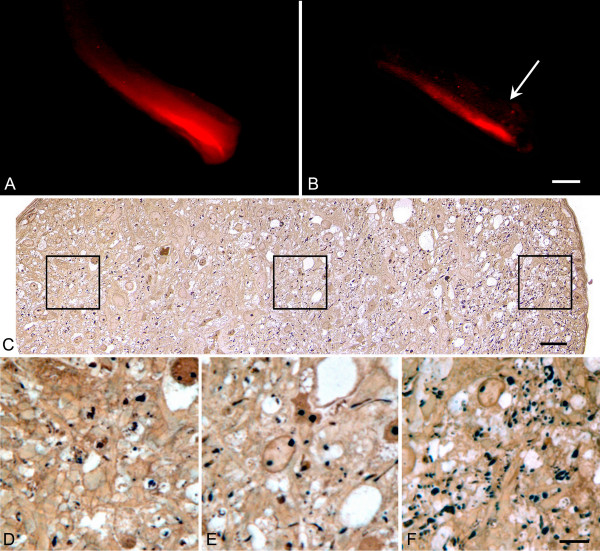
Glaucoma is a chronic neurodegenerative disease of the retina, characterized by the degeneration of axons in the optic nerve and retinal ganglion cell apoptosis. DBA/2J inbred mice develop chronic hereditary glaucoma and are an important model system to study the molecular mechanisms underlying this disease and novel therapeutic interventions designed to attenuate the loss of retinal ganglion cells. Although the genetics of this disease in these mice are well characterized, the etiology of its progression, particularly with respect to retinal degeneration, is not. We have used two separate labeling techniques, post-mortem DiI labeling of axons and ganglion cell-specific expression of the betaGeo reporter gene, to evaluate the time course of optic nerve degeneration and ganglion cell loss, respectively, in aging mice.
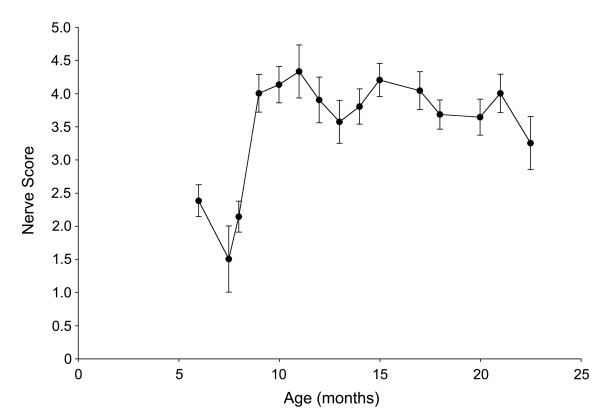
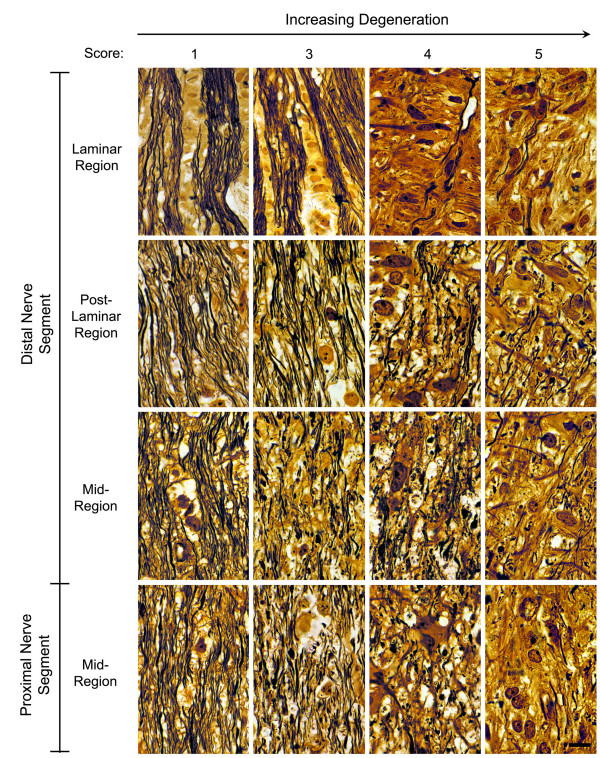
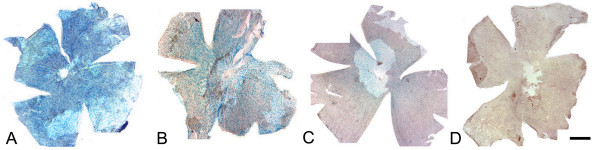
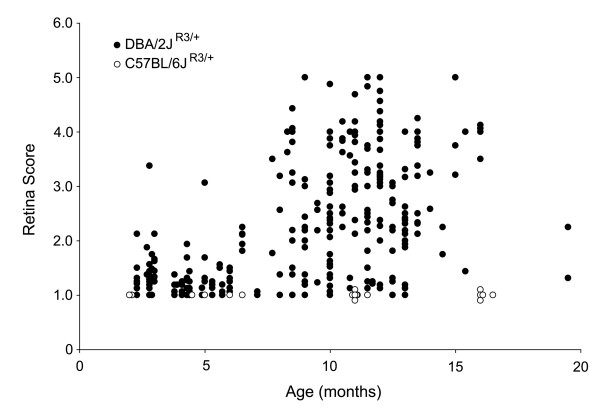
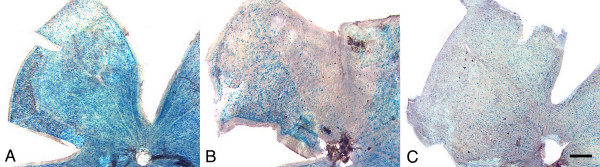
Optic nerve degeneration, characterized by axon loss and gliosis is first apparent in mice between 8 and 9 months of age. Degeneration appears to follow a retrograde course with axons dying from their proximal ends toward the globe. Although nerve damage is typically bilateral, the progression of disease is asymmetric between the eyes of individual mice. Some nerves also exhibit focal preservation of tracts of axons generally in the nasal peripheral region. Ganglion cell loss, as a function of the loss of betaGeo expression, is evident in some mice between 8 and 10 months of age and is prevalent in the majority of mice older than 10.5 months. Most eyes display a uniform loss of ganglion cells throughout the retina, but many younger mice exhibit focal loss of cells in sectors extending from the optic nerve head to the retinal periphery. Similar to what we observe in the optic nerves, ganglion cell loss is often asymmetric between the eyes of the same animal.
A comparison of the data collected from the two cohorts of mice used for this study suggests that the initial site of damage in this disease is to the axons in the optic nerve, followed by the subsequent death of the ganglion cell soma.
青光眼是一种视网膜慢性神经退行性疾病,其特征为视神经轴突退变和视网膜神经节细胞凋亡。DBA/2J近交系小鼠会发生慢性遗传性青光眼,是研究该疾病潜在分子机制以及旨在减轻视网膜神经节细胞损失的新型治疗干预措施的重要模型系统。尽管这些小鼠中该疾病的遗传学特征已得到充分表征,但其进展的病因,尤其是与视网膜退变相关的病因,尚不明确。我们使用了两种不同的标记技术,即轴突的死后DiI标记和βGeo报告基因的神经节细胞特异性表达,分别评估衰老小鼠视神经退变和神经节细胞损失的时间进程。
以轴突损失和胶质增生为特征的视神经退变在8至9月龄小鼠中首次明显出现。退变似乎呈逆行过程,轴突从其近端向眼球方向死亡。尽管神经损伤通常是双侧的,但个体小鼠双眼之间疾病的进展是不对称的。一些神经在鼻周外周区域通常也表现出轴突束的局灶性保留。作为βGeo表达损失的函数,神经节细胞损失在8至10月龄的一些小鼠中明显,在大多数10.5月龄以上的小鼠中普遍存在。大多数眼睛在整个视网膜中显示神经节细胞均匀损失,但许多较年轻的小鼠在从视神经乳头延伸至视网膜周边的扇形区域中表现出细胞的局灶性损失。与我们在视神经中观察到的情况类似,同一动物双眼之间的神经节细胞损失通常也是不对称的。
对本研究中使用的两组小鼠收集的数据进行比较表明,该疾病的初始损伤部位是视神经中的轴突,随后是神经节细胞胞体的死亡。