Lee Ken W, Everett Thomas H, Rahmutula Dulkon, Guerra Jose M, Wilson Emily, Ding Chunhua, Olgin Jeffrey E
Cardiac Electrophysiology and Cardiovascular Research Institute, University of California, San Francisco, San Francisco, CA, USA.
Circulation. 2006 Oct 17;114(16):1703-12. doi: 10.1161/CIRCULATIONAHA.106.624320. Epub 2006 Oct 9.
Atrial fibrosis is an important substrate in atrial fibrillation (AF), particularly in the setting of structural heart disease. In a canine model, congestive heart failure (CHF) produces significant atrial fibrosis and the substrate for sustained AF. This atrial remodeling is a potential therapeutic target. The objective of the present study is to evaluate the effects of the antifibrotic drug pirfenidone (PFD) on arrhythmogenic atrial remodeling in a canine CHF model.
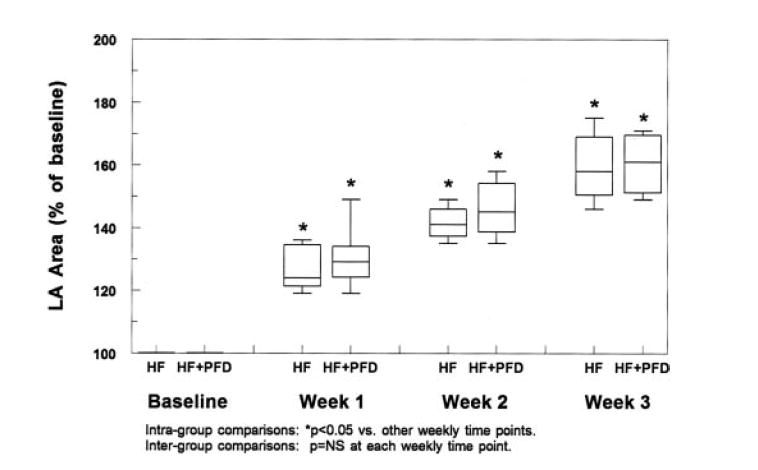
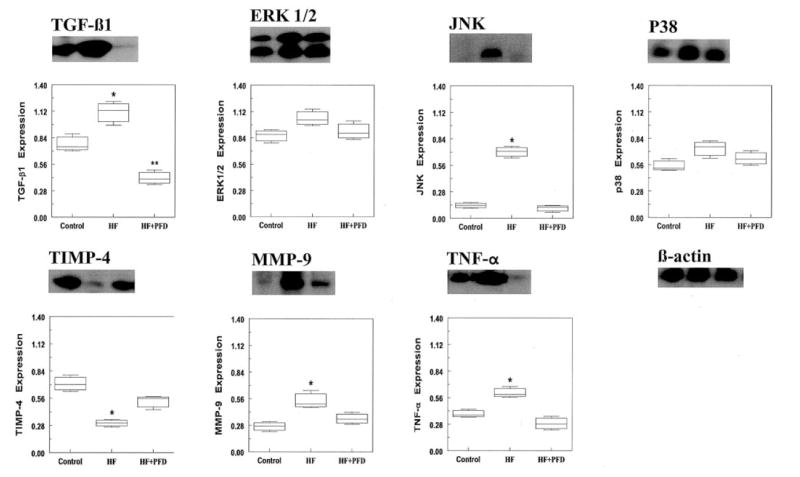
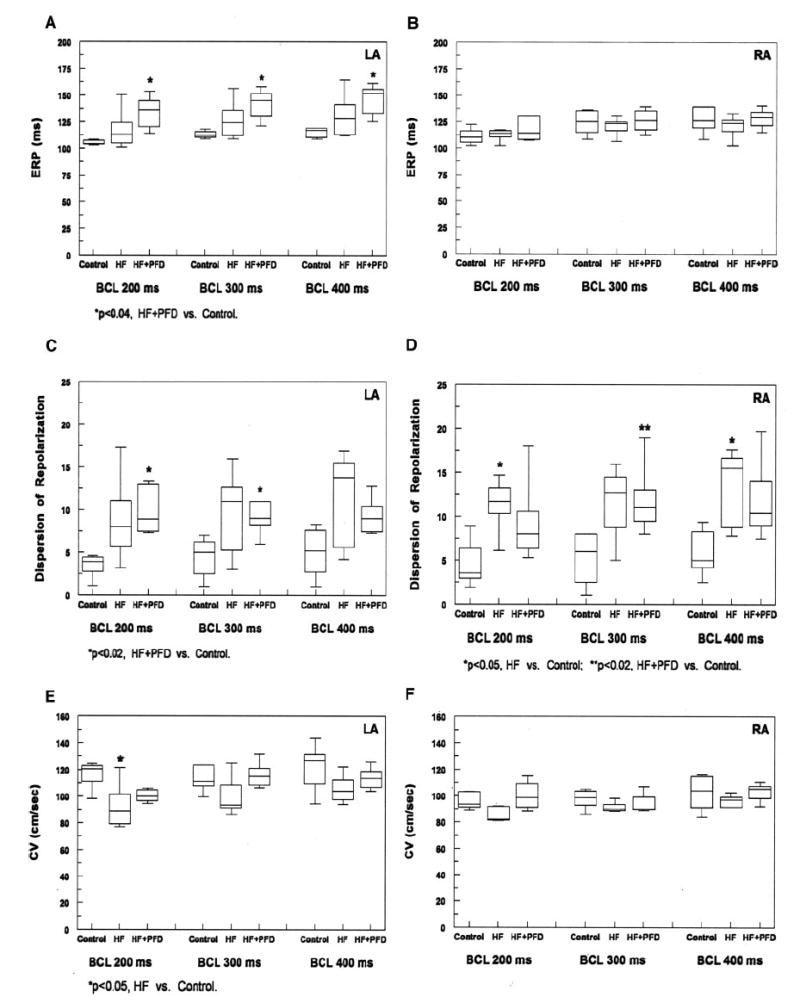
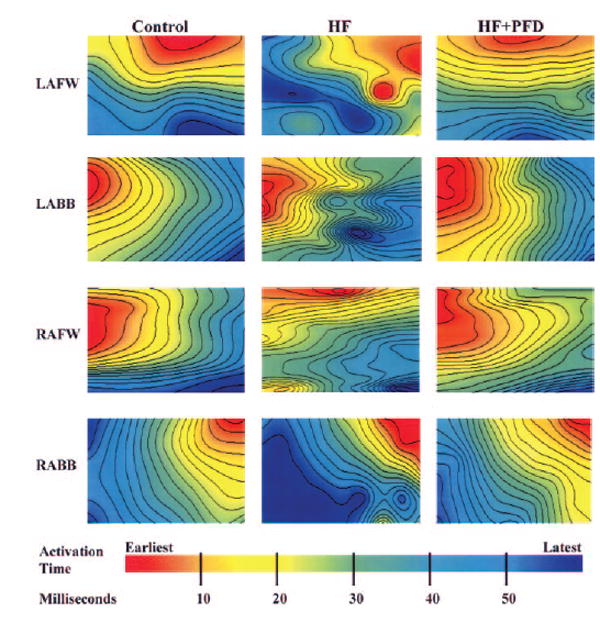
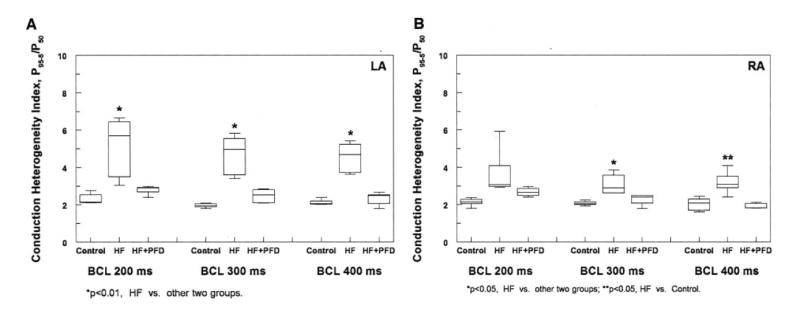
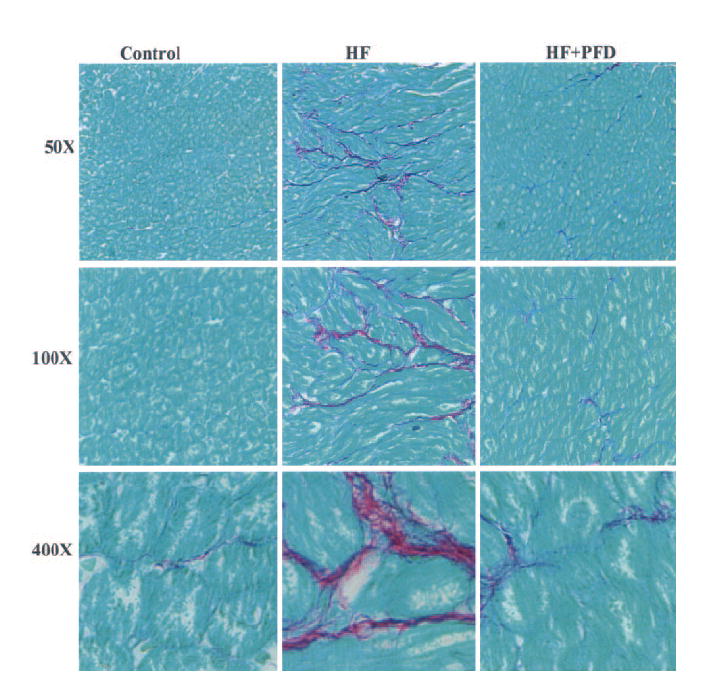
We studied 15 canines, divided equally into 3 groups: control, CHF canines not treated with PFD, and CHF canines treated with PFD. CHF was induced by ventricular tachypacing (220 bpm for 3 weeks), and oral PFD was administered for the 3-week pacing period. We performed electrophysiology and AF vulnerability studies, atrial fibrosis measurements, and atrial cytokine expression studies. Only canines in the untreated CHF group developed sustained AF (>30 minutes, 4 of 5 canines; P<0.05). Treatment of CHF canines with PFD resulted in an attenuation of arrhythmogenic left atrial remodeling, with a significant reduction in left atrial conduction heterogeneity index (median [25% to 75% interquartile range] 4.96 [3.53 to 5.64] versus 2.52 [2.11 to 2.82], P<0.01; pacing cycle length 300 ms), left atrial fibrosis (16.0% [13.0% to 17.5%] versus 8.7% [5.7% to 10.6%], P<0.01), and AF duration (1800 [1020 to 1800] seconds versus 6 [5 to 22] seconds, P<0.01). Immunoblotting studies demonstrated the drug's effects on multiple cytokines, including a reduction in transforming growth factor-beta1 expression.
Treatment of CHF canines with PFD results in significantly reduced arrhythmogenic atrial remodeling and AF vulnerability. Pharmacological therapy targeted at the fibrotic substrate itself may play an important role in the management of AF.
心房纤维化是心房颤动(AF)的重要病理基础,尤其是在结构性心脏病的情况下。在犬类模型中,充血性心力衰竭(CHF)会导致显著的心房纤维化以及持续性房颤的病理基础。这种心房重构是一个潜在的治疗靶点。本研究的目的是评估抗纤维化药物吡非尼酮(PFD)对犬类CHF模型中致心律失常性心房重构的影响。
我们研究了15只犬,平均分为3组:对照组、未接受PFD治疗的CHF犬以及接受PFD治疗的CHF犬。通过心室快速起搏(220次/分钟,持续3周)诱导CHF,并在3周的起搏期内口服PFD。我们进行了电生理和房颤易感性研究、心房纤维化测量以及心房细胞因子表达研究。只有未治疗的CHF组犬发生了持续性房颤(>30分钟,5只犬中有4只;P<0.05)。用PFD治疗CHF犬可减轻致心律失常性左心房重构,左心房传导异质性指数显著降低(中位数[四分位数间距25%至75%]4.96[3.53至5.64]对2.52[2.11至2.82],P<0.01;起搏周期长度300毫秒),左心房纤维化(16.0%[13.0%至17.5%]对8.7%[5.7%至10.6%],P<0.01),以及房颤持续时间(1800[1020至1800]秒对6[5至22]秒,P<0.01)。免疫印迹研究证明了该药物对多种细胞因子的作用,包括转化生长因子-β1表达的降低。
用PFD治疗CHF犬可显著降低致心律失常性心房重构和房颤易感性。针对纤维化病理基础本身的药物治疗可能在房颤的管理中发挥重要作用。