Koda Masahiko, Bauer Michael, Krebs Anja, Hahn Eckhart G, Schuppan Detlef, Murawaki Yoshikazu
First Department of Medicine, University of Erlangen-Nuernberg, Erlangen, Germany.
Comp Hepatol. 2006 Oct 24;5:5. doi: 10.1186/1476-5926-5-5.
In liver injury, the pool of hepatic stellate cell (HSC) increases and produces extracellular matrix proteins, decreasing during the resolution of fibrosis. The profibrogenic role of endothelin-1 (ET-1) in liver fibrosis remains disputed. We therefore studied the effect of ET-1 on proliferation, apoptosis and profibrogenic gene expression of HSCs.
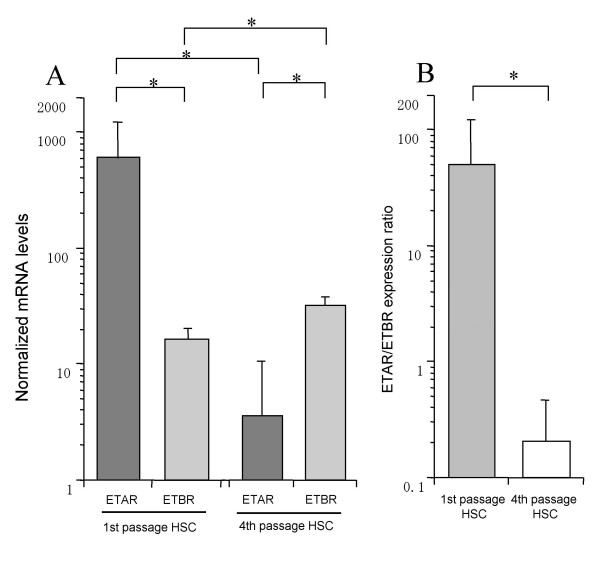
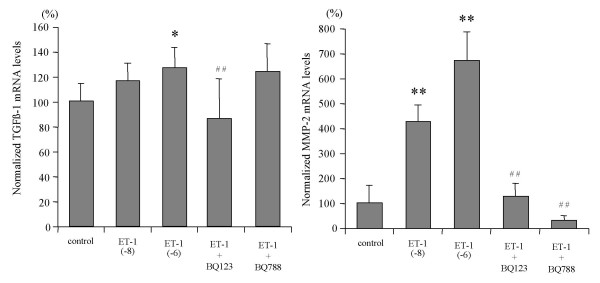
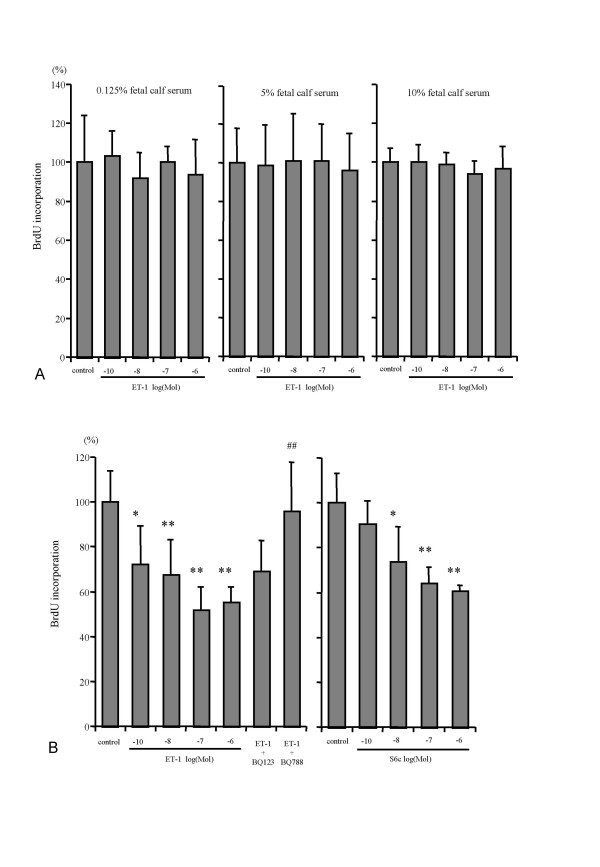
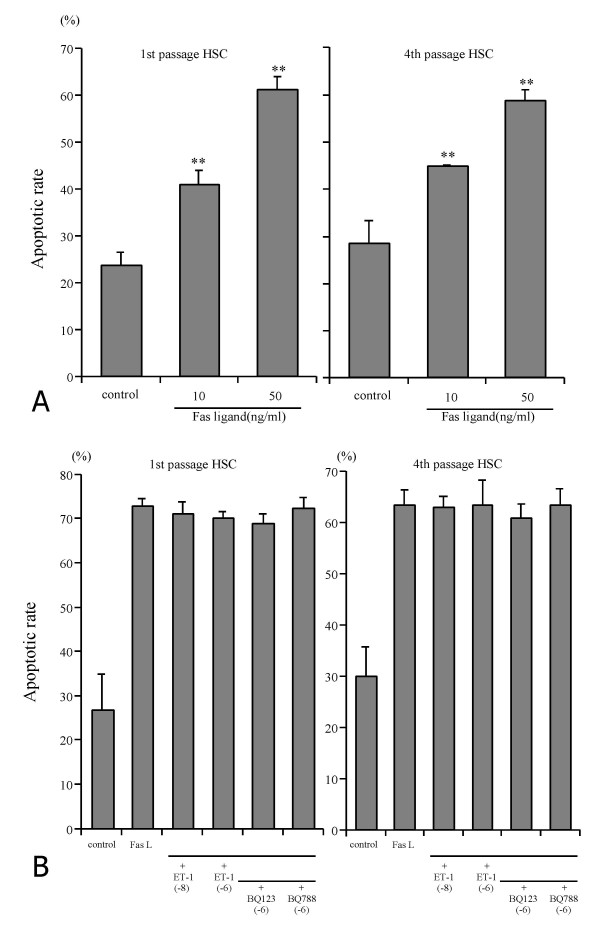
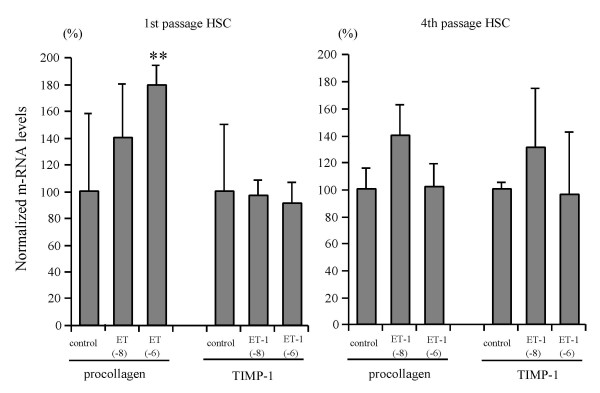
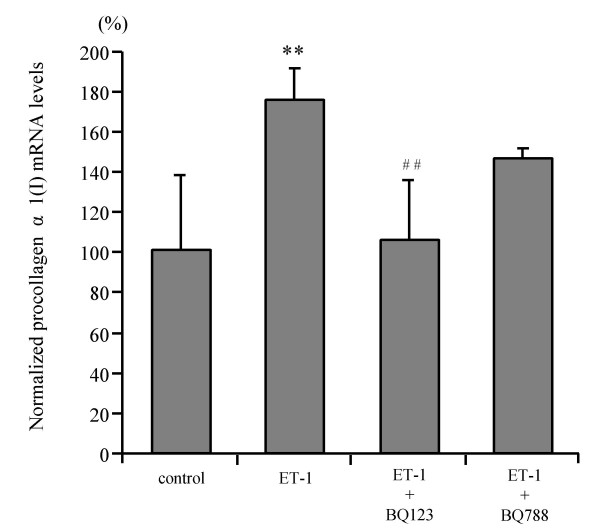
First passage HSC predominantly expressed endothelin A receptor (ETAR) mRNA and 4th passage HSC predominantly expressed the endothelin B receptor (ETBR) mRNA. ET-1 had no effect on DNA synthesis in 1st passage HSC, but reduced DNA synthesis in 4th passage HSC by more than 50%. Inhibition of proliferation by endothelin-1 was abrogated by ETBR specific antagonist BQ788, indicating a prominent role of ETBR in growth inhibition. ET-1 did not prevent apoptosis induced by serum deprivation or Fas ligand in 1st or 4th passage HSC. However, ET-1 increased procollagen alpha1(I), transforming growth factor beta-1 and matrix metalloproteinase (MMP)-2 mRNA transcripts in a concentration-dependent manner in 1st, but not in 4th passage HSC. Profibrogenic gene expression was abrogated by ETAR antagonist BQ123. Both BQ123 and BQ788 attenuated the increase of MMP-2 expression by ET-1.
We show that ET-1 stimulates fibrogenic gene expression for 1st passage HSC and it inhibits HSC proliferation for 4th passage HSC. These data indicate the profibrogenic and antifibrogenic action of ET-1 for HSC are involved in the process of liver fibrosis.
在肝损伤时,肝星状细胞(HSC)数量增多并产生细胞外基质蛋白,在纤维化消退过程中数量减少。内皮素-1(ET-1)在肝纤维化中的促纤维化作用仍存在争议。因此,我们研究了ET-1对HSC增殖、凋亡及促纤维化基因表达的影响。
原代培养的HSC主要表达内皮素A受体(ETAR)mRNA,第4代培养的HSC主要表达内皮素B受体(ETBR)mRNA。ET-1对原代培养的HSC的DNA合成无影响,但使第4代培养的HSC的DNA合成减少超过50%。ETBR特异性拮抗剂BQ788可消除内皮素-1对增殖的抑制作用,表明ETBR在生长抑制中起重要作用。ET-1不能阻止血清剥夺或Fas配体诱导的原代或第4代培养的HSC凋亡。然而,ET-1在原代培养的HSC中以浓度依赖的方式增加I型前胶原α1、转化生长因子β-1和基质金属蛋白酶(MMP)-2 mRNA转录本,但在第4代培养的HSC中无此作用。ETAR拮抗剂BQ123可消除促纤维化基因表达。BQ123和BQ788均减弱了ET-1对MMP-2表达的增加作用。
我们发现ET-1刺激原代培养的HSC的纤维化基因表达,并抑制第4代培养的HSC的增殖。这些数据表明ET-1对HSC的促纤维化和抗纤维化作用参与了肝纤维化过程。