Wang Chun Ming, Lo Loong Chueng, Zhu Ze Yuan, Yue Gen Hua
Molecular Population Genetics Group, Temasek Life Sciences Laboratory, 1 Research Link, National University of Singapore, 117604, Singapore.
BMC Genomics. 2006 Oct 26;7:274. doi: 10.1186/1471-2164-7-274.
Body weight and length are economically important traits in foodfish species influenced by quantitative trait loci (QTL) and environmental factors. It is usually difficult to dissect the genetic and environmental effects. Asian seabass (Lates calcarifer) is an important marine foodfish species with a compact genome (approximately 700 Mb). The recent construction of a first generation linkage map of Asian seabass with 240 microsatellites provides a good opportunity to determine the number and position of QTL, and the magnitude of QTL effects with a genome scan.
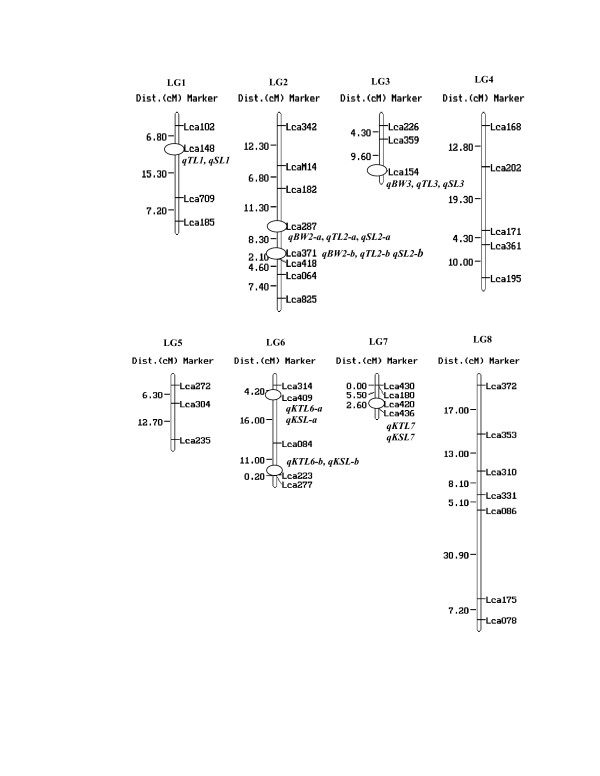
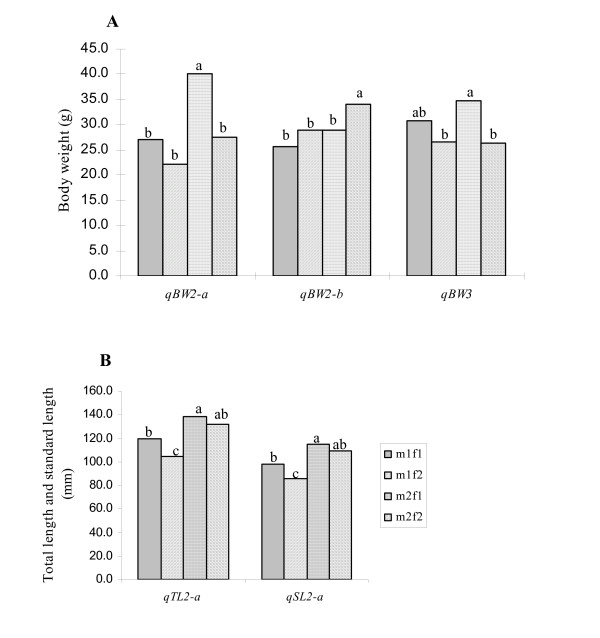
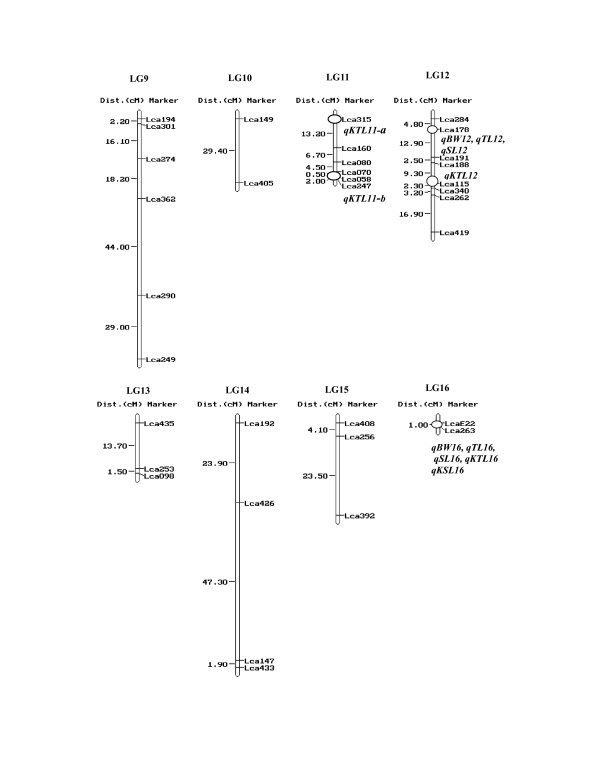
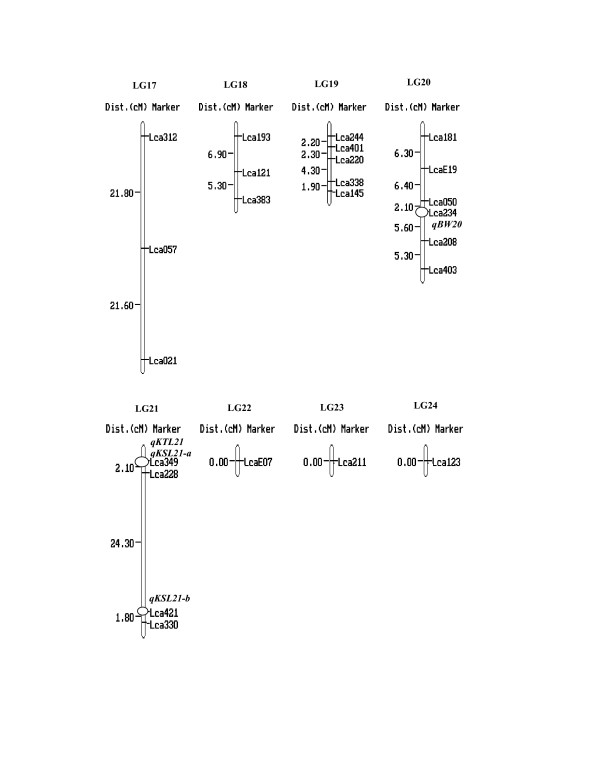
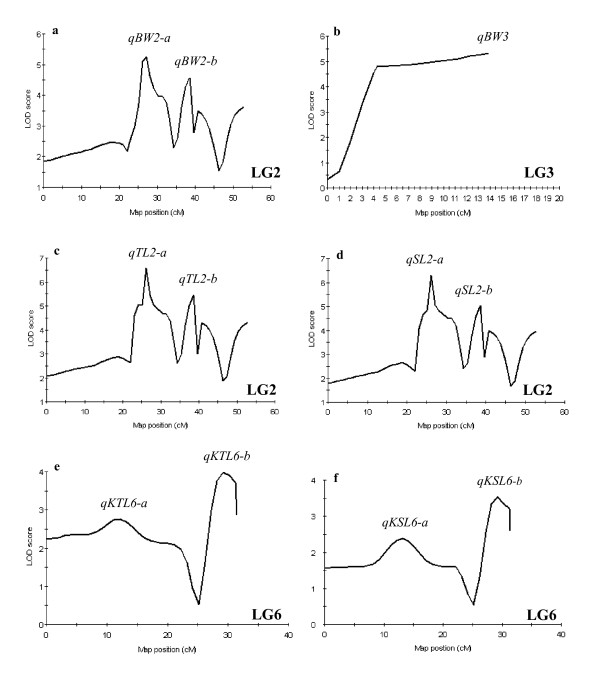
We conducted a genome scan for QTL affecting body weight, standard length and condition factors in an F1 family containing 380 full-sib individuals from a breeding stock by using 97 microsatellites evenly covering 24 chromosomes. Interval mapping and multiple QTL model mapping detected five significant and 27 suggestive QTL on ten linkage groups (LGs). Among the five significant QTL detected, three (qBW2-a, qTL2-a and qSL2-a) controlling body weight, total and standard length respectively, were mapped on the same region near Lca287 on LG2, and explained 28.8, 58.9 and 59.7% of the phenotypic variance. The other two QTL affecting body weight, qBW2-b and qBW3, were located on LG2 and 3, and accounted for 6.4 and 8.8% of the phenotypic variance. Suggestive QTL associated with condition factors are located on six different LGs.
This study presents the first example of QTL detection for growth-related traits in an F1 family of a marine foodfish species. The results presented here will enable further fine-mapping of these QTL for marker-assisted selection of the Asian seabass, eventually identifying individual genes responsible for growth-related traits.
体重和体长是食用鱼类中受数量性状基因座(QTL)和环境因素影响的重要经济性状。通常很难剖析遗传和环境效应。尖吻鲈(Lates calcarifer)是一种重要的海洋食用鱼类,其基因组紧凑(约700 Mb)。最近构建的包含240个微卫星的尖吻鲈第一代连锁图谱为通过基因组扫描确定QTL的数量和位置以及QTL效应的大小提供了良好机会。
我们使用均匀覆盖24条染色体的97个微卫星,对一个由育种群体中380个全同胞个体组成的F1家系中影响体重、标准体长和体况因子的QTL进行了基因组扫描。区间作图和多QTL模型作图在十个连锁群(LG)上检测到五个显著QTL和27个暗示性QTL。在检测到的五个显著QTL中,三个(qBW2 - a、qTL2 - a和qSL2 - a)分别控制体重、全长和标准体长,位于LG2上靠近Lca287的同一区域,解释了表型变异的28.8%、58.9%和59.7%。另外两个影响体重的QTL,qBW2 - b和qBW3,位于LG2和LG3上,分别占表型变异的6.4%和8.8%。与体况因子相关的暗示性QTL位于六个不同的LG上。
本研究展示了在海洋食用鱼类的F1家系中对生长相关性状进行QTL检测的首个实例。这里呈现的结果将有助于对这些QTL进行进一步精细定位,以用于尖吻鲈的标记辅助选择,最终鉴定出负责生长相关性状的单个基因。