Brabletz T, Pietrowski I, Serfling E
Institut für Virologie und Immunbiologie, Universität Würzburg, FRG.
Nucleic Acids Res. 1991 Jan 11;19(1):61-7. doi: 10.1093/nar/19.1.61.
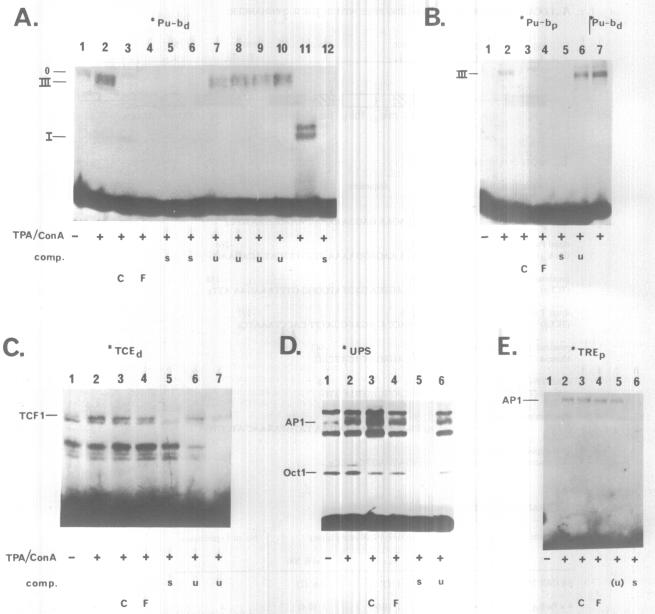
Like Cyclosporin A (CsA), the macrolide FK 506 is a potent immunosuppressive that inhibits early steps of T cell activation, including the synthesis of Interleukin 2 (II-2) and numerous other lymphokines. The block of II-2 synthesis occurs at the transcriptional level. At concentrations that block T cell activation, FK 506 and CsA inhibit the proto-enhancer activity of Purine boxes of the II-2 promoter and the generation of lymphocyte-specific factors binding to the Purine boxes. Under the same conditions, the DNA binding of other II-2 enhancer factors remains unaffected by both compounds. These results support the view that FK 506 and CsA, which both inhibit the activity of peptidylprolyl cis/trans isomerases, suppress T cell activation by a similar, if not identical mechanism.
与环孢素A(CsA)一样,大环内酯类药物FK 506是一种强效免疫抑制剂,可抑制T细胞活化的早期步骤,包括白细胞介素2(IL-2)和许多其他淋巴因子的合成。IL-2合成的阻断发生在转录水平。在阻断T细胞活化的浓度下,FK 506和CsA抑制IL-2启动子嘌呤盒的原增强子活性以及与嘌呤盒结合的淋巴细胞特异性因子的产生。在相同条件下,其他IL-2增强子因子的DNA结合不受这两种化合物的影响。这些结果支持这样的观点,即FK 506和CsA都抑制肽基脯氨酰顺/反异构酶的活性,它们通过相似(如果不是相同)的机制抑制T细胞活化。