English Christine M, Adkins Melissa W, Carson Joshua J, Churchill Mair E A, Tyler Jessica K
Department of Biochemistry and Molecular Genetics, School of Medicine, University of Colorado, Aurora, CO 80045, USA.
Cell. 2006 Nov 3;127(3):495-508. doi: 10.1016/j.cell.2006.08.047.
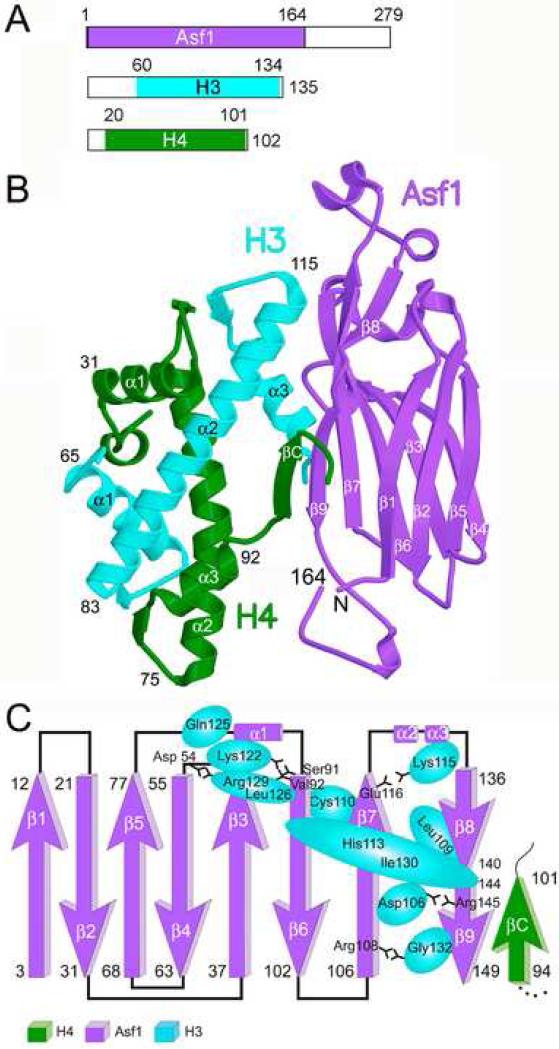
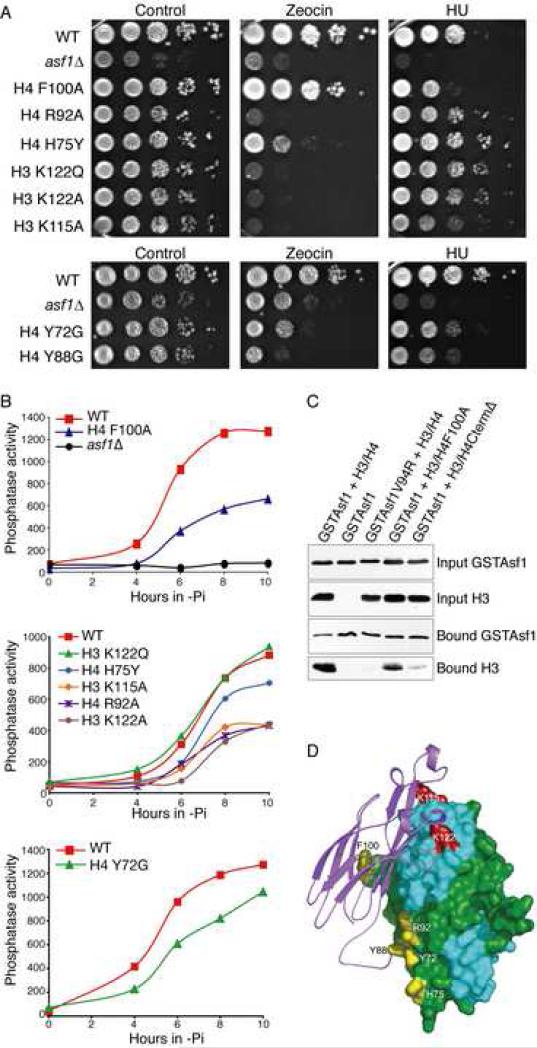
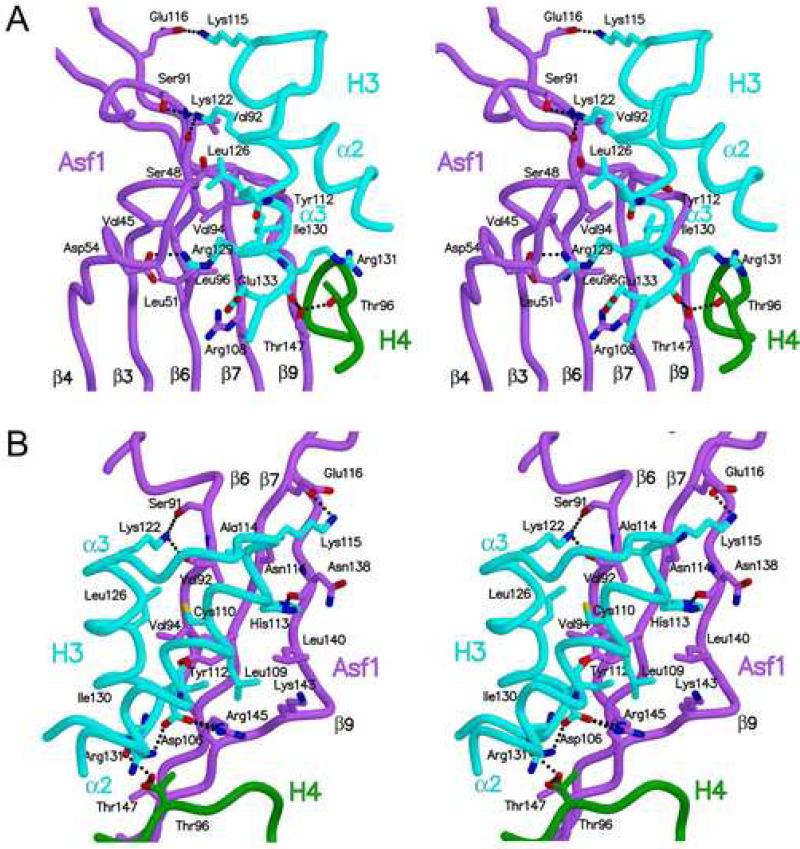
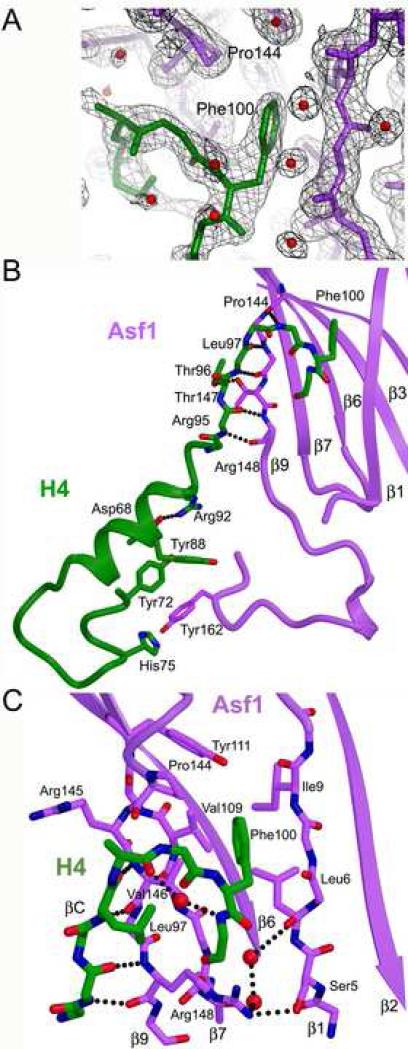
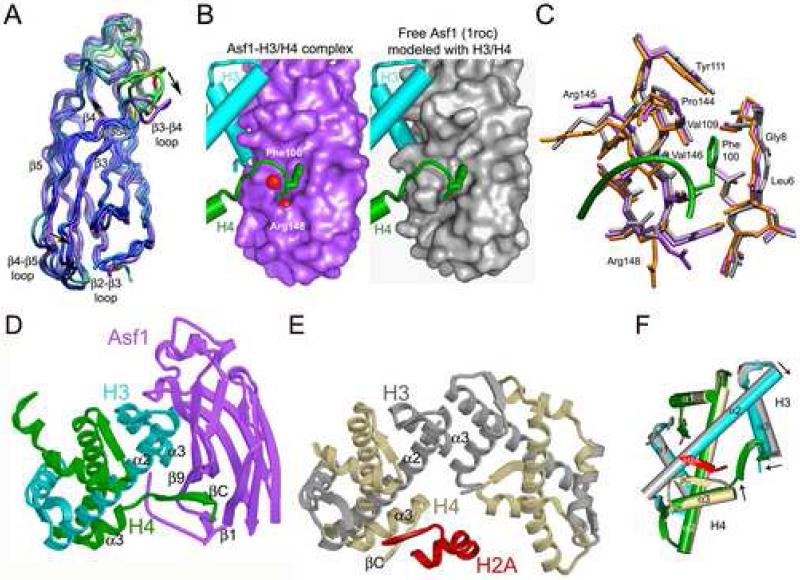
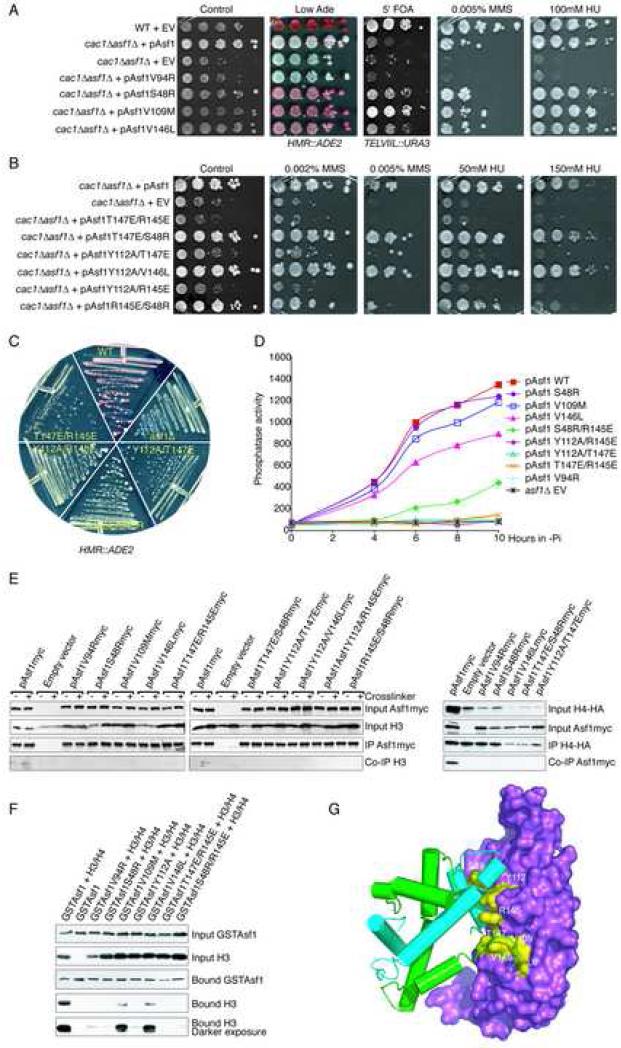
Anti-silencing function 1 (Asf1) is a highly conserved chaperone of histones H3/H4 that assembles or disassembles chromatin during transcription, replication, and repair. The structure of the globular domain of Asf1 bound to H3/H4 determined by X-ray crystallography to a resolution of 1.7 Angstroms shows how Asf1 binds the H3/H4 heterodimer, enveloping the C terminus of histone H3 and physically blocking formation of the H3/H4 heterotetramer. Unexpectedly, the C terminus of histone H4 that forms a mini-beta sheet with histone H2A in the nucleosome undergoes a major conformational change upon binding to Asf1 and adds a beta strand to the Asf1 beta sheet sandwich. Interactions with both H3 and H4 were required for Asf1 histone chaperone function in vivo and in vitro. The Asf1-H3/H4 structure suggests a "strand-capture" mechanism whereby the H4 tail acts as a lever to facilitate chromatin disassembly/assembly that may be used ubiquitously by histone chaperones.
抗沉默功能1(Asf1)是组蛋白H3/H4的一种高度保守的伴侣蛋白,在转录、复制和修复过程中组装或拆卸染色质。通过X射线晶体学确定的与H3/H4结合的Asf1球状结构域的结构,分辨率为1.7埃,显示了Asf1如何结合H3/H4异二聚体,包裹组蛋白H3的C末端并物理阻断H3/H4异四聚体的形成。出乎意料的是,在核小体中与组蛋白H2A形成一个小β折叠的组蛋白H4的C末端,在与Asf1结合后发生了重大的构象变化,并在Asf1β折叠三明治中增加了一条β链。在体内和体外,Asf1组蛋白伴侣功能都需要与H3和H4相互作用。Asf1-H3/H4结构提示了一种“链捕获”机制,即H4尾巴作为一个杠杆促进染色质的拆卸/组装,这可能是组蛋白伴侣普遍使用的机制。