Horowitz Jeffrey C, Rogers David S, Sharma Vishal, Vittal Ragini, White Eric S, Cui Zongbin, Thannickal Victor J
Division of Pulmonary and Critical Care Medicine, Department of Internal Medicine, University of Michigan Medical Center, 6301 MSRB III, Ann Arbor, MI 48109, USA.
Cell Signal. 2007 Apr;19(4):761-71. doi: 10.1016/j.cellsig.2006.10.001. Epub 2006 Nov 17.
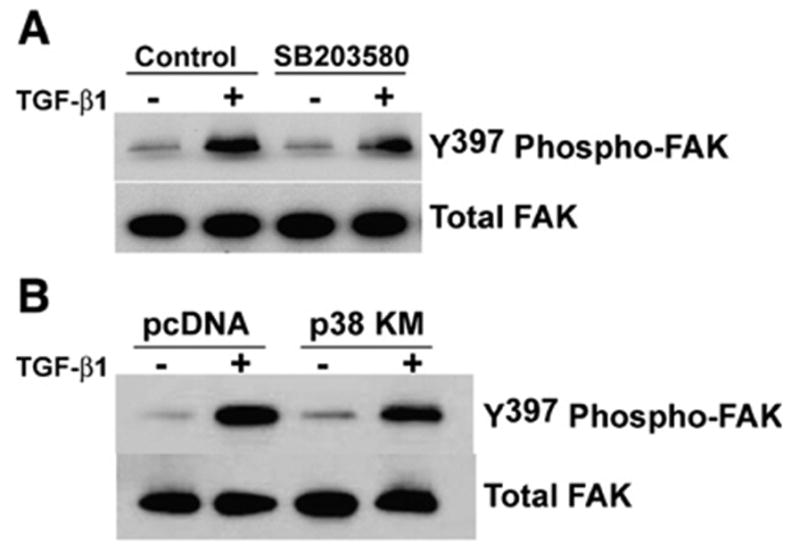
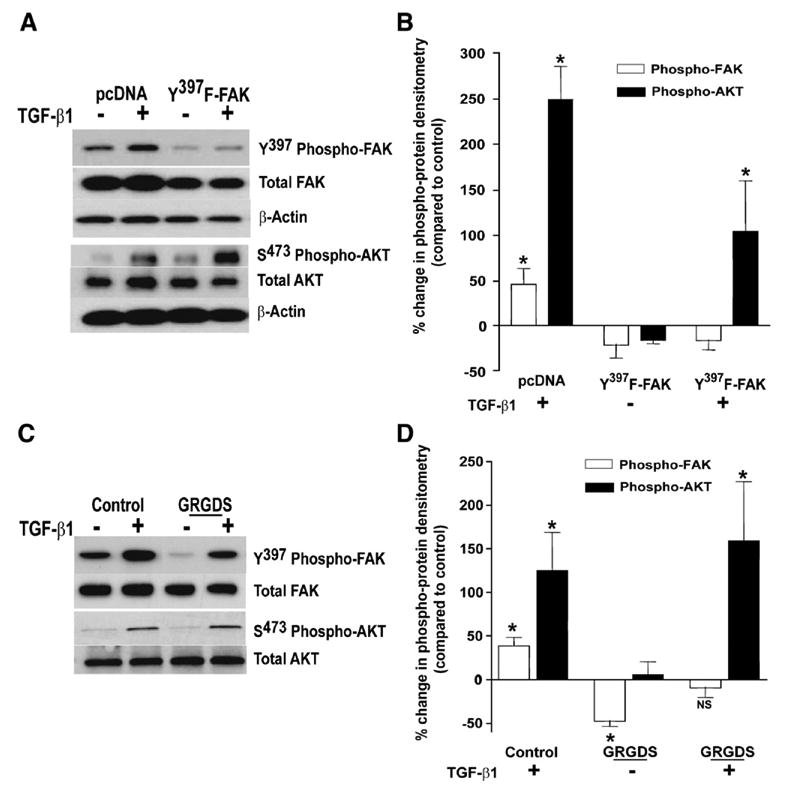
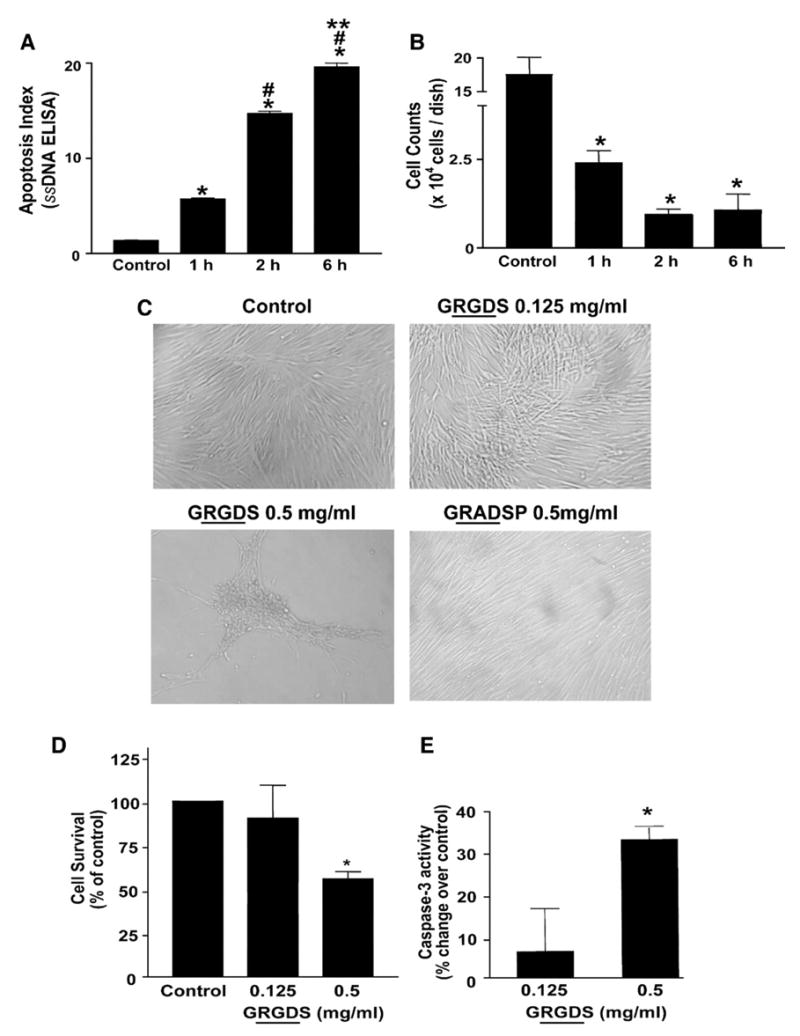
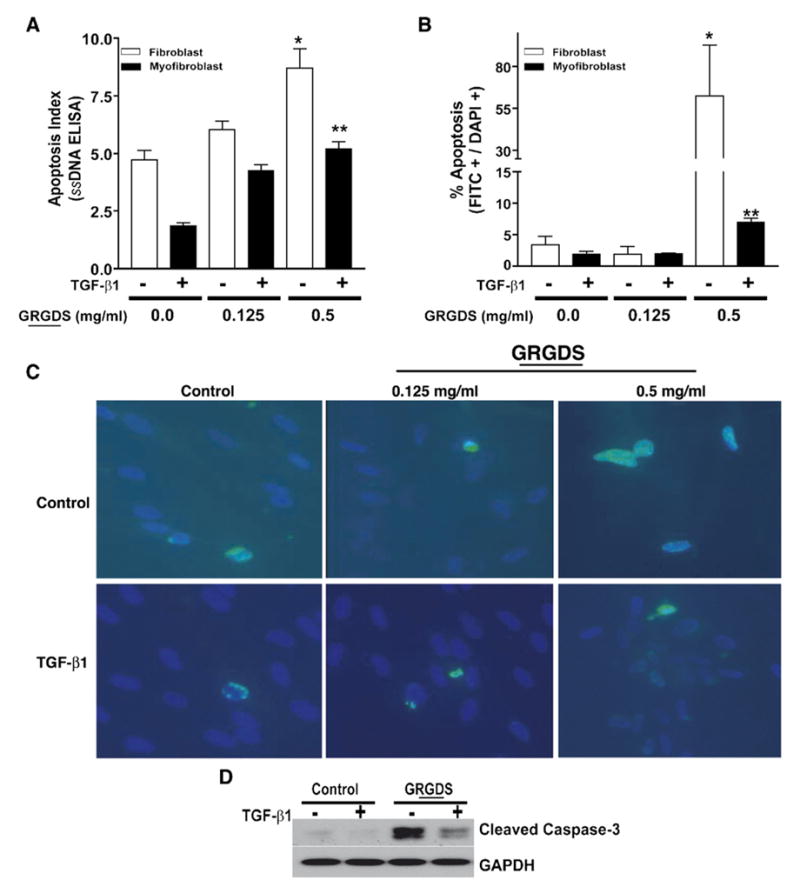
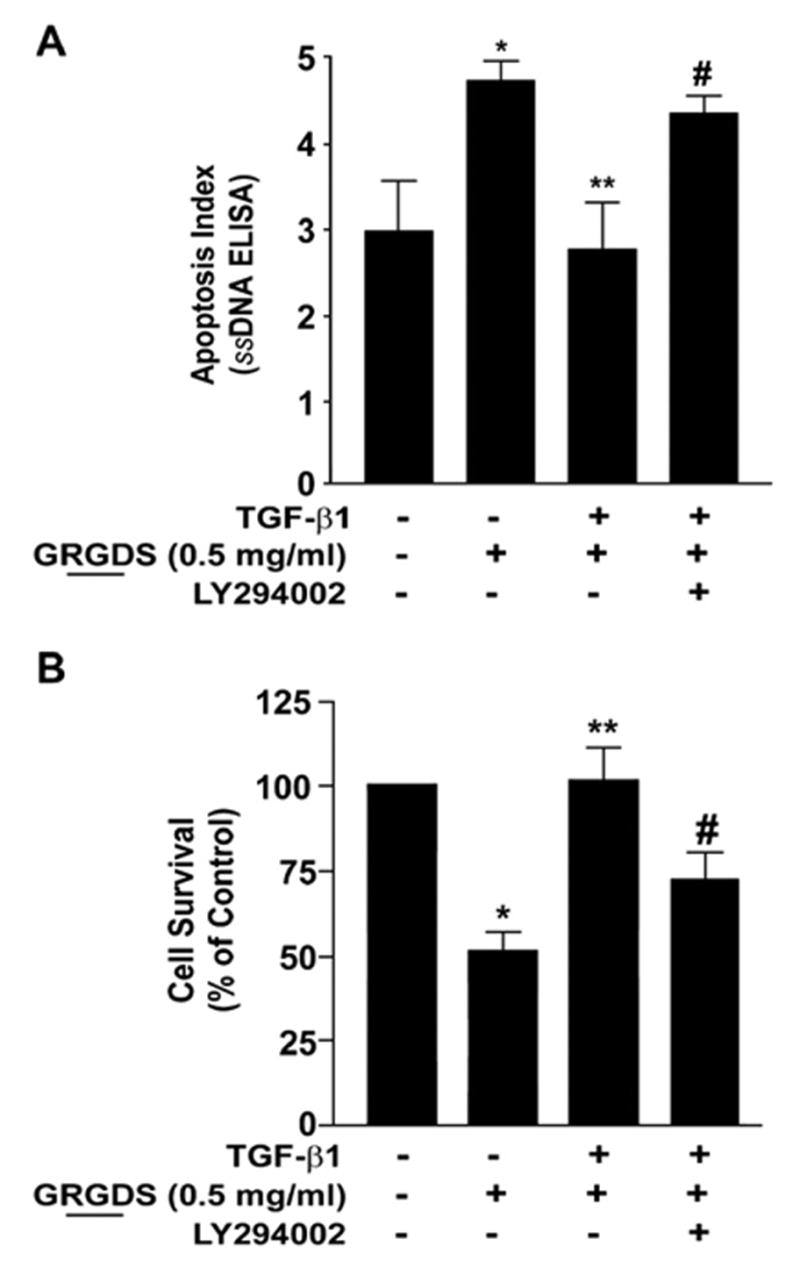
Transforming growth factor-beta (TGF-beta) is a prototypical tumour-suppressor cytokine with cytostatic and pro-apoptotic effects on most target cells; however, mechanisms of its pro-survival/anti-apoptotic signalling in certain cell types and contexts remain unclear. In human lung fibroblasts, TGF-beta1 is known to induce myofibroblast differentiation in association with the delayed activation of focal adhesion kinase (FAK) and protein kinase B (PKB/AKT). Here, we demonstrate that FAK and AKT are independently regulated by early activation of SMAD3 and p38 MAPK, respectively. Pharmacologic or genetic approaches that disrupt SMAD3 signalling block TGF-beta1-induced activation of FAK, but not AKT; in contrast, disruption of early p38 MAPK signalling abrogates AKT activation, but does not alter FAK activation. TGF-beta1 is able to activate AKT in cells expressing mutant FAK or in cells treated with an RGD-containing peptide that interferes with integrin signalling, inhibits FAK activation and induces anoikis (apoptosis induced by loss of adhesion signalling). TGF-beta1 protects myofibroblasts from anoikis, in part, by activation of the PI3K-AKT pathway. Thus, TGF-beta1 co-ordinately and independently activates the FAK and AKT protein kinase pathways to confer an anoikis-resistant phenotype to myofibroblasts. Activation of these pro-survival/anti-anoikis pathways in myofibroblasts likely contributes to essential roles of TGF-beta1 in tissue fibrosis and tumour-promotion.
转化生长因子-β(TGF-β)是一种典型的肿瘤抑制细胞因子,对大多数靶细胞具有细胞生长抑制和促凋亡作用;然而,其在某些细胞类型和环境中的促生存/抗凋亡信号传导机制仍不清楚。在人肺成纤维细胞中,已知TGF-β1与粘着斑激酶(FAK)和蛋白激酶B(PKB/AKT)的延迟激活相关联,诱导肌成纤维细胞分化。在此,我们证明FAK和AKT分别由SMAD3和p38丝裂原活化蛋白激酶(MAPK)的早期激活独立调节。破坏SMAD3信号传导的药理学或遗传学方法可阻断TGF-β1诱导的FAK激活,但不影响AKT激活;相反,早期p38 MAPK信号传导的破坏可消除AKT激活,但不改变FAK激活。TGF-β1能够在表达突变型FAK的细胞中或在用含RGD肽处理的细胞中激活AKT,该肽干扰整合素信号传导、抑制FAK激活并诱导失巢凋亡(由粘附信号丧失诱导的凋亡)。TGF-β1部分通过激活PI3K-AKT途径保护肌成纤维细胞免受失巢凋亡。因此,TGF-β1协同且独立地激活FAK和AKT蛋白激酶途径,赋予肌成纤维细胞失巢凋亡抗性表型。肌成纤维细胞中这些促生存/抗失巢凋亡途径的激活可能有助于TGF-β1在组织纤维化和肿瘤促进中的重要作用。