UMR 5797 Laboratoire de Physique des deux infinis, Université de Bordeaux-CNRS, 33170 Bordeaux, France.
Assistance Publique-Hôpitaux de Paris, Hôpital Saint-Louis, Unité de Thérapie Cellulaire, 75610 Paris, France.
Int J Mol Sci. 2023 Jan 13;24(2):1571. doi: 10.3390/ijms24021571.
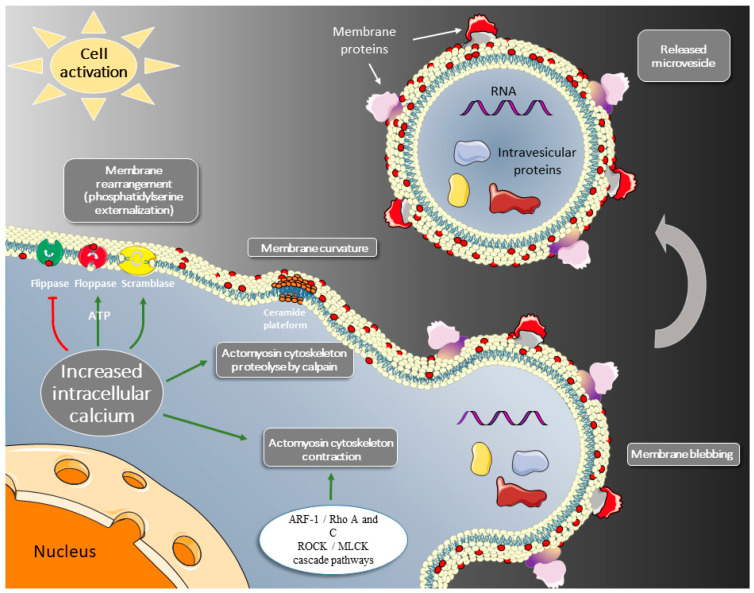
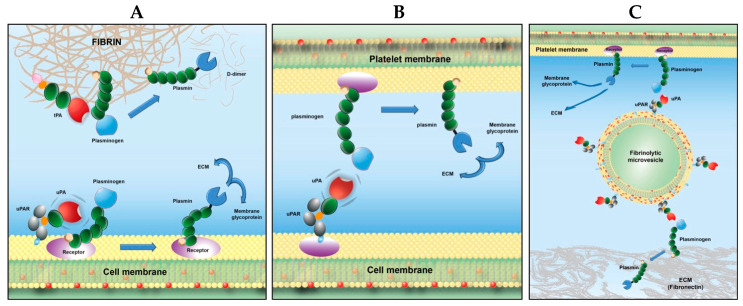
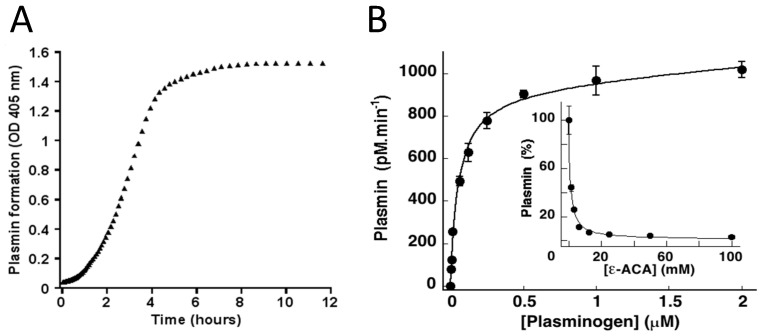
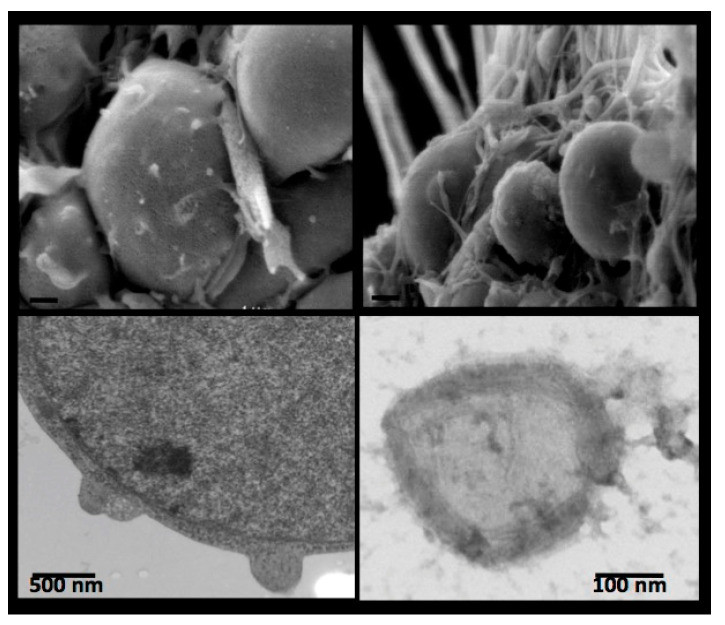
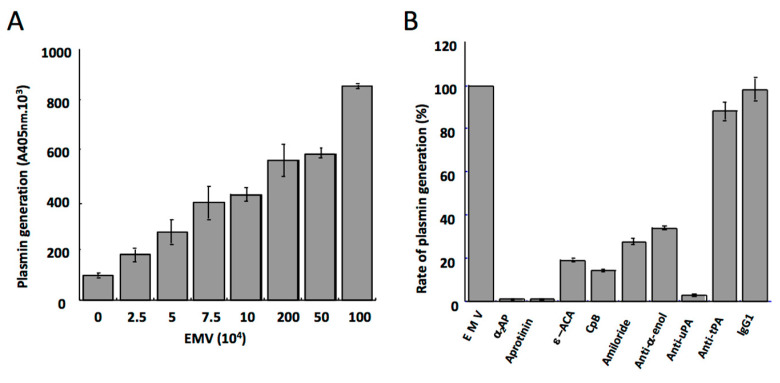
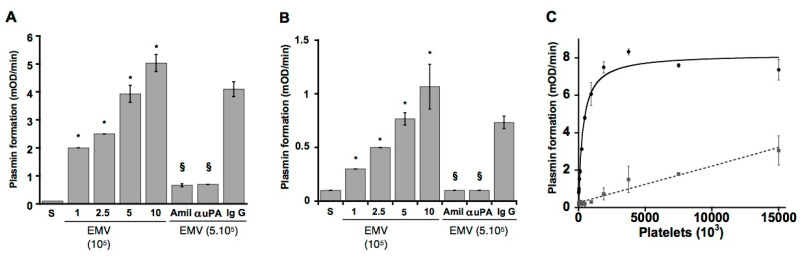
A number of stressors and inflammatory mediators (cytokines, proteases, oxidative stress mediators) released during inflammation or ischemia stimulate and activate cells in blood, the vessel wall or tissues. The most well-known functional and phenotypic responses of activated cells are (1) the immediate expression and/or release of stored or newly synthesized bioactive molecules, and (2) membrane blebbing followed by release of microvesicles. An ultimate response, namely the formation of extracellular traps by neutrophils (NETs), is outside the scope of this work. The main objective of this article is to provide an overview on the mechanism of plasminogen reception and activation at the surface of cell-derived microvesicles, new actors in fibrinolysis and proteolysis. The role of microvesicle-bound plasmin in pathological settings involving inflammation, atherosclerosis, angiogenesis, and tumour growth, remains to be investigated. Further studies are necessary to determine if profibrinolytic microvesicles are involved in a finely regulated equilibrium with pro-coagulant microvesicles, which ensures a balanced haemostasis, leading to the maintenance of vascular patency.
许多在炎症或缺血期间释放的应激源和炎症介质(细胞因子、蛋白酶、氧化应激介质)刺激并激活血液、血管壁或组织中的细胞。激活细胞最著名的功能和表型反应是(1)立即表达和/或释放储存或新合成的生物活性分子,以及(2)膜起泡随后释放微泡。中性粒细胞(NETs)形成细胞外陷阱是本文的研究范围之外。本文的主要目的是概述细胞衍生的微泡表面上的纤溶酶原接收和激活机制,这是纤溶和蛋白水解的新因素。微泡结合纤溶酶在涉及炎症、动脉粥样硬化、血管生成和肿瘤生长等病理情况下的作用仍有待研究。需要进一步的研究来确定富含纤维蛋白溶解的微泡是否与促凝微泡处于精细调节的平衡中,这种平衡可确保平衡的止血,从而维持血管通畅。