Montanaro Lucio, Parisini Patrizio, Greggi Tiziana, Di Silvestre Mario, Campoccia Davide, Rizzi Simona, Arciola Carla Renata
Research Unit on Implant Infections, Molecular Pathology Section, Rizzoli Orthopaedic Institute, Bologna, Italy.
Experimental Pathology Department, University of Bologna, Italy.
Scoliosis. 2006 Dec 18;1:21. doi: 10.1186/1748-7161-1-21.
In a previous study, a number of genes, associated with spine musculoskeletal deformity phenotypes in mouse and in synteny between mouse and man, were identified as candidate genes for IS. Among these genes, MATN1, which carries a polymorphic microsatellite marker within its sequence, was selected for a linkage analysis. MATN1 is localised at 1p35 and is mainly expressed in cartilage. The objective of this study was to assess a linkage disequilibrium between the matrilin-1 (MATN1) gene and the idiopathic scoliosis (IS).
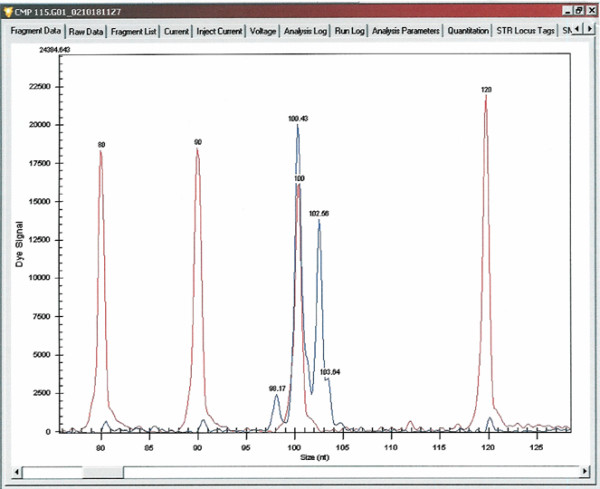
The genetic study was conducted on a population of 81 trios, each consistent of a daughter/son affected by idiopathic scoliosis (IS) and both parents. In all trios components, the region of MATN1 gene containing the microsatellite marker was amplified by a polymerase chain reaction. The amplicons were analysed by a DNA sequencer-genotyper. The statistical linkage analysis was performed using the extended transmission/disequilibrium test.
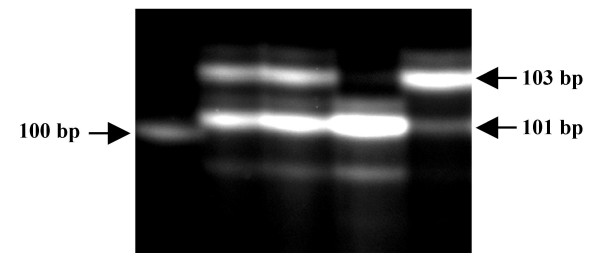
Three microsatellite polymorphisms, respectively consisting of 103 bp, 101 bp and 99 bp, were identified. ETDT evidenced a significant preferential transmission for the 103 bp allele (Chi-square = 5.058, df = 1, P = 0.024)
The results suggest that the familial idiopathic scoliosis is associated to the MATN1 gene.
在之前的一项研究中,一些与小鼠脊柱肌肉骨骼畸形表型以及小鼠与人之间的同线性相关的基因被确定为特发性脊柱侧凸(IS)的候选基因。在这些基因中,MATN1因其序列中携带一个多态性微卫星标记而被选作连锁分析。MATN1定位于1p35,主要在软骨中表达。本研究的目的是评估基质金属蛋白酶-1(MATN1)基因与特发性脊柱侧凸(IS)之间的连锁不平衡。
对81个三联体人群进行了基因研究,每个三联体由一名患有特发性脊柱侧凸(IS)的女儿/儿子及其父母组成。在所有三联体成员中,通过聚合酶链反应扩增包含微卫星标记的MATN1基因区域。扩增产物通过DNA测序仪-基因分型仪进行分析。使用扩展传递/不平衡检验进行统计连锁分析。
鉴定出三个微卫星多态性,分别由103 bp、101 bp和99 bp组成。扩展传递/不平衡检验表明103 bp等位基因存在显著的优先传递(卡方 = 5.058,自由度 = 1,P = 0.024)。
结果表明家族性特发性脊柱侧凸与MATN1基因相关。