Evans Kathryn E, Fox Simon W
Ecotoxicology and Stress Biology Research Group, School of Biological Science, University of Plymouth, UK.
BMC Cell Biol. 2007 Jan 19;8:4. doi: 10.1186/1471-2121-8-4.
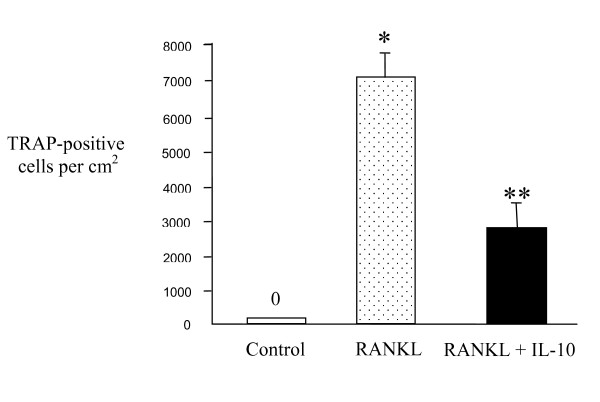
IL-10 has a potent inhibitory effect on osteoclastogenesis. In vitro and in vivo studies confirm the importance of this cytokine in bone metabolism, for instance IL-10-deficient mice develop the hallmarks of osteoporosis. Although it is known that IL-10 directly inhibits osteoclastogenesis at an early stage, preventing differentiation of osteoclast progenitors to preosteoclasts, the precise mechanism of its action is not yet clear. Several major pathways regulate osteoclastogenesis, with key signalling genes such as p38, TRAF6, NF-kappaB and NFATc1 well established as playing vital roles. We have looked at gene expression in eleven of these genes using real-time quantitative PCR on RNA extracted from RANKL-treated RAW264.7 monocytes.
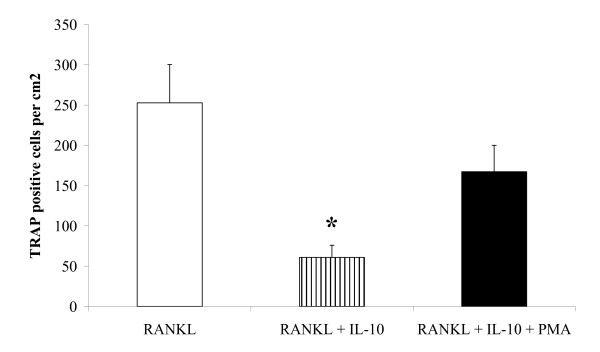
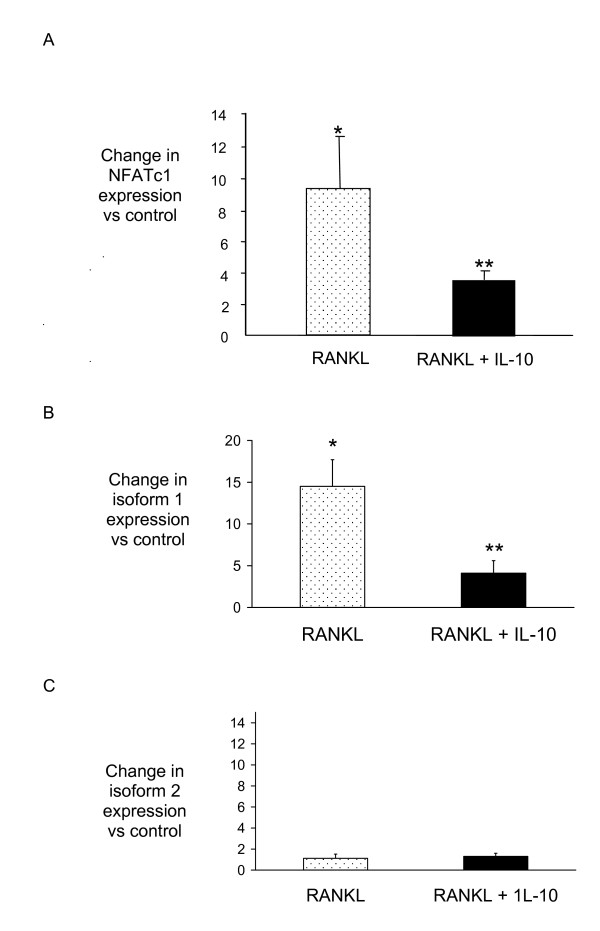
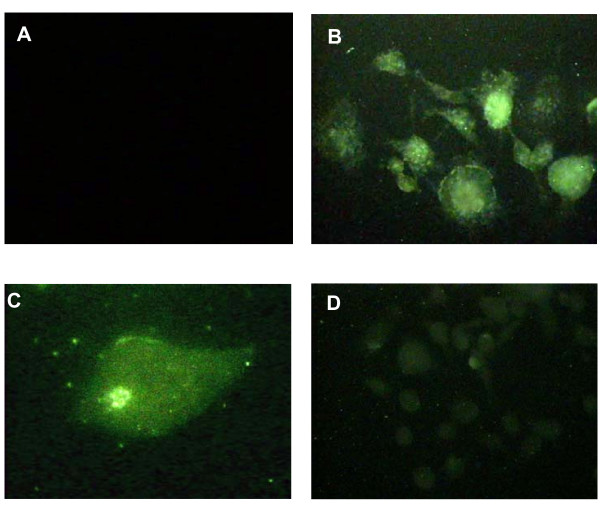
There was no downregulation by IL-10 of DAP12, FcgammaRIIB, c-jun, RANK, TRAF6, p38, NF-kappaB, Gab2, Pim-1, or c-Fos at the mRNA level. However, we found that IL-10 significantly reduces RANKL-induced NFATc1 expression. NFATc1 is transcribed from two alternative promoters in Mus musculus and, interestingly, only the variant transcribed from promoter P1 and beginning with exon 1 was downregulated by IL-10 (isoform 1). In addition, immunofluorescence studies showed that IL-10 reduces NFATc1 levels in RANKL-treated precursors and suppresses nuclear translocation. The inhibitory effect of IL-10 on tartrate-resistant acid phosphatase-positive cell number and NFATc1 mRNA expression was reversed by the protein kinase C agonist phorbol myristate acetate, providing evidence that interleukin-10 disrupts NFATc1 activity through its effect on Ca2+ mobilisation.
IL-10 acts directly on mononuclear precursors to inhibit NFATc1 expression and nuclear translocation, and we provide evidence that the mechanism may involve disruption of Ca2+ mobilisation. We detected downregulation only of the NFATc1 isoform 1 transcribed from promoter P1. This is the first report indicating that one of the ways in which IL-10 directly inhibits osteoclastogenesis is by suppressing NFATc1 activity.
白细胞介素 - 10(IL - 10)对破骨细胞生成具有强大的抑制作用。体外和体内研究证实了这种细胞因子在骨代谢中的重要性,例如IL - 10基因缺陷小鼠会出现骨质疏松的特征。虽然已知IL - 10在早期直接抑制破骨细胞生成,阻止破骨细胞前体向破骨细胞的分化,但其确切作用机制尚不清楚。有几种主要途径调节破骨细胞生成,关键信号基因如p38、TRAF6、核因子κB(NF - κB)和活化T细胞核因子c1(NFATc1)在其中发挥着至关重要的作用已得到充分证实。我们使用实时定量PCR对从经核因子κB受体活化因子配体(RANKL)处理的RAW264.7单核细胞中提取的RNA进行分析,研究了这11个基因中的基因表达情况。
在mRNA水平上,IL - 10并未下调DNAX - 活化蛋白12(DAP12)、Fcγ受体IIB(FcγRIIB)、c - 原癌基因蛋白(c - jun)、RANK、TRAF6、p38、NF - κB、Gab2、原癌基因Pim - 1(Pim - 1)或原癌基因c - fos(c - Fos)的表达。然而,我们发现IL - 10能显著降低RANKL诱导的NFATc1表达。在小家鼠中,NFATc1由两个不同的启动子转录,有趣的是,只有从启动子P1转录并以外显子1开始的变体(异构体1)被IL - 10下调。此外,免疫荧光研究表明,IL - 10可降低RANKL处理的前体细胞中NFATc1的水平,并抑制其核转位。蛋白激酶C激动剂佛波酯肉豆蔻酸酯乙酸盐可逆转IL - 10对耐酒石酸酸性磷酸酶阳性细胞数量和NFATc1 mRNA表达的抑制作用,这表明白细胞介素 - 10通过影响钙离子动员来破坏NFATc1的活性。
IL - 10直接作用于单核前体细胞以抑制NFATc1的表达和核转位,我们提供的证据表明其机制可能涉及钙离子动员的破坏。我们仅检测到从启动子P1转录的NFATc1异构体1的下调。这是第一份表明IL - 10直接抑制破骨细胞生成的方式之一是通过抑制NFATc1活性的报告。