Ray Anandasankar, van Naters Wynand van der Goes, Shiraiwa Takashi, Carlson John R
Department of Molecular, Cellular, and Developmental Biology, Yale University, New Haven, CT 06520, USA.
Neuron. 2007 Feb 1;53(3):353-69. doi: 10.1016/j.neuron.2006.12.010.
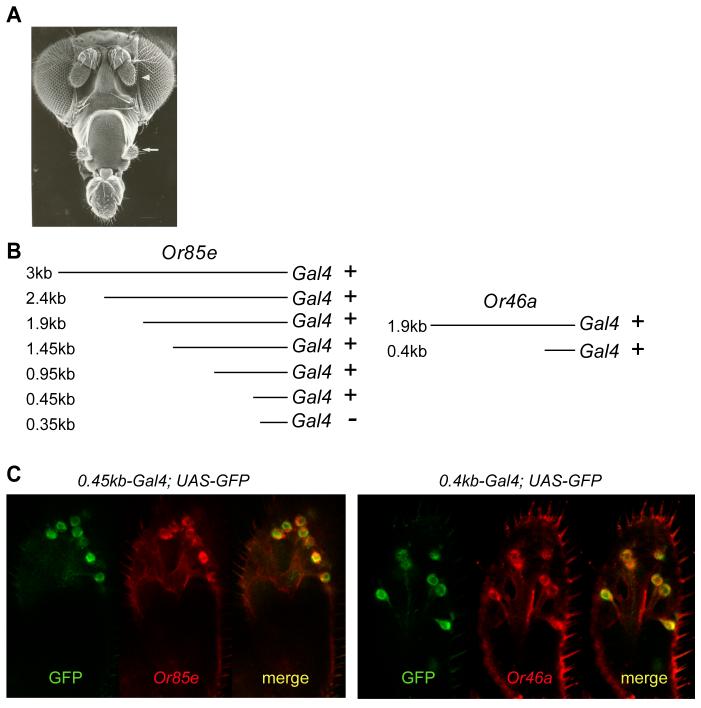
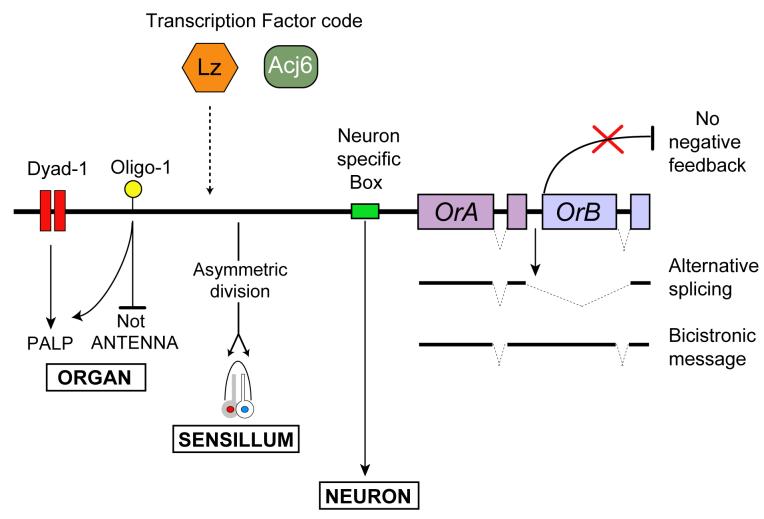
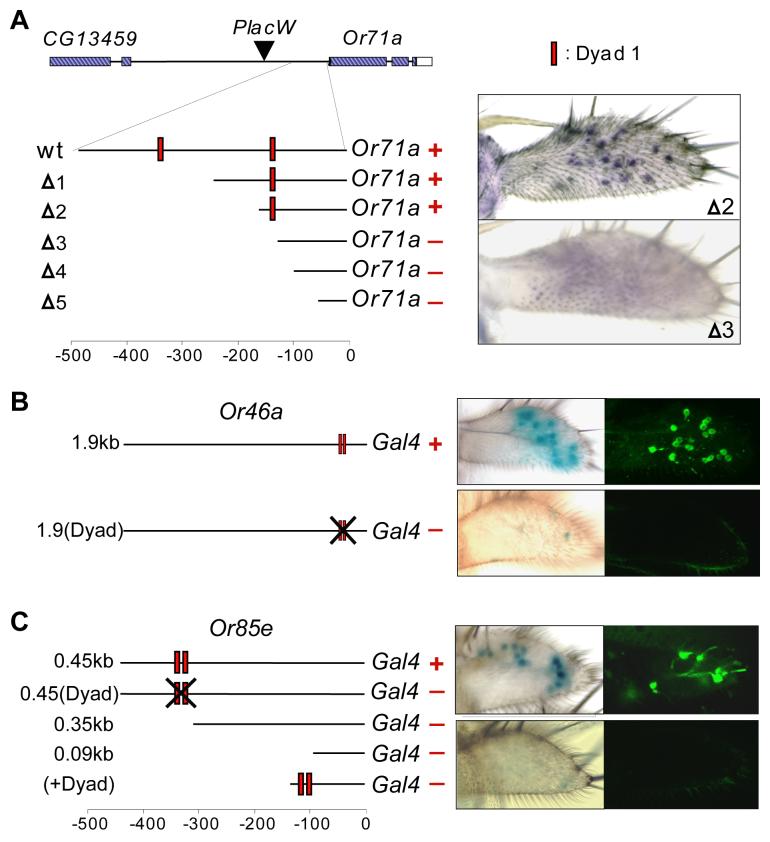
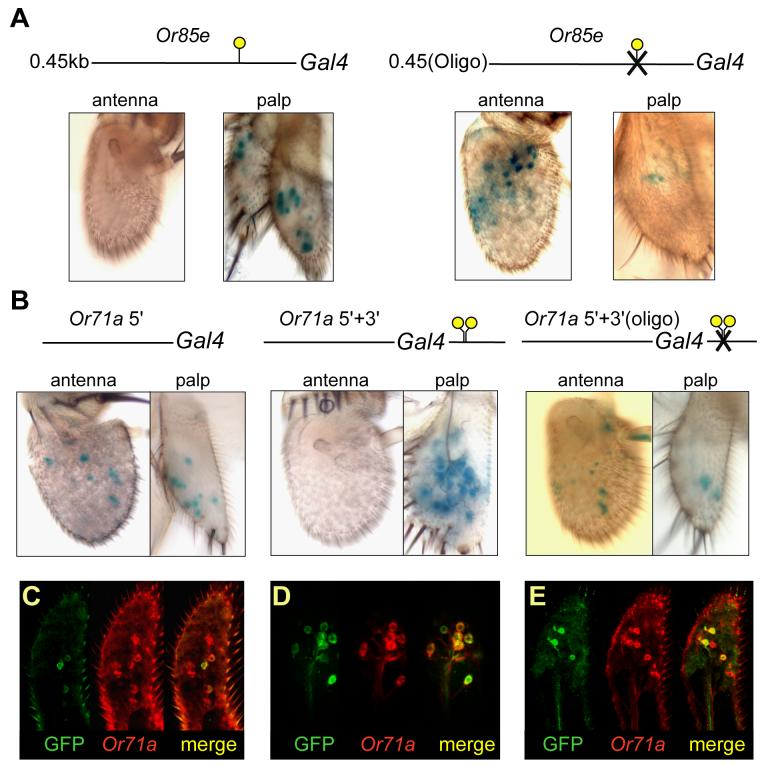
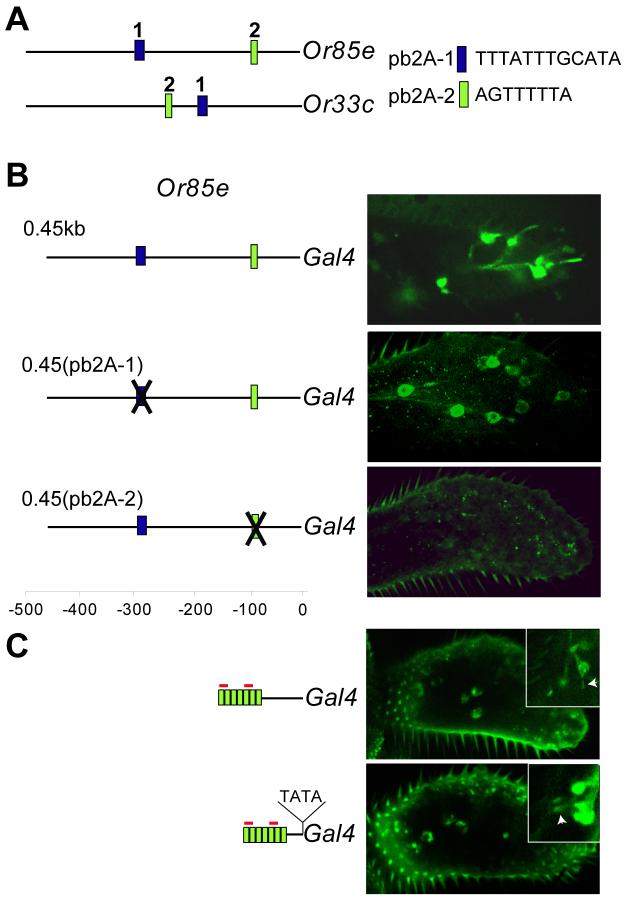
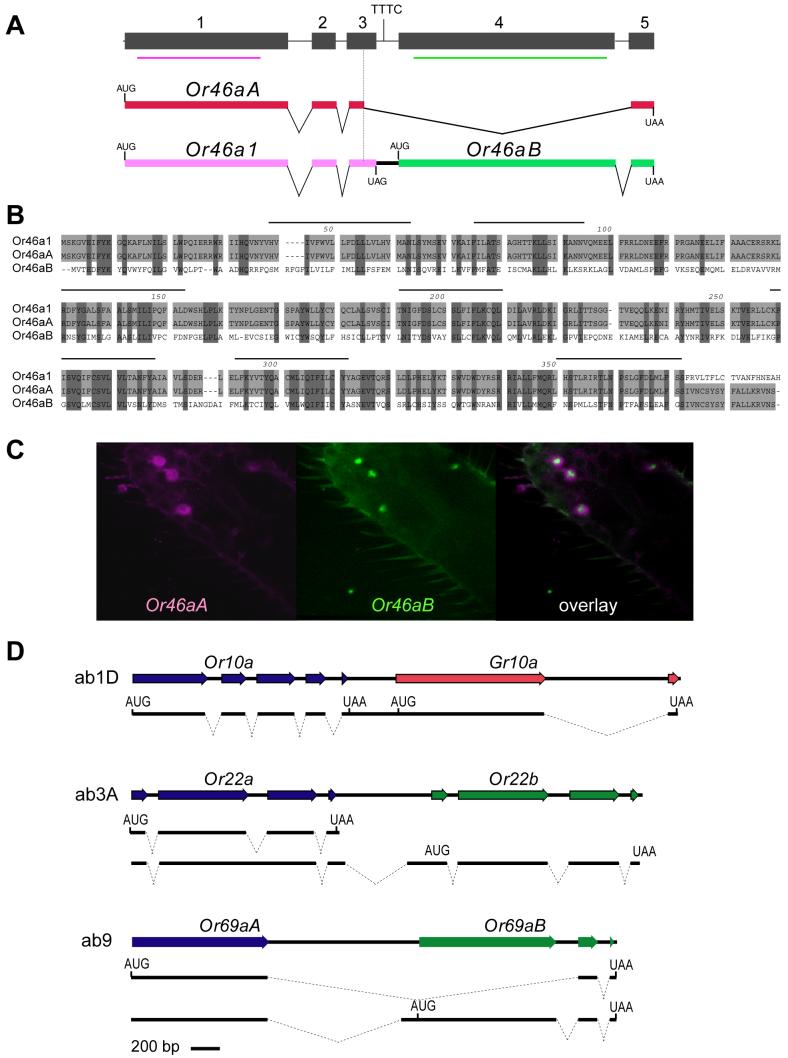
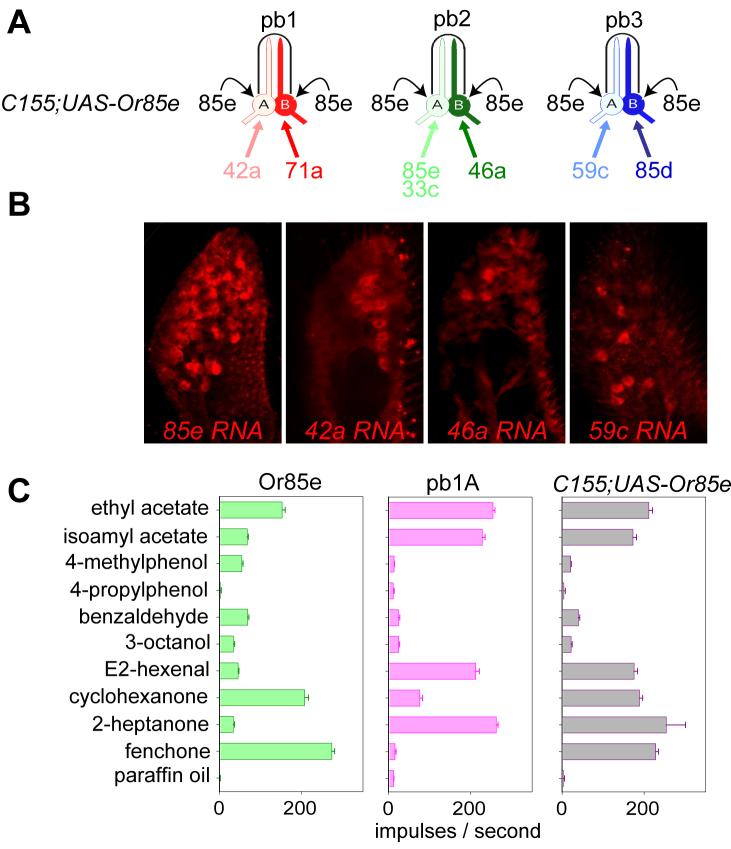
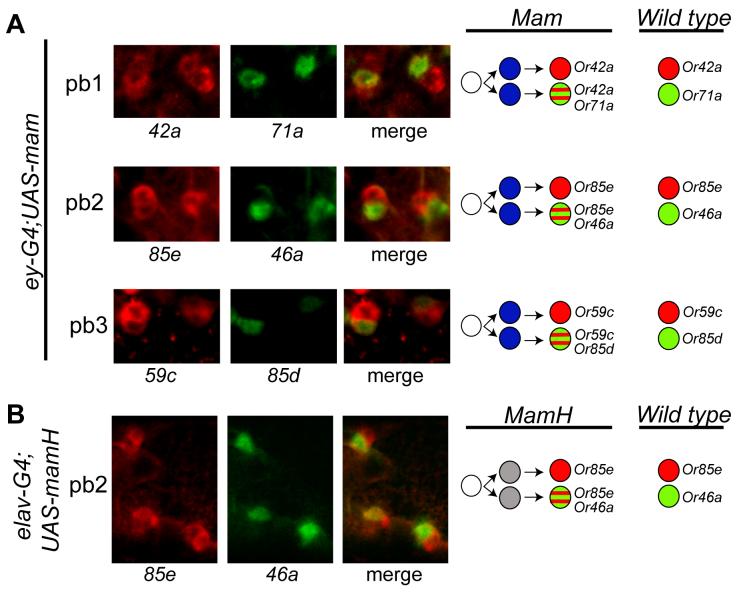
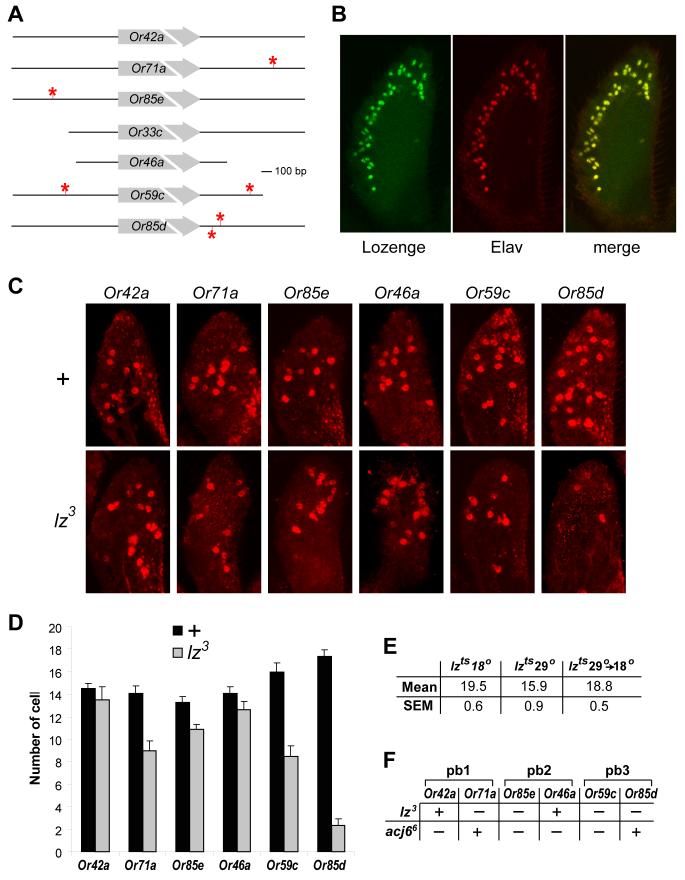
A remarkable problem in neurobiology is how olfactory receptor neurons (ORNs) select, from among a large odor receptor repertoire, which receptors to express. We use computational algorithms and mutational analysis to define positive and negative regulatory elements that are required for selection of odor receptor (Or) genes in the proper olfactory organ of Drosophila, and we identify an element that is essential for selection in one ORN class. Two odor receptors are coexpressed by virtue of the alternative splicing of a single gene, and we identify dicistronic mRNAs that each encode two receptors. Systematic analysis reveals no evidence for negative feedback regulation, but provides evidence that the choices made by neighboring ORNs of a sensillum are coordinated via the asymmetric segregation of regulatory factors from a common progenitor. We show that receptor gene choice in Drosophila also depends on a combinatorial code of transcription factors to generate the receptor-to-neuron map.
神经生物学中的一个显著问题是嗅觉受体神经元(ORN)如何从大量气味受体库中选择要表达的受体。我们使用计算算法和突变分析来定义在果蝇的适当嗅觉器官中选择气味受体(Or)基因所需的正向和负向调控元件,并且我们鉴定出一个对某一类ORN选择至关重要的元件。两个气味受体通过单个基因的可变剪接共同表达,并且我们鉴定出每个都编码两个受体的双顺反子mRNA。系统分析没有发现负反馈调节的证据,但提供了证据表明,感觉毛相邻ORN所做的选择是通过来自共同祖细胞的调控因子的不对称分离来协调的。我们表明,果蝇中的受体基因选择还取决于转录因子的组合密码,以生成受体与神经元的图谱。