Robbins Justin B, Stapleton Michelle, Stanger Matthew J, Smith Dorie, Dansereau John T, Derbyshire Victoria, Belfort Marlene
Wadsworth Center, New York State Department of Health, Center for Medical Science, Albany, NY 12208, USA.
Nucleic Acids Res. 2007;35(5):1589-600. doi: 10.1093/nar/gkl1170. Epub 2007 Feb 8.
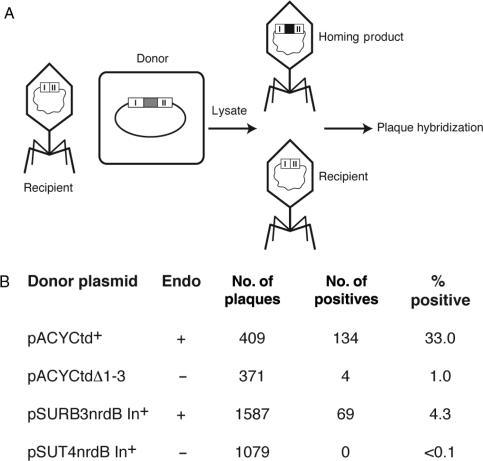
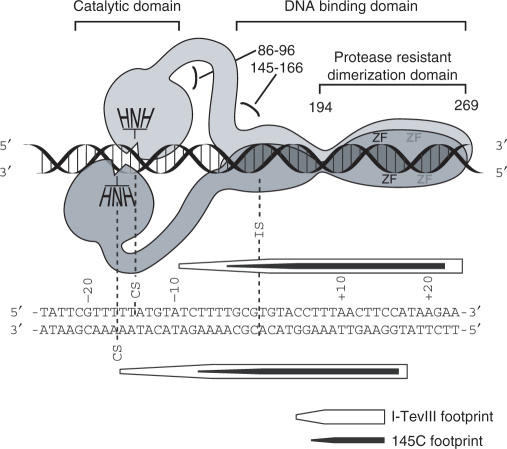
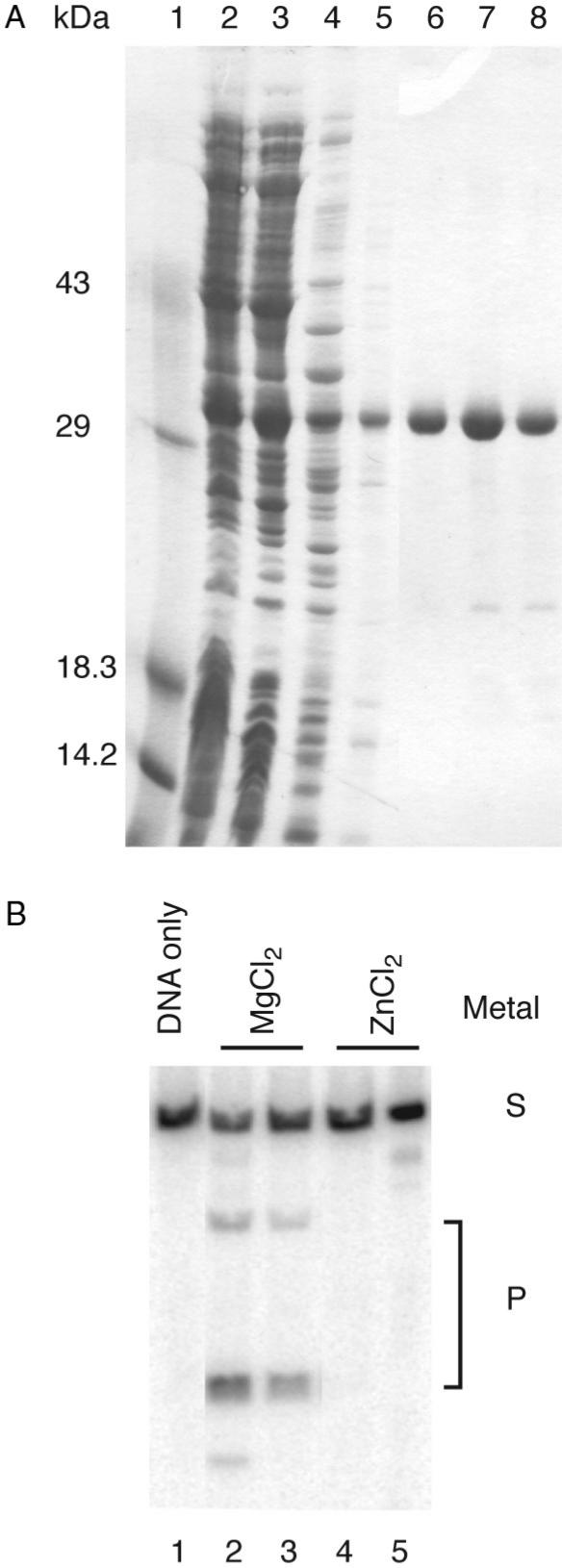
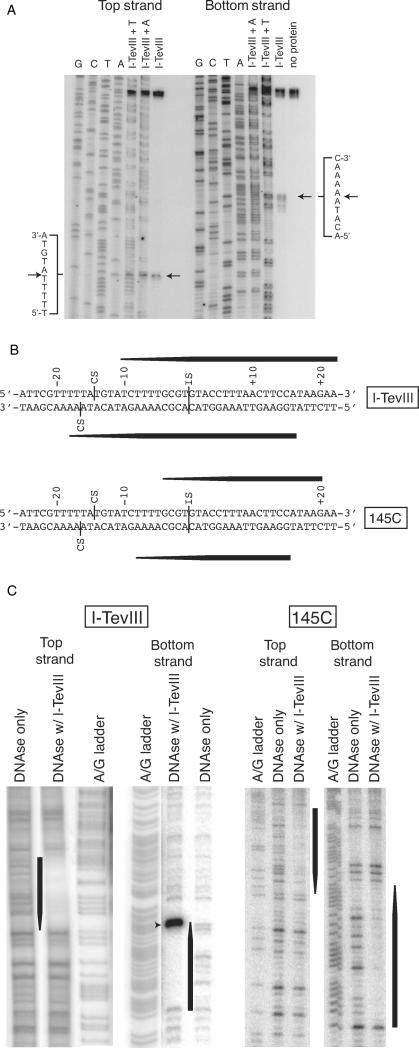
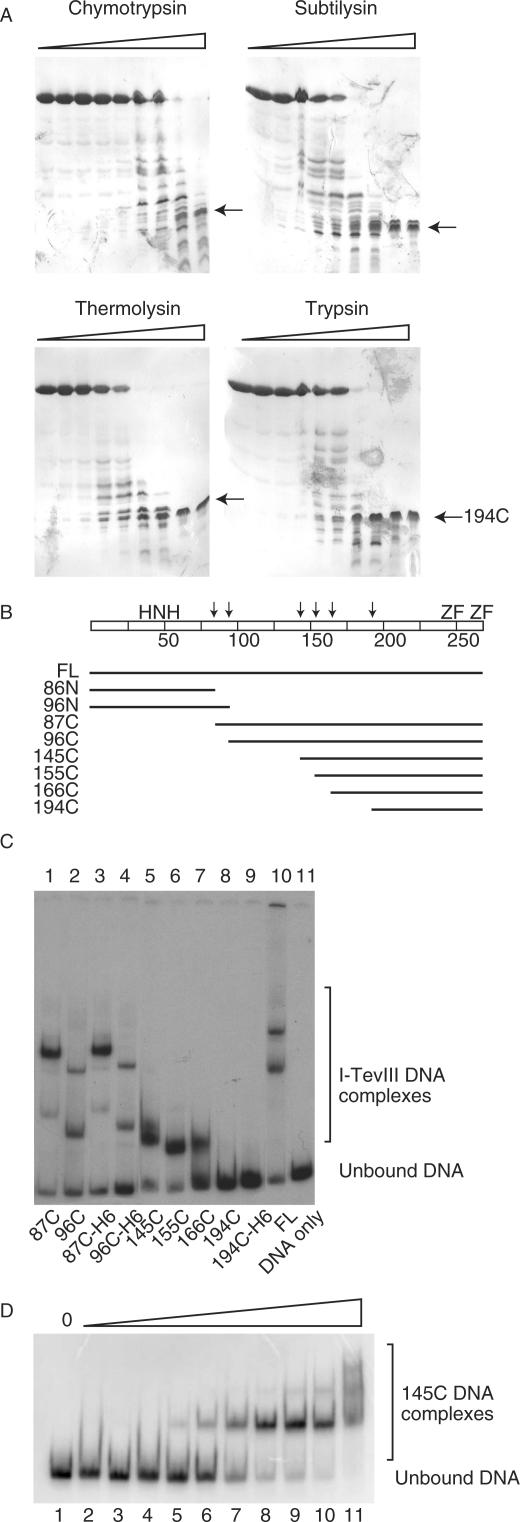
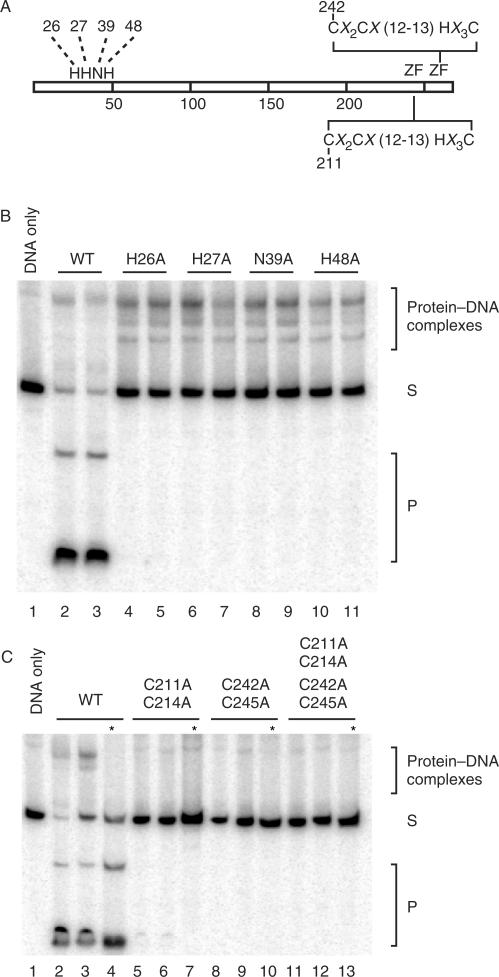
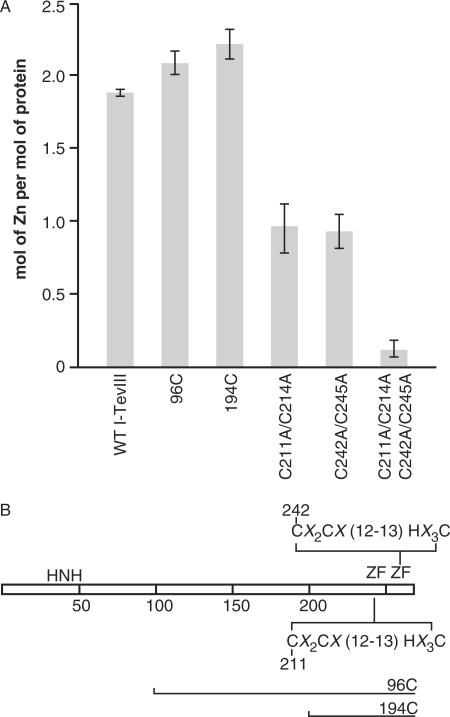
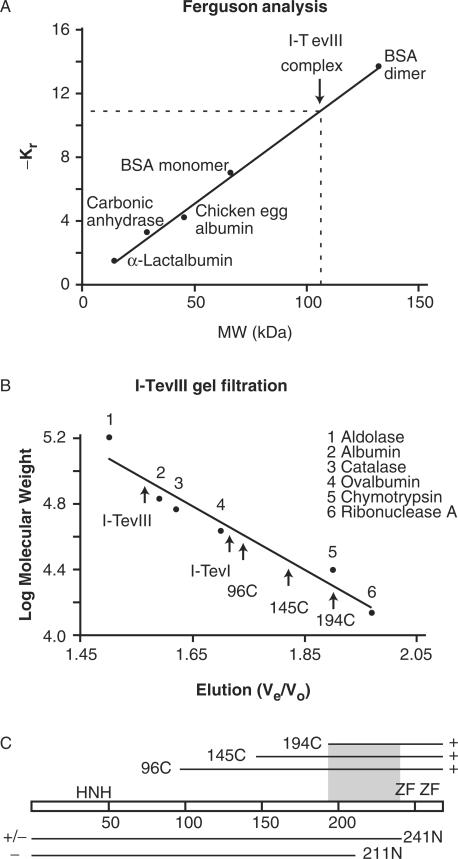
Homing endonucleases are unusual enzymes, capable of recognizing lengthy DNA sequences and cleaving site-specifically within genomes. Many homing endonucleases are encoded within group I introns, and such enzymes promote the mobility reactions of these introns. Phage T4 has three group I introns, within the td, nrdB and nrdD genes. The td and nrdD introns are mobile, whereas the nrdB intron is not. Phage RB3 is a close relative of T4 and has a lengthier nrdB intron. Here, we describe I-TevIII, the H-N-H endonuclease encoded by the RB3 nrdB intron. In contrast to previous reports, we demonstrate that this intron is mobile, and that this mobility is dependent on I-TevIII, which generates 2-nt 3' extensions. The enzyme has a distinct catalytic domain, which contains the H-N-H motif, and DNA-binding domain, which contains two zinc fingers required for interaction with the DNA substrate. Most importantly, I-TevIII, unlike the H-N-H endonucleases described so far, makes a double-strand break on the DNA homing site by acting as a dimer. Through deletion analysis, the dimerization interface was mapped to the DNA-binding domain. The unusual propensity of I-TevIII to dimerize to achieve cleavage of both DNA strands underscores the versatility of the H-N-H enzyme family.
归巢内切酶是一类特殊的酶,能够识别长DNA序列并在基因组内进行位点特异性切割。许多归巢内切酶由I类内含子编码,这类酶促进这些内含子的移动反应。噬菌体T4在td、nrdB和nrdD基因内有三个I类内含子。td和nrdD内含子是可移动的,而nrdB内含子则不可移动。噬菌体RB3是T4的近亲,其nrdB内含子更长。在此,我们描述了由RB3 nrdB内含子编码的H-N-H内切酶I-TevIII。与之前的报道不同,我们证明该内含子是可移动的,且这种移动性依赖于I-TevIII,它会产生2个核苷酸的3'端延伸。该酶具有一个独特的催化结构域,其中包含H-N-H基序,以及一个DNA结合结构域,其中包含与DNA底物相互作用所需的两个锌指。最重要的是,与迄今为止描述的H-N-H内切酶不同,I-TevIII通过形成二聚体在DNA归巢位点上产生双链断裂。通过缺失分析,二聚化界面被定位到DNA结合结构域。I-TevIII形成二聚体以实现两条DNA链切割的异常倾向突显了H-N-H酶家族的多功能性。