Department of Biochemistry, Schulich School of Medicine & Dentistry, The University of Western Ontario, London, ON N6A5C1, Canada.
Virol J. 2010 Oct 28;7:290. doi: 10.1186/1743-422X-7-290.
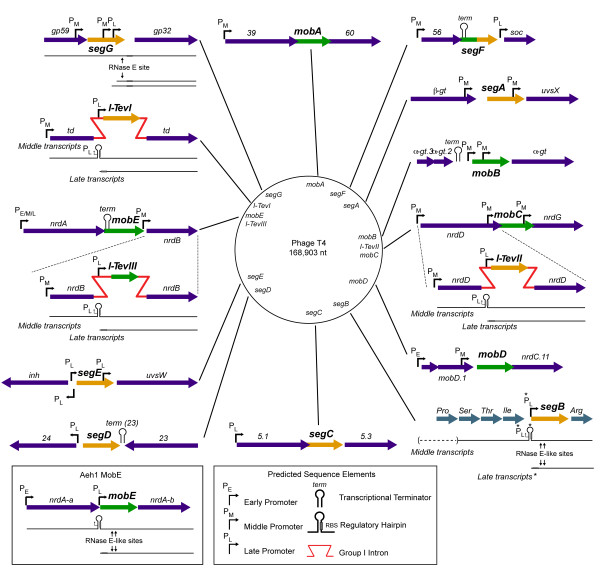
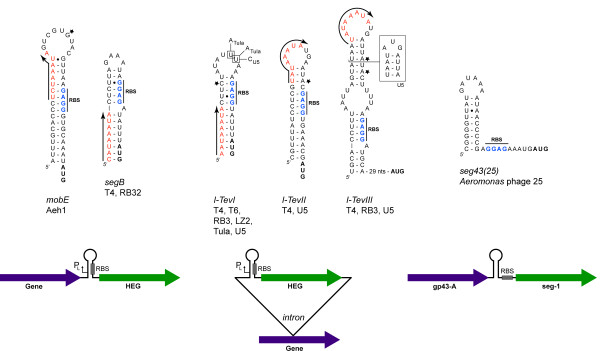
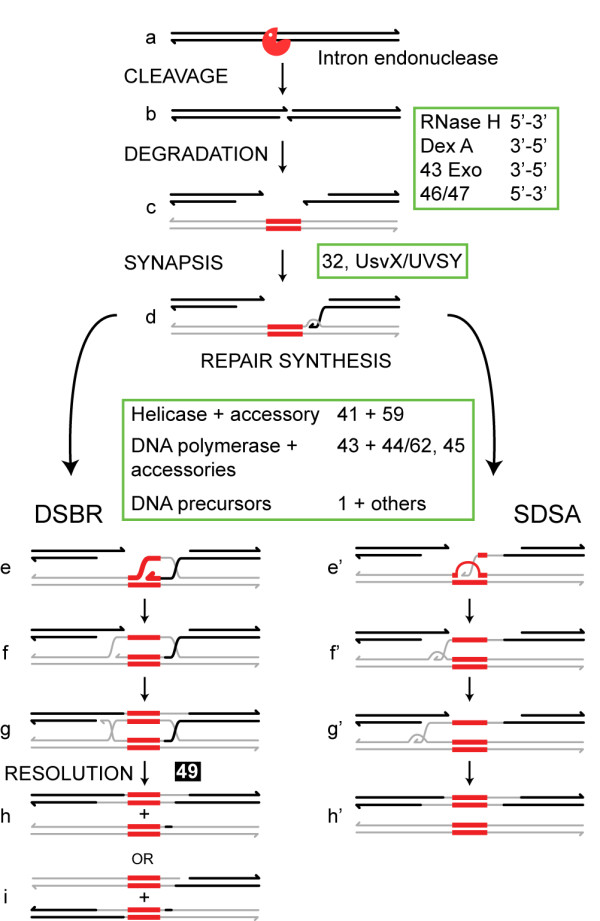
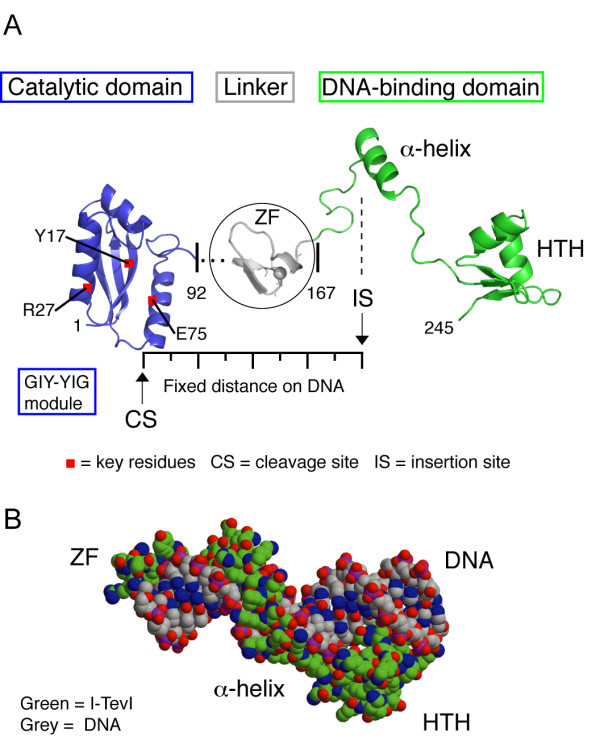
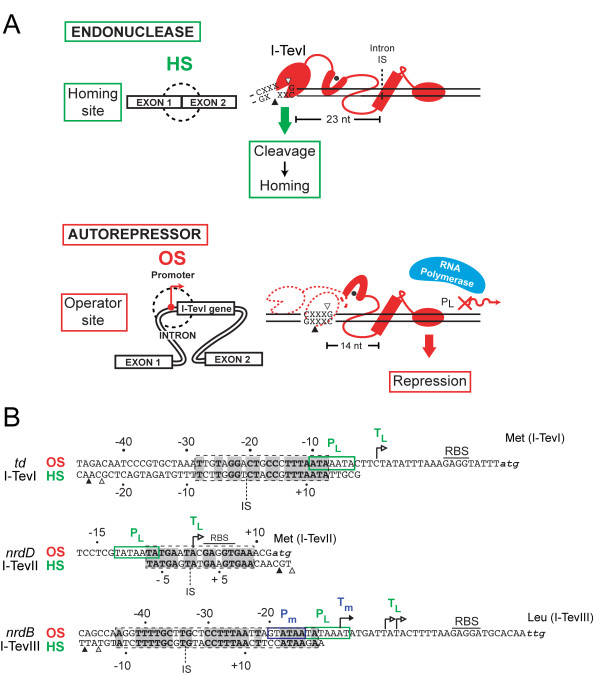
Mobile genetic elements are common inhabitants of virtually every genome where they can exert profound influences on genome structure and function in addition to promoting their own spread within and between genomes. Phage T4 and related phage have long served as a model system for understanding the molecular mechanisms by which a certain class of mobile DNA, homing endonucleases, promote their spread. Homing endonucleases are site-specific DNA endonucleases that initiate mobility by introducing double-strand breaks at defined positions in genomes lacking the endonuclease gene, stimulating repair and recombination pathways that mobilize the endonuclease coding region. In phage T4, homing endonucleases were first discovered as encoded within the self-splicing td, nrdB and nrdD introns of T4. Genomic data has revealed that homing endonucleases are extremely widespread in T-even-like phage, as evidenced by the astounding fact that ~11% of the T4 genome encodes homing endonuclease genes, with most of them located outside of self-splicing introns. Detailed studies of the mobile td intron and its encoded endonuclease, I-TevI, have laid the foundation for genetic, biochemical and structural aspects that regulate the mobility process, and more recently have provided insights into regulation of homing endonuclease function. Here, we summarize the current state of knowledge regarding T4-encoded homing endonucleases, with particular emphasis on the td/I-TevI model system. We also discuss recent progress in the biology of free-standing endonucleases, and present areas of future research for this fascinating class of mobile genetic elements.
移动遗传元件是几乎所有基因组中常见的居民,它们除了促进自身在基因组内外的传播外,还可以对基因组结构和功能产生深远的影响。噬菌体 T4 及其相关噬菌体长期以来一直是一个模型系统,用于了解一类特定的移动 DNA,即归巢内切核酸酶,促进其传播的分子机制。归巢内切核酸酶是一种位点特异性的 DNA 内切核酸酶,它在基因组中缺乏内切核酸酶基因的特定位置引入双链断裂,从而启动移动,刺激修复和重组途径,使内切核酸酶编码区移动。在噬菌体 T4 中,归巢内切核酸酶最初是在 T4 的自我剪接 td、nrdB 和 nrdD 内含子中被发现的。基因组数据表明,归巢内切核酸酶在 T 偶数噬菌体中广泛存在,这一事实令人惊讶,即约 11%的 T4 基因组编码归巢内切核酸酶基因,其中大多数位于自我剪接内含子之外。移动 td 内含子及其编码的内切核酸酶 I-TevI 的详细研究为调节移动过程的遗传、生化和结构方面奠定了基础,最近还为归巢内切核酸酶功能的调节提供了新的见解。在这里,我们总结了关于 T4 编码归巢内切核酸酶的现有知识状态,特别强调了 td/I-TevI 模型系统。我们还讨论了游离内切核酸酶生物学的最新进展,并提出了这个迷人的移动遗传元件类别的未来研究领域。