
基于价值的采购对住院医师、财务状况和医疗保险补贴产生影响。
BBA impacts on hospital residents, finances, and Medicare subsidies.
作者信息
Cromwell Jerry, Adamache Walter, Drozd Edward M
机构信息
RTI International, Waltham, MA 02451, USA.
出版信息
Health Care Financ Rev. 2006 Fall;28(1):117-29.
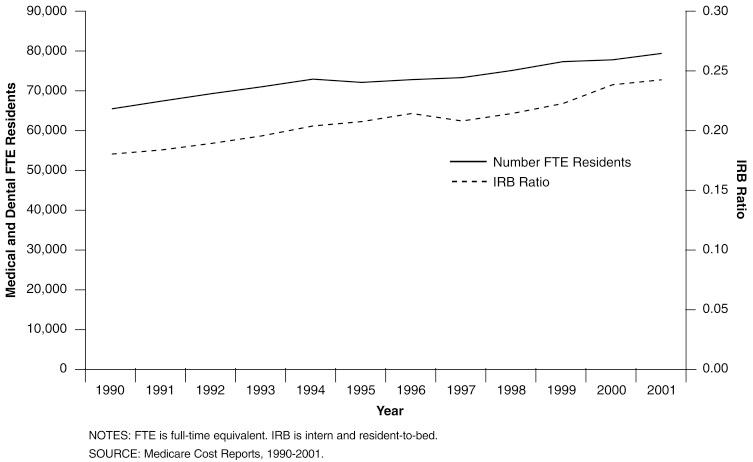
Concern over rapidly rising Medicare expenditures prompted Congress to pass the 1997 Balanced Budget Act (BBA) that included provisions reducing graduate medical education (GME) payments and capped the growth in residents for payment purposes. Using Medicare cost reports through 2001, we find that both actual and capped residents continued to grow post-BBA. While teaching hospital total margins declined, GME payment reductions of approximately 17 percent had minimal impact on revenue growth (-0.5 percent annually). Four years after BBA, residents remained a substantial line of business for nearly one-half of teaching hospitals with Medicare effective marginal subsidies exceeding resident stipends by nearly $50,000 on average. Coupled with an estimated replacement cost of over $100,000 per resident, it is not surprising that hospitals accepted nearly 4,000 residents beyond their allowable payment caps in just 4 years post-BBA.
对医疗保险支出迅速增长的担忧促使国会通过了1997年《平衡预算法案》(BBA),该法案包括减少研究生医学教育(GME)支付的条款,并设定了支付目的下住院医师人数的增长上限。利用截至2001年的医疗保险成本报告,我们发现,BBA之后,实际住院医师人数和设定上限的住院医师人数都持续增长。虽然教学医院的总利润率下降了,但GME支付减少约17%对收入增长的影响微乎其微(每年-0.5%)。BBA实施四年后,住院医师业务仍然是近一半教学医院的重要业务,医疗保险有效的边际补贴平均比住院医师津贴高出近5万美元。再加上估计每位住院医师的重置成本超过10万美元,难怪在BBA实施后的短短4年内,医院接收的住院医师人数超出其允许支付上限近4000人。
 Zotero 插件