Doyle Máire E, Egan Josephine M
Department of Pathology, Immunology & Laboratory Medicine, College of Medicine, University of Florida, Gainesville, FL, USA.
Pharmacol Ther. 2007 Mar;113(3):546-93. doi: 10.1016/j.pharmthera.2006.11.007. Epub 2006 Dec 28.
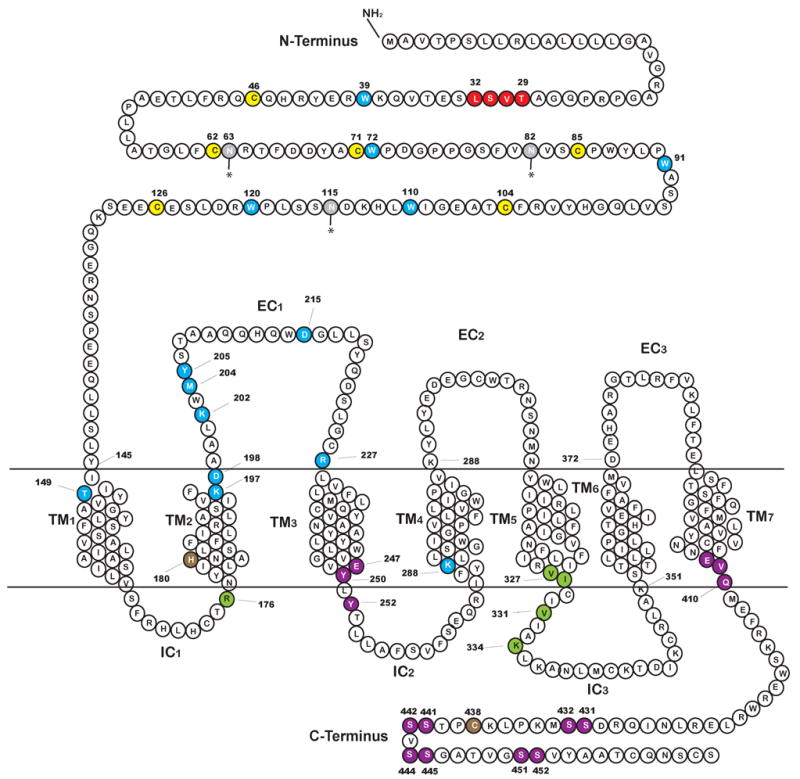
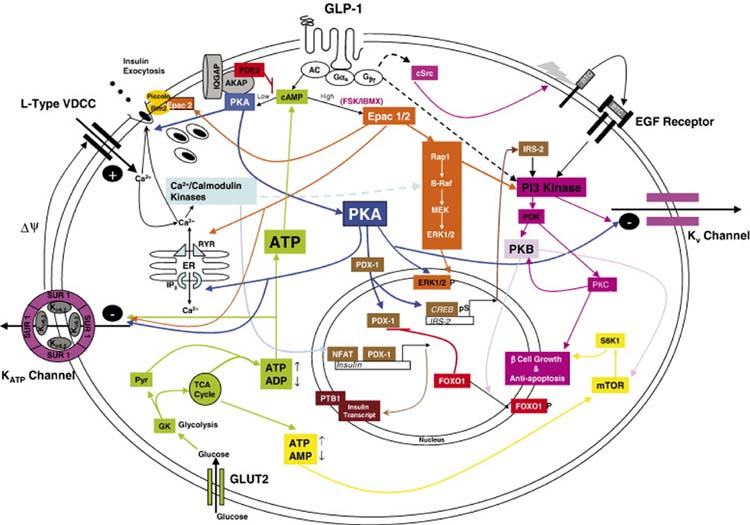
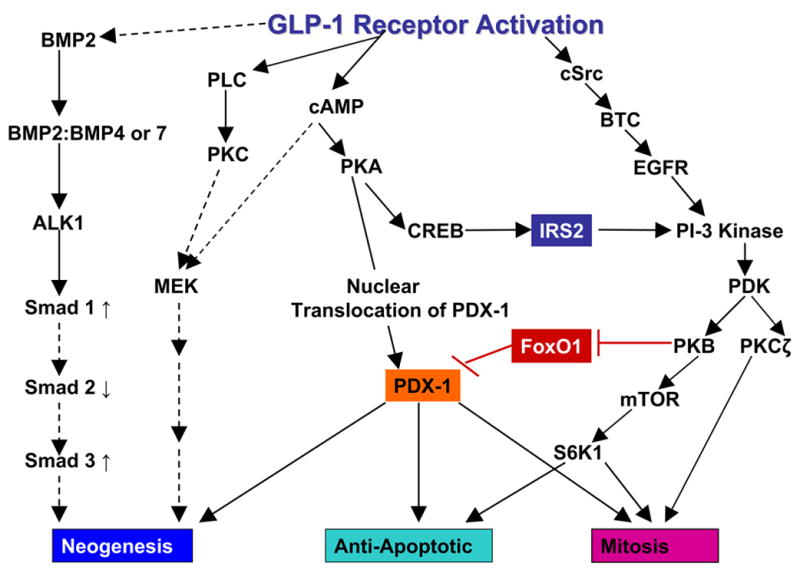
Glucagon-like peptide 1 (GLP-1) is a hormone that is encoded in the proglucagon gene. It is mainly produced in enteroendocrine L cells of the gut and is secreted into the blood stream when food containing fat, protein hydrolysate, and/or glucose enters the duodenum. Its particular effects on insulin and glucagon secretion have generated a flurry of research activity over the past 20 years culminating in a naturally occurring GLP-1 receptor (GLP-1R) agonist, exendin 4 (Ex-4), now being used to treat type 2 diabetes mellitus (T2DM). GLP-1 engages a specific guanine nucleotide-binding protein (G-protein) coupled receptor (GPCR) that is present in tissues other than the pancreas (brain, kidney, lung, heart, and major blood vessels). The most widely studied cell activated by GLP-1 is the insulin-secreting beta cell where its defining action is augmentation of glucose-induced insulin secretion. Upon GLP-1R activation, adenylyl cyclase (AC) is activated and cAMP is generated, leading, in turn, to cAMP-dependent activation of second messenger pathways, such as the protein kinase A (PKA) and Epac pathways. As well as short-term effects of enhancing glucose-induced insulin secretion, continuous GLP-1R activation also increases insulin synthesis, beta cell proliferation, and neogenesis. Although these latter effects cannot be currently monitored in humans, there are substantial improvements in glucose tolerance and increases in both first phase and plateau phase insulin secretory responses in T2DM patients treated with Ex-4. This review will focus on the effects resulting from GLP-1R activation in the pancreas.
胰高血糖素样肽1(GLP-1)是一种由胰高血糖素原基因编码的激素。它主要在肠道的肠内分泌L细胞中产生,当含有脂肪、蛋白质水解物和/或葡萄糖的食物进入十二指肠时,会分泌到血液中。在过去20年里,其对胰岛素和胰高血糖素分泌的特殊作用引发了一系列研究活动,最终促成了一种天然存在的GLP-1受体(GLP-1R)激动剂艾塞那肽4(Ex-4),目前正用于治疗2型糖尿病(T2DM)。GLP-1与一种特定的鸟嘌呤核苷酸结合蛋白(G蛋白)偶联受体(GPCR)结合,该受体存在于胰腺以外的组织(脑、肾、肺、心脏和主要血管)中。受GLP-1激活最广泛研究的细胞是分泌胰岛素的β细胞,其决定性作用是增强葡萄糖诱导的胰岛素分泌。GLP-1R激活后,腺苷酸环化酶(AC)被激活并产生cAMP,进而导致第二信使途径(如蛋白激酶A(PKA)和Epac途径)的cAMP依赖性激活。除了增强葡萄糖诱导的胰岛素分泌的短期作用外,持续的GLP-1R激活还会增加胰岛素合成、β细胞增殖和新生。尽管目前无法在人体中监测到这些后期作用,但在用Ex-4治疗的T2DM患者中,葡萄糖耐量有显著改善,第一相和平台期胰岛素分泌反应均增加。本综述将重点关注GLP-1R激活在胰腺中产生的作用。