Dierssen Jan Willem F, de Miranda Noel F C C, Ferrone Soldano, van Puijenbroek Marjo, Cornelisse Cees J, Fleuren Gert Jan, van Wezel Tom, Morreau Hans
Department of Pathology, Leiden University Medical Center, Leiden, The Netherlands.
BMC Cancer. 2007 Feb 22;7:33. doi: 10.1186/1471-2407-7-33.
Abnormalities in Human Leukocyte Antigen (HLA) class I expression are common in colorectal cancer. Since HLA expression is required to activate tumor antigen-specific cytotoxic T-lymphocytes (CTL), HLA class I abnormalities represent a mechanism by which tumors circumvent immune surveillance. Tumors with high microsatellite instability (MSI-H) are believed to face strong selective pressure to evade CTL activity since they produce large amounts of immunogenic peptides. Previous studies identified the prevalence of HLA class I alterations in MSI-H tumors. However, those reports did not compare the frequency of alterations between hereditary and sporadic MSI-H tumors neither the mechanisms that led to HLA class I alterations in each subgroup.
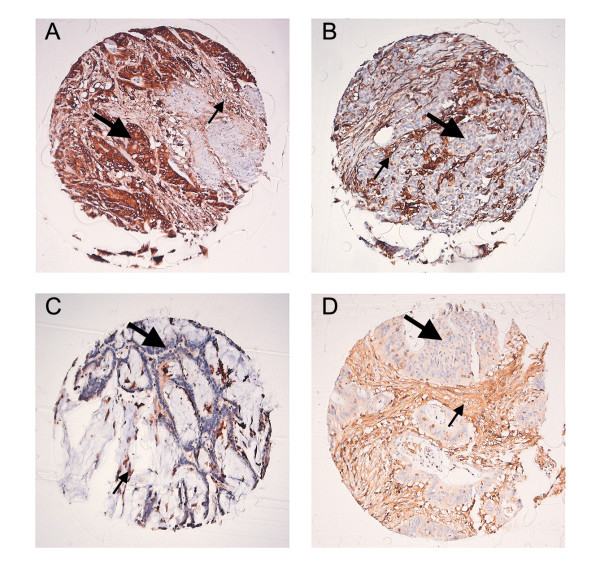
To characterize the HLA class I expression among sporadic MSI-H and microsatellite-stable (MSS) tumors, and HNPCC tumors we compared immunohistochemically the expression of HLA class I, beta2-microglobulin (beta2m), and Antigen Processing Machinery (APM) components in 81 right-sided sporadic and 75 HNPCC tumors. Moreover, we investigated the genetic basis for these changes.
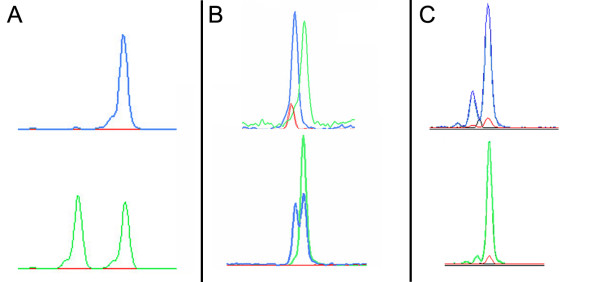
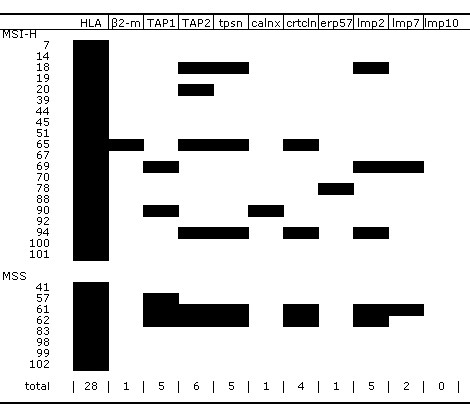
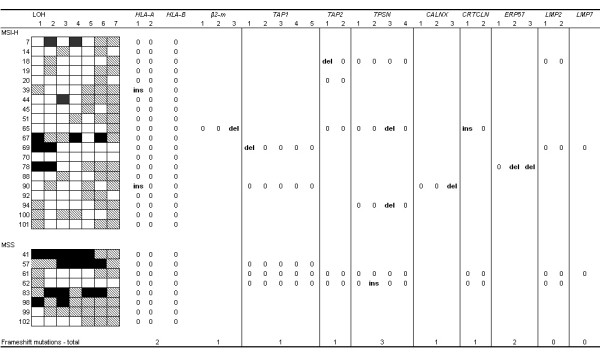
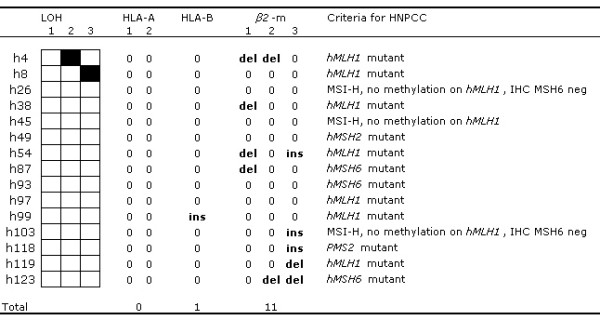
HLA class I loss was seen more frequently in MSI-H tumors than in MSS tumors (p < 0.0001). Distinct mechanisms were responsible for HLA class I loss in HNPCC and sporadic MSI-H tumors. Loss of HLA class I expression was associated with beta2m loss in HNPCC tumors, but was correlated with APM component defects in sporadic MSI-H tumors (p < 0.0001). In about half of the cases, loss of expression of HLA class I was concordant with the detection of one or more mutations in the beta2m and APM components genes.
HLA class I aberrations are found at varying frequencies in different colorectal tumor types and are caused by distinct genetic mechanisms. Chiefly, sporadic and hereditary MSI-H tumors follow different routes toward HLA class I loss of expression supporting the idea that these tumors follow different evolutionary pathways in tumorigenesis. The resulting variation in immune escape mechanisms may have repercussions in tumor progression and behavior.
人类白细胞抗原(HLA)I类表达异常在结直肠癌中很常见。由于激活肿瘤抗原特异性细胞毒性T淋巴细胞(CTL)需要HLA表达,HLA I类异常代表肿瘤规避免疫监视的一种机制。具有高微卫星不稳定性(MSI-H)的肿瘤被认为面临逃避CTL活性的强烈选择压力,因为它们会产生大量免疫原性肽。先前的研究确定了MSI-H肿瘤中HLA I类改变的发生率。然而,这些报告既没有比较遗传性和散发性MSI-H肿瘤之间改变的频率,也没有比较导致每个亚组中HLA I类改变的机制。
为了描述散发性MSI-H和微卫星稳定(MSS)肿瘤以及遗传性非息肉病性结直肠癌(HNPCC)肿瘤中HLA I类的表达情况,我们通过免疫组化比较了81例右侧散发性肿瘤和75例HNPCC肿瘤中HLA I类、β2微球蛋白(β2m)和抗原加工机制(APM)成分的表达。此外,我们研究了这些变化的遗传基础。
HLA I类缺失在MSI-H肿瘤中比在MSS肿瘤中更常见(p < 0.0001)。HNPCC和散发性MSI-H肿瘤中HLA I类缺失的机制不同。HNPCC肿瘤中HLA I类表达缺失与β2m缺失相关,但在散发性MSI-H肿瘤中与APM成分缺陷相关(p < 0.0001)。在大约一半的病例中,HLA I类表达缺失与β2m和APM成分基因中一个或多个突变的检测结果一致。
HLA I类畸变在不同类型的结直肠癌肿瘤中以不同频率出现,并且由不同的遗传机制引起。主要是,散发性和遗传性MSI-H肿瘤在HLA I类表达缺失方面遵循不同的途径,这支持了这些肿瘤在肿瘤发生过程中遵循不同进化途径的观点。免疫逃逸机制的这种差异可能会对肿瘤进展和行为产生影响。