Chen Xiaojie, Levine Jon D
Departments of Anatomy, Medicine and Oral and Maxillofacial Surgery, Division of Neuroscience, NIH Pain Center, University of California, San Francisco, CA 94143, USA.
Mol Pain. 2007 Feb 23;3:5. doi: 10.1186/1744-8069-3-5.
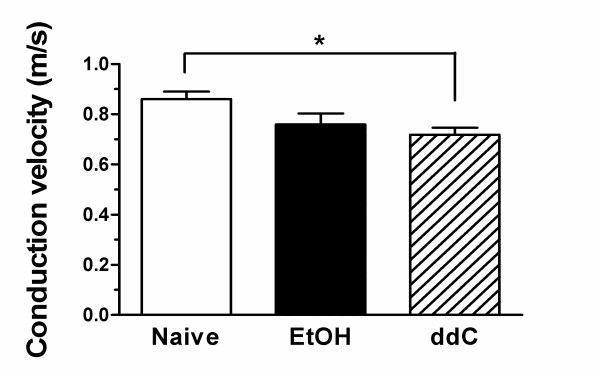
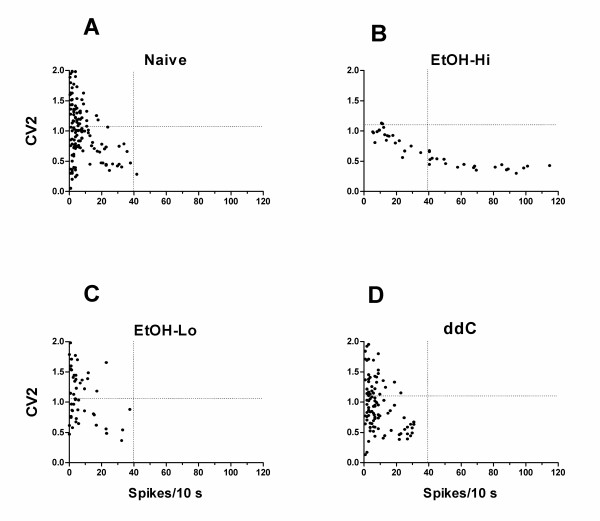
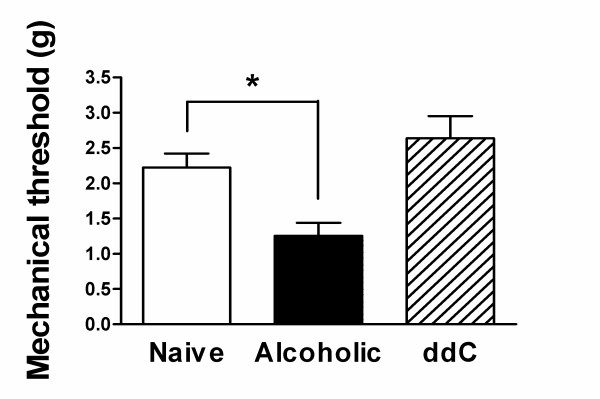
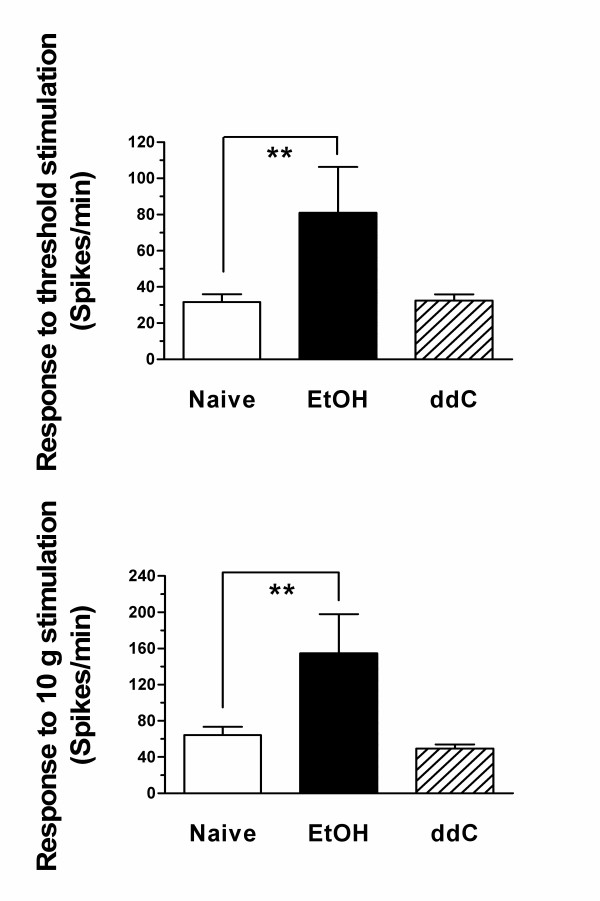
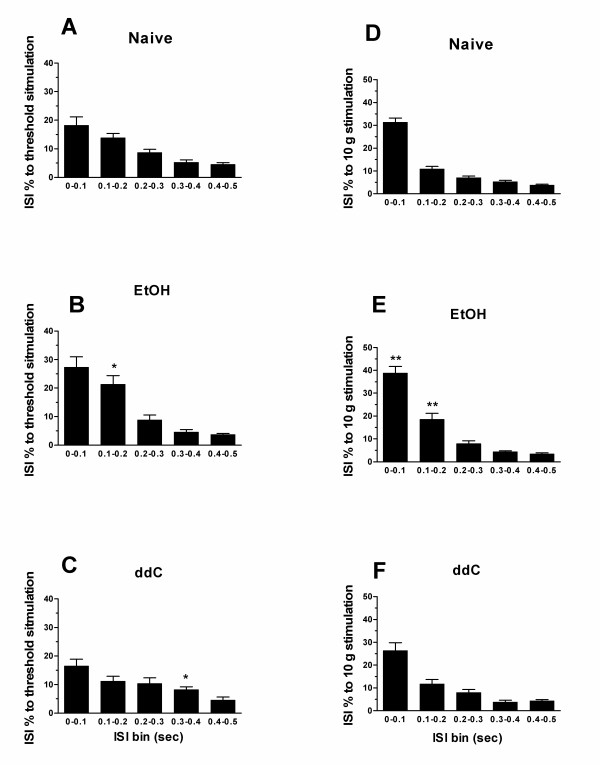
While altered activities in sensory neurons were noticed in neuropathic pain, caused by highly diverse insults to the peripheral nervous system, such as diabetes, alcohol ingestion, cancer chemotherapy and drugs used to treat AIDS, other infections and autoimmune diseases, as well as trauma, our understanding of how these various peripheral neuropathies manifest as altered neuronal activity is still rudimentary. The recent development of models of several of those neuropathies has, however, now made it possible to address their impact on primary afferent nociceptor function. We compared changes in mechanically-evoked C-fiber activity, in models of painful peripheral neuropathy induced by drinking ethanol (alcohol) or administering 2',3'-dideoxycytidine (ddC), a nucleoside reverse transcriptase inhibitor for AIDS therapy, two co-morbid conditions in which pain is thought to be mediated by different second messenger signaling pathways. In C-fiber afferents, ddC decreased conduction velocity. In contrast, alcohol but not ddC caused enhanced response to mechanical stimulation (i.e., decrease in threshold and increase in response to sustained threshold and supra-threshold stimulation) and changes in pattern of evoked activity (interspike interval and action potential variability analyses). These marked differences in primary afferent nociceptor function, in two different forms of neuropathy that produce mechanical hyperalgesia of similar magnitude, suggest that optimal treatment of neuropathic pain may differ depending on the nature of the causative insult to the peripheral nervous system, and emphasize the value of studying co-morbid conditions that produce painful peripheral neuropathy by different mechanisms.
虽然在由多种对周围神经系统的损伤所引起的神经性疼痛中,已注意到感觉神经元的活动发生了改变,这些损伤包括糖尿病、酒精摄入、癌症化疗、用于治疗艾滋病的药物、其他感染和自身免疫性疾病以及创伤等,但我们对于这些各种周围神经病变如何表现为神经元活动改变的理解仍然很初步。然而,最近几种此类神经病变模型的开发,现在使得研究它们对初级传入伤害感受器功能的影响成为可能。我们比较了饮用乙醇(酒精)或给予2',3'-二脱氧胞苷(ddC,一种用于艾滋病治疗的核苷逆转录酶抑制剂)所诱导的疼痛性周围神经病变模型中,机械诱发的C纤维活动的变化,这两种共病情况中疼痛被认为是由不同的第二信使信号通路介导的。在C纤维传入神经中,ddC降低了传导速度。相比之下,酒精而非ddC导致对机械刺激的反应增强(即阈值降低以及对持续阈值和阈上刺激的反应增加)以及诱发活动模式的改变(峰间期和动作电位变异性分析)。在两种产生相似程度机械性痛觉过敏的不同形式神经病变中初级传入伤害感受器功能的这些显著差异,表明神经性疼痛的最佳治疗可能因对周围神经系统致病损伤的性质而异,并强调了研究通过不同机制产生疼痛性周围神经病变的共病情况的价值。