Nishida Naoyo, Yano Hirohisa, Nishida Takashi, Kamura Toshiharu, Kojiro Masamichi
Department of Pathology, Research Center of Innovative Cancer Therapy of the 21 Century, COE Program for Medical Science, Kurume University School of Medicine, Fukuoka, Japan.
Vasc Health Risk Manag. 2006;2(3):213-9. doi: 10.2147/vhrm.2006.2.3.213.
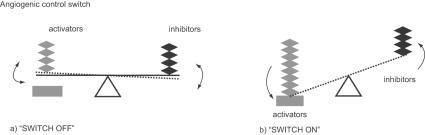
New growth in the vascular network is important since the proliferation, as well as metastatic spread, of cancer cells depends on an adequate supply of oxygen and nutrients and the removal of waste products. New blood and lymphatic vessels form through processes called angiogenesis and lymphangiogenesis, respectively. Angiogenesis is regulated by both activator and inhibitor molecules. More than a dozen different proteins have been identified as angiogenic activators and inhibitors. Levels of expression of angiogenic factors reflect the aggressiveness of tumor cells. The discovery of angiogenic inhibitors should help to reduce both morbidity and mortality from carcinomas. Thousands of patients have received antiangiogenic therapy to date. Despite their theoretical efficacy, antiangiogeic treatments have not proved beneficial in terms of long-term survival. There is an urgent need for a new comprehensive treatment strategy combining antiangiogenic agents with conventional cytoreductive treatments in the control of cancer.
血管网络中的新生长很重要,因为癌细胞的增殖以及转移扩散依赖于充足的氧气和营养供应以及废物的清除。新的血管和淋巴管分别通过称为血管生成和淋巴管生成的过程形成。血管生成受激活剂和抑制剂分子的调节。已经鉴定出十几种不同的蛋白质作为血管生成激活剂和抑制剂。血管生成因子的表达水平反映了肿瘤细胞的侵袭性。血管生成抑制剂的发现应有助于降低癌症的发病率和死亡率。迄今为止,成千上万的患者接受了抗血管生成治疗。尽管它们具有理论上的疗效,但抗血管生成治疗在长期生存方面尚未证明有益。迫切需要一种新的综合治疗策略,将抗血管生成药物与传统的细胞减灭治疗相结合来控制癌症。