Deng Wu-Guo, Nishizaki Masahiko, Fang Bingliang, Roth Jack A, Ji Lin
Department of Thoracic and Cardiovascular Surgery, The University of Texas M.D. Anderson Cancer Center, Houston, TX 77030, USA.
Biochem Biophys Res Commun. 2007 Apr 20;355(4):993-9. doi: 10.1016/j.bbrc.2007.02.067. Epub 2007 Feb 22.
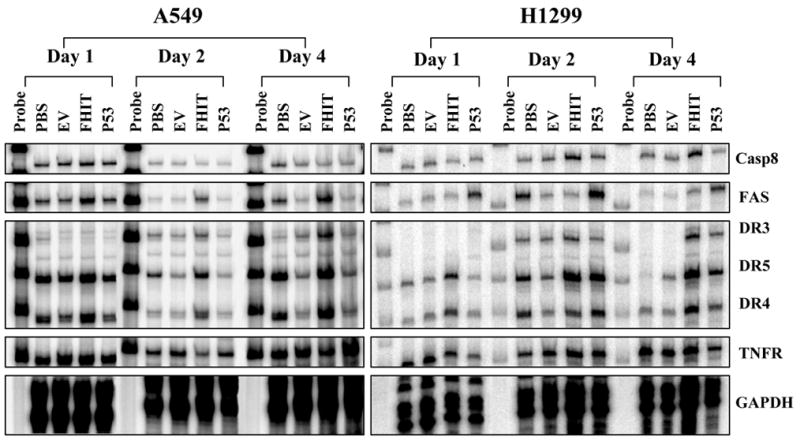
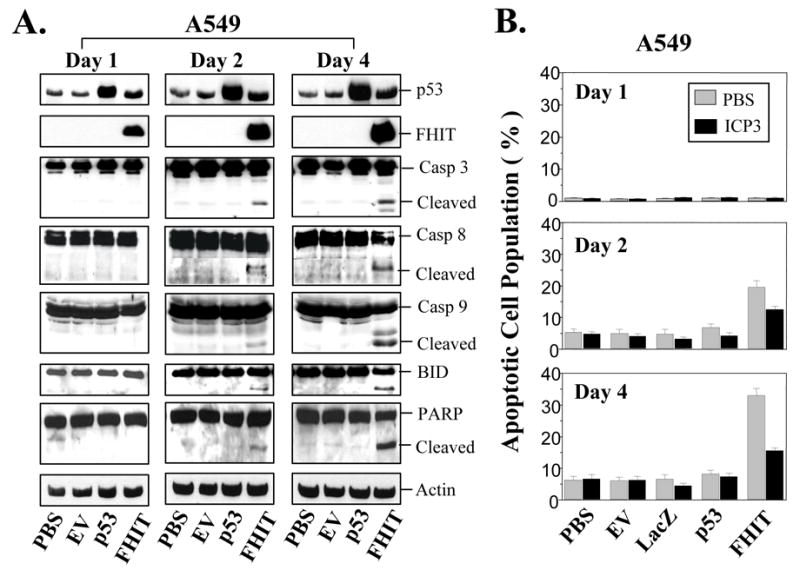
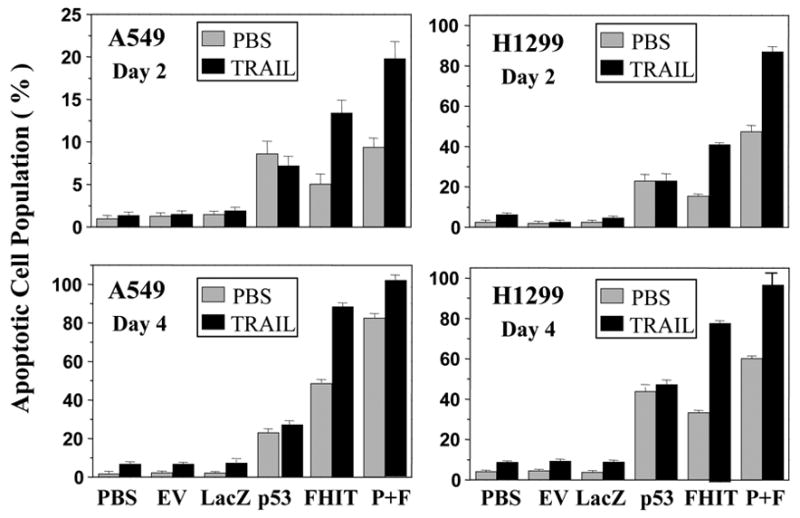
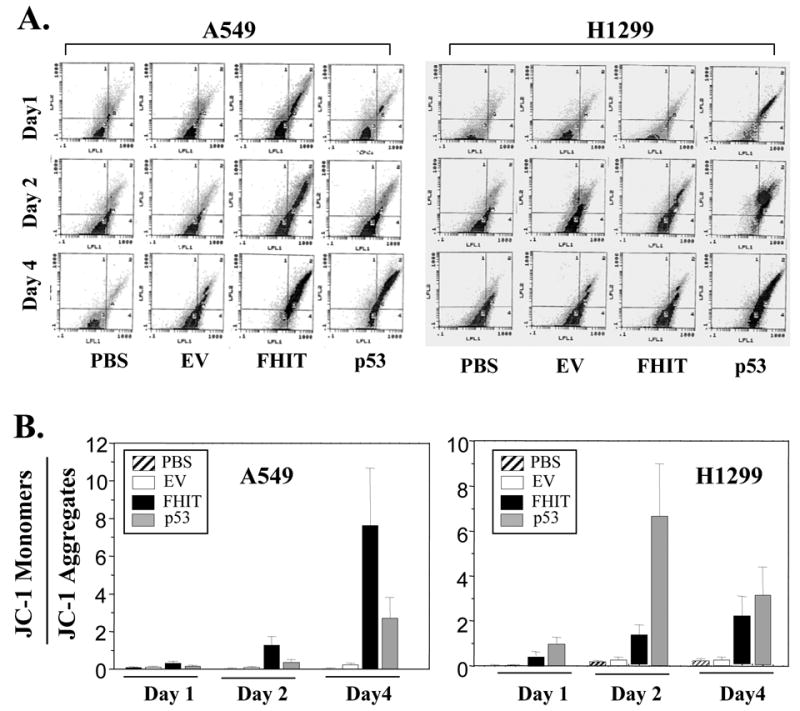
FHIT is a novel tumor suppressor gene located at human chromosome 3p14.2. Restoration of wild-type FHIT in 3p14.2-deficient human lung cancer cells inhibits cell growth and induces apoptosis. In this study, we analyzed potential upstream/downstream molecular targets of the FHIT protein and found that FHIT specifically targeted and regulated death receptor (DR) genes in human non-small-cell lung cancer (NSCLC) cells. Exogenous expression of FHIT by a recombinant adenoviral vector (Ad)-mediated gene transfer upregulated expression of DR genes. Treatment with a recombinant TRAIL protein, a DR-specific ligand, in Ad-FHIT-transduced NSCLC cells considerably enhanced FHIT-induced apoptosis, further demonstrating the involvement of DRs in FHIT-induced apoptosis. Moreover, we also found that FHIT targeted downstream of the DR-mediated signaling pathway. FHIT overexpression disrupted mitochondrial membrane integrity and activated multiple pro-apoptotic proteins in NSCLC cell. These results suggest that FHIT induces apoptosis through a sequential activation of DR-mediated pro-apoptotic signaling pathways in human NSCLC cells.
FHIT是一种位于人类染色体3p14.2的新型肿瘤抑制基因。在3p14.2缺失的人类肺癌细胞中恢复野生型FHIT可抑制细胞生长并诱导凋亡。在本研究中,我们分析了FHIT蛋白潜在的上游/下游分子靶点,发现FHIT在人类非小细胞肺癌(NSCLC)细胞中特异性靶向并调控死亡受体(DR)基因。通过重组腺病毒载体(Ad)介导的基因转移进行FHIT的外源性表达上调了DR基因的表达。在Ad-FHIT转导的NSCLC细胞中用重组TRAIL蛋白(一种DR特异性配体)处理可显著增强FHIT诱导的凋亡,进一步证明DR参与了FHIT诱导的凋亡。此外,我们还发现FHIT靶向DR介导的信号通路的下游。FHIT过表达破坏了NSCLC细胞中的线粒体膜完整性并激活了多种促凋亡蛋白。这些结果表明,FHIT通过在人类NSCLC细胞中顺序激活DR介导的促凋亡信号通路来诱导凋亡。