Short Walter H, Werner Frederick W, Green Jason K, Sutton Levi G, Brutus Jean Paul
Department of Orthopedic Surgery, SUNY Upstate Medical University, Syracuse, NY 13210, USA.
J Hand Surg Am. 2007 Mar;32(3):297-309. doi: 10.1016/j.jhsa.2006.10.024.
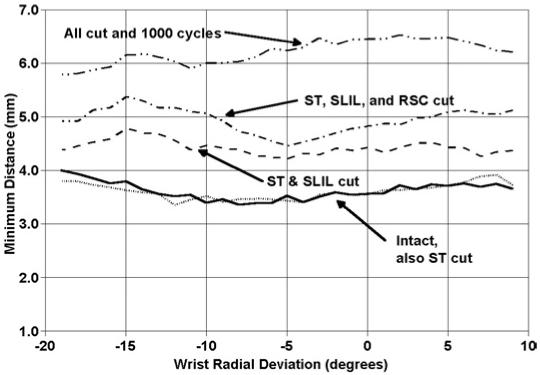
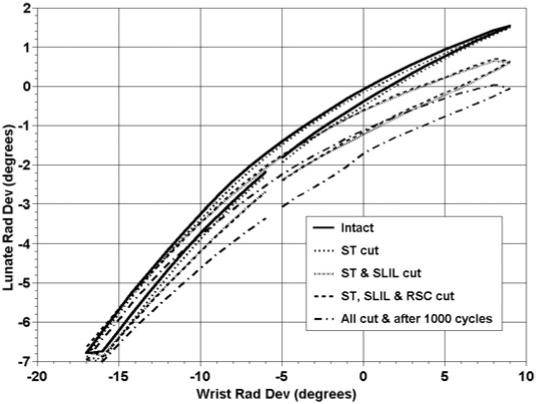
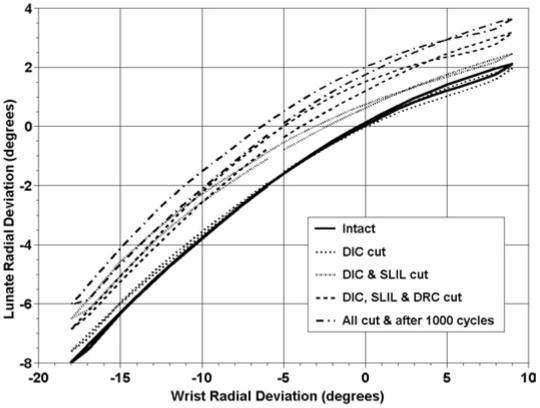
This study continued our previous investigations of the ligaments stabilizing the scaphoid and lunate in which we examined the scapholunate interosseous ligament, the radioscaphocapitate, and the scaphotrapezial ligament. In this current study, we examined the effects of sectioning the dorsal radiocarpal ligament, dorsal intercarpal ligament, scapholunate interosseous ligament, radioscaphocapitate, and scaphotrapezial ligaments. In the current study, the scapholunate interosseous ligament, radioscaphocapitate, and scaphotrapezial ligaments were sectioned in a different order than performed previously.
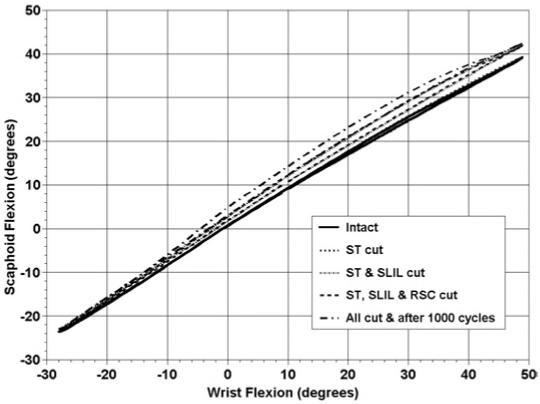
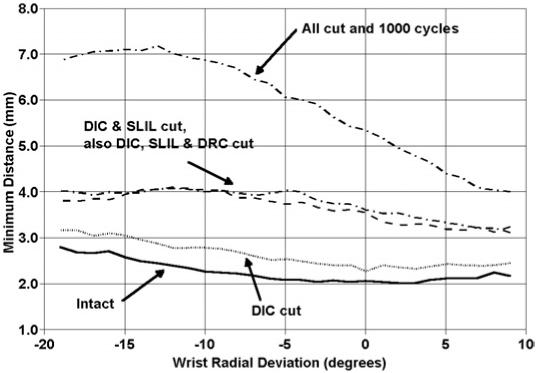
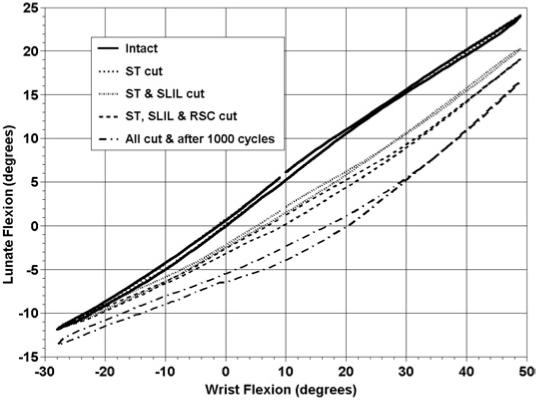
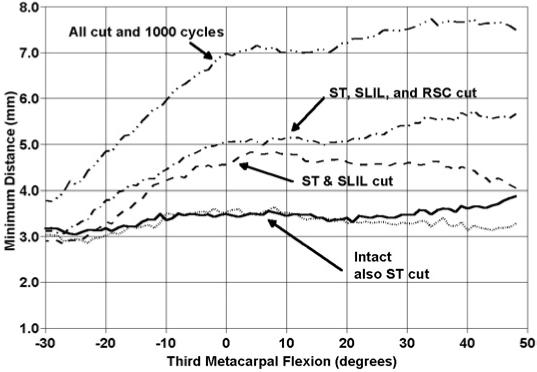
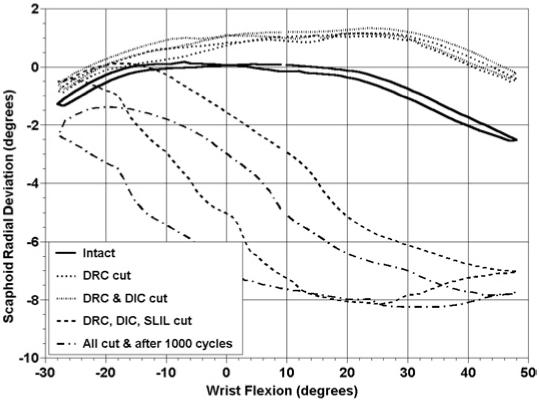
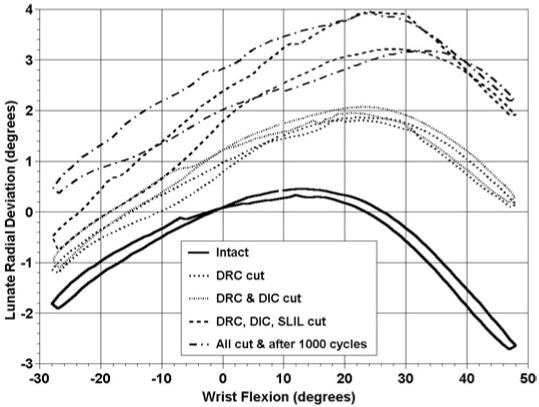
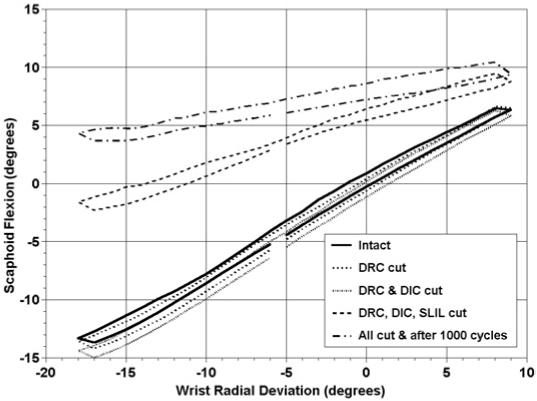
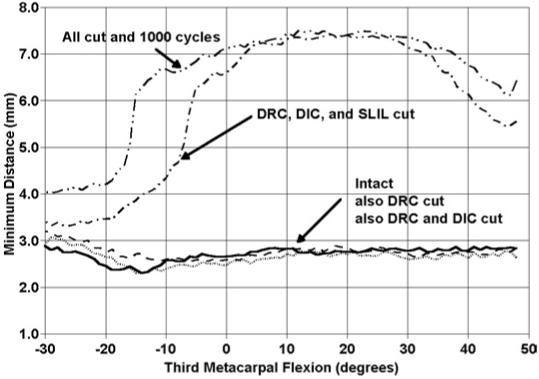
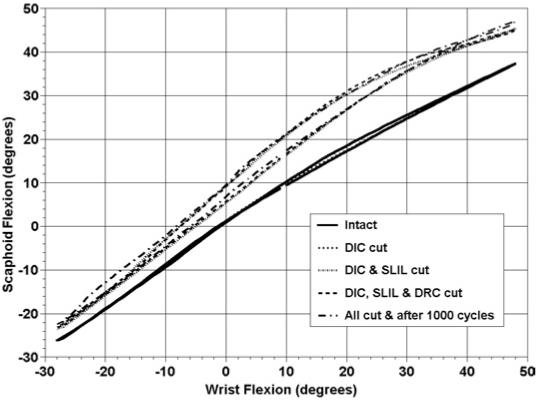
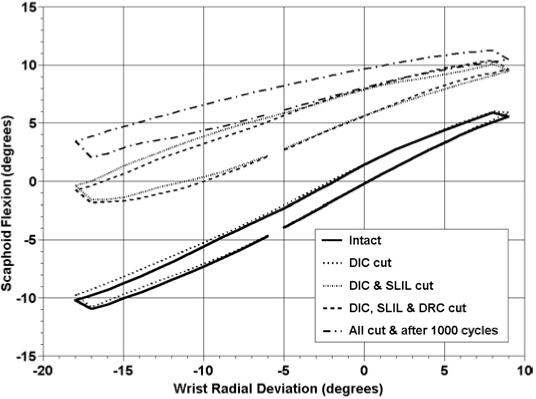
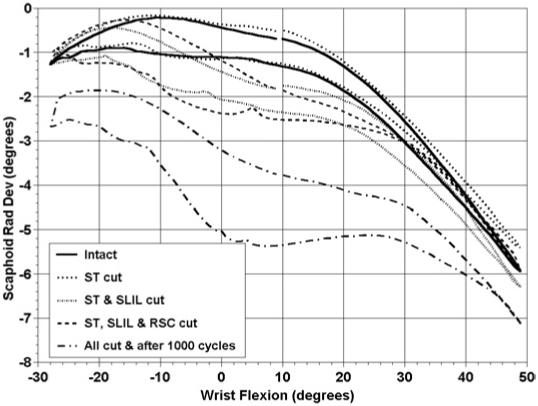
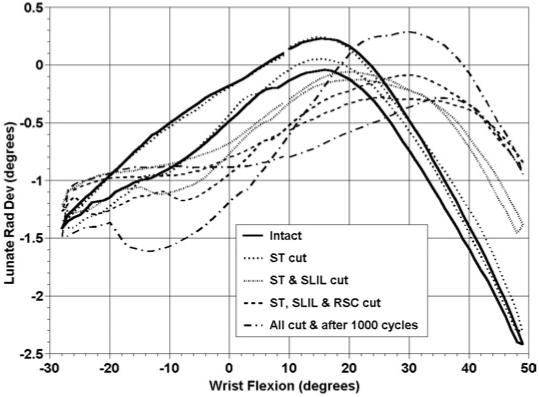
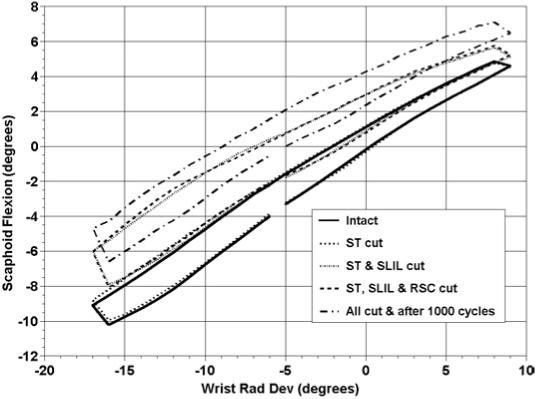
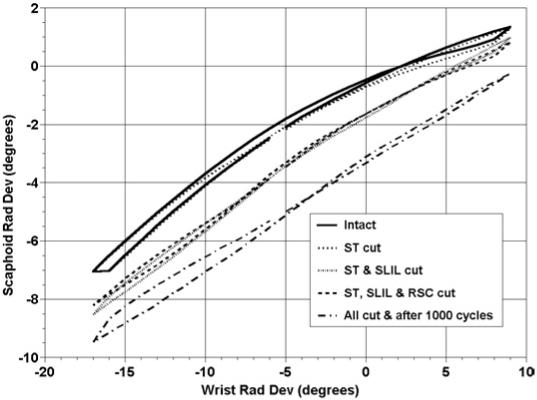
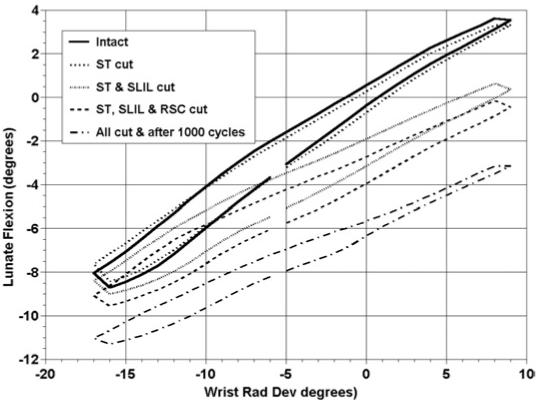
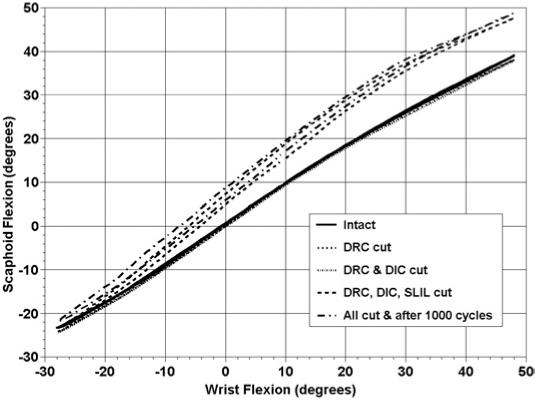
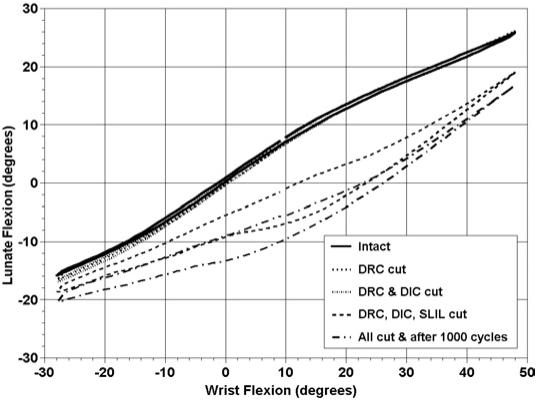
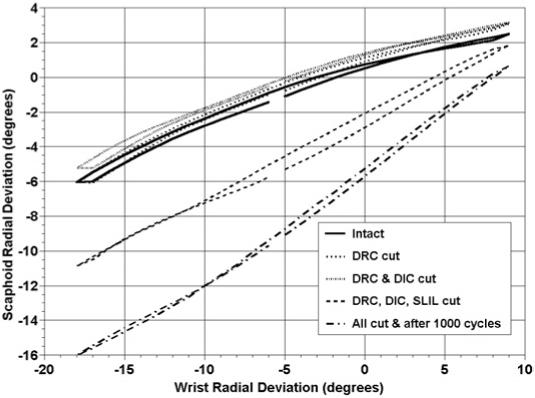
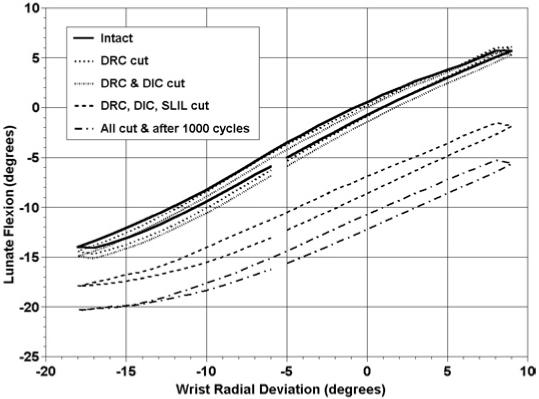
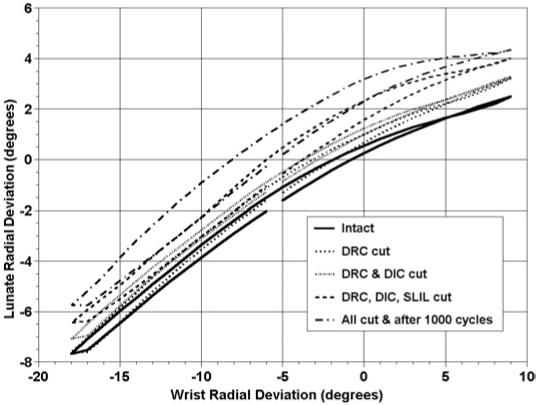
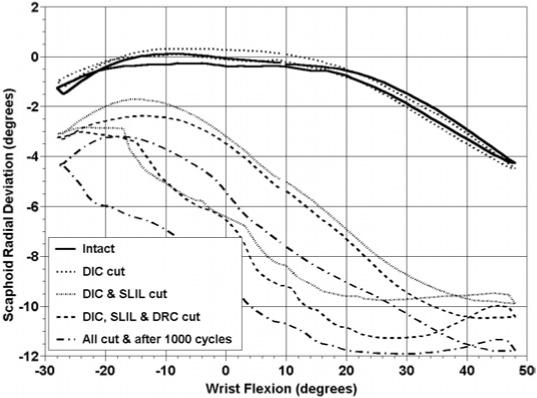
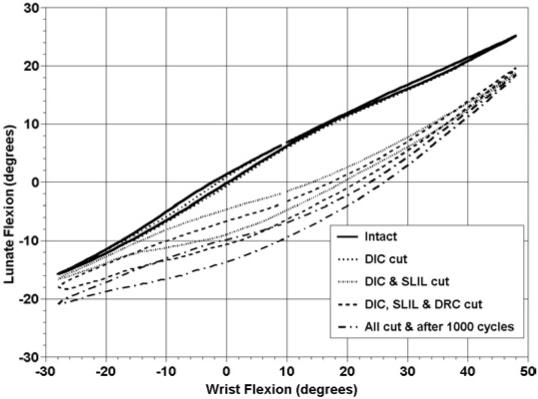
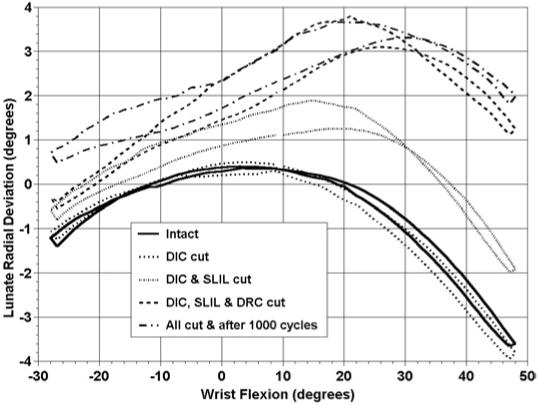
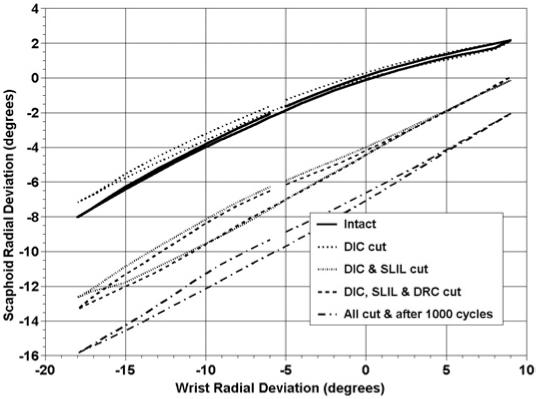
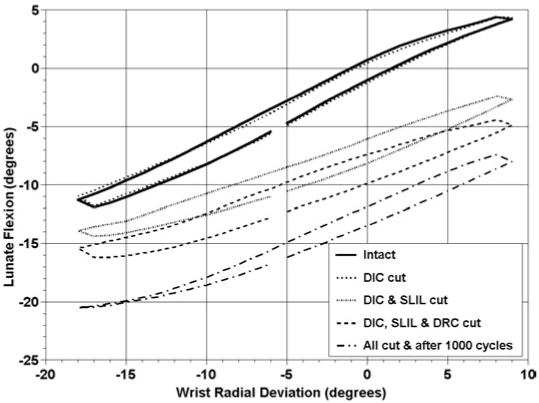
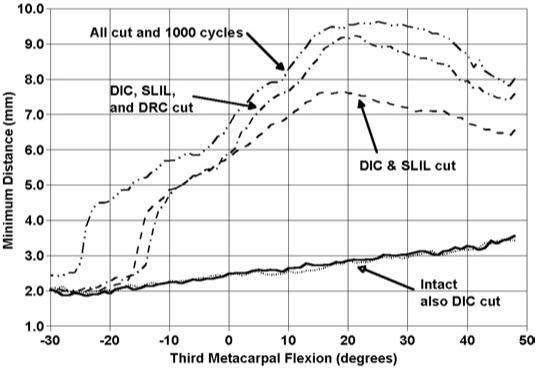
Three sets of 8 cadaver wrists were tested in a wrist joint motion simulator. In each set of wrists, only 3 of the 5 ligaments were cut in specific sequences. Each wrist was moved in continuous cycles of flexion-extension and radial-ulnar deviation. Kinematic data for the scaphoid and lunate were recorded for each wrist in the intact state, after the 3 ligaments were sectioned in various sequences and after the wrist was moved through 1,000 cycles of motion.
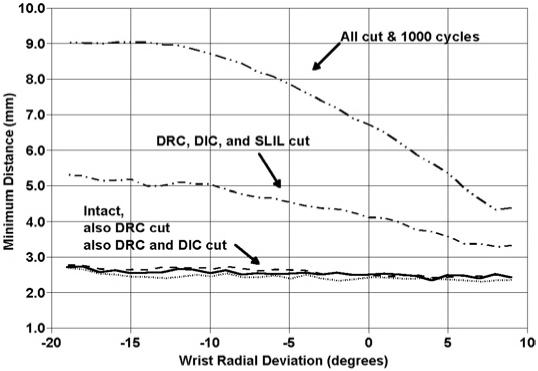
Dividing the dorsal intercarpal or scaphotrapezial ligaments did not alter the motion of the scaphoid or lunate. Dividing the dorsal radiocarpal ligament alone caused a slight statistical increase in lunate radial deviation. Dividing the scapholunate interosseous ligament after first dividing the dorsal intercarpal, dorsal radiocarpal, or scaphotrapezial ligaments caused large increases in scaphoid flexion and lunate extension.
Based on these findings, we concluded that the scapholunate interosseous ligament is the primary stabilizer and that the other ligaments are secondary stabilizers of the scapholunate articulation. Dividing the dorsal radiocarpal, dorsal intercarpal, or scaphotrapezial ligaments after cutting the scapholunate interosseous ligament produces further changes in scapholunate instability or results in changes in the kinematics for a larger portion of the wrist motion cycle.
本研究延续了我们之前对稳定舟骨和月骨的韧带的研究,在之前的研究中我们检查了舟月骨间韧带、桡舟头韧带和舟大多角骨韧带。在当前这项研究中,我们检查了切断背侧腕关节韧带、背侧腕骨间韧带、舟月骨间韧带、桡舟头韧带和舟大多角骨韧带的影响。在当前研究中,舟月骨间韧带、桡舟头韧带和舟大多角骨韧带的切断顺序与之前不同。
在腕关节运动模拟器中对三组共8个尸体腕关节进行测试。在每组腕关节中,仅按特定顺序切断5条韧带中的3条。每个腕关节以连续的屈伸和桡尺偏斜循环进行移动。记录每个腕关节在完整状态下、按不同顺序切断3条韧带后以及腕关节经过1000个运动循环后的舟骨和月骨的运动学数据。
切断背侧腕骨间韧带或舟大多角骨韧带不会改变舟骨或月骨的运动。单独切断背侧腕关节韧带会使月骨桡偏在统计学上略有增加。在首先切断背侧腕骨间韧带、背侧腕关节韧带或舟大多角骨韧带后再切断舟月骨间韧带,会导致舟骨屈曲和月骨伸展大幅增加。
基于这些发现,我们得出结论,舟月骨间韧带是主要稳定结构,而其他韧带是舟月关节的次要稳定结构。在切断舟月骨间韧带后再切断背侧腕关节韧带、背侧腕骨间韧带或舟大多角骨韧带,会使舟月关节不稳定进一步加剧,或导致腕关节运动周期中更大比例的运动学变化。