Shen Hui, Gong Qi Hua, Aoki Chiye, Yuan Maoli, Ruderman Yevgeniy, Dattilo Michael, Williams Keith, Smith Sheryl S
Department of Physiology and Pharmacology, SUNY Downstate Medical Center, 450 Clarkson Avenue, Brooklyn, New York 11203, USA.
Nat Neurosci. 2007 Apr;10(4):469-77. doi: 10.1038/nn1868. Epub 2007 Mar 11.
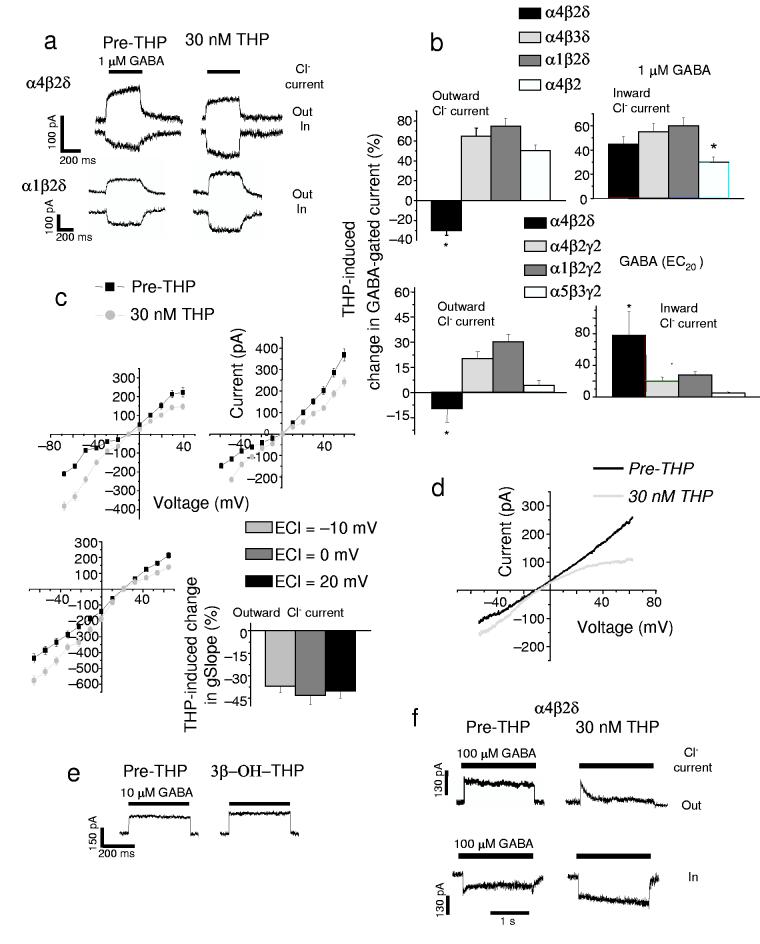
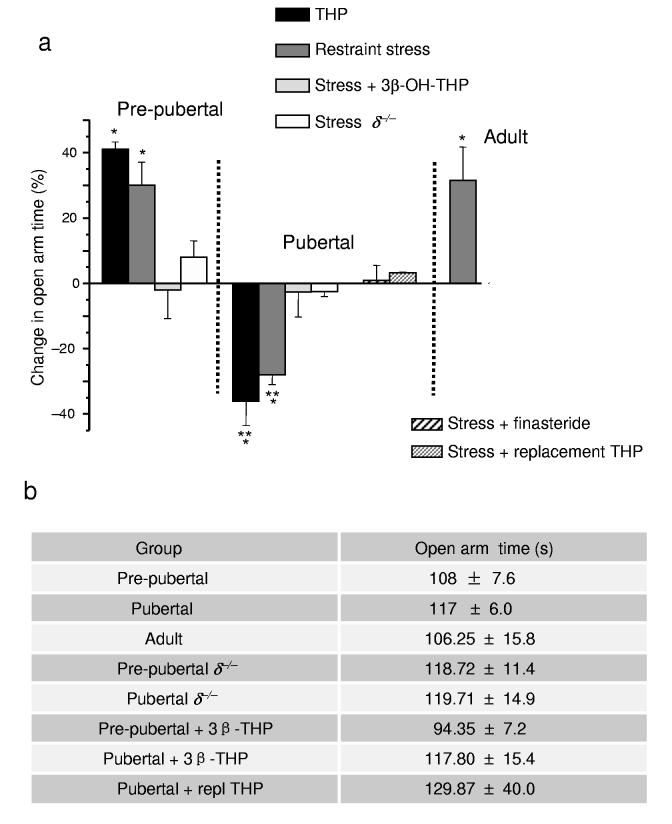
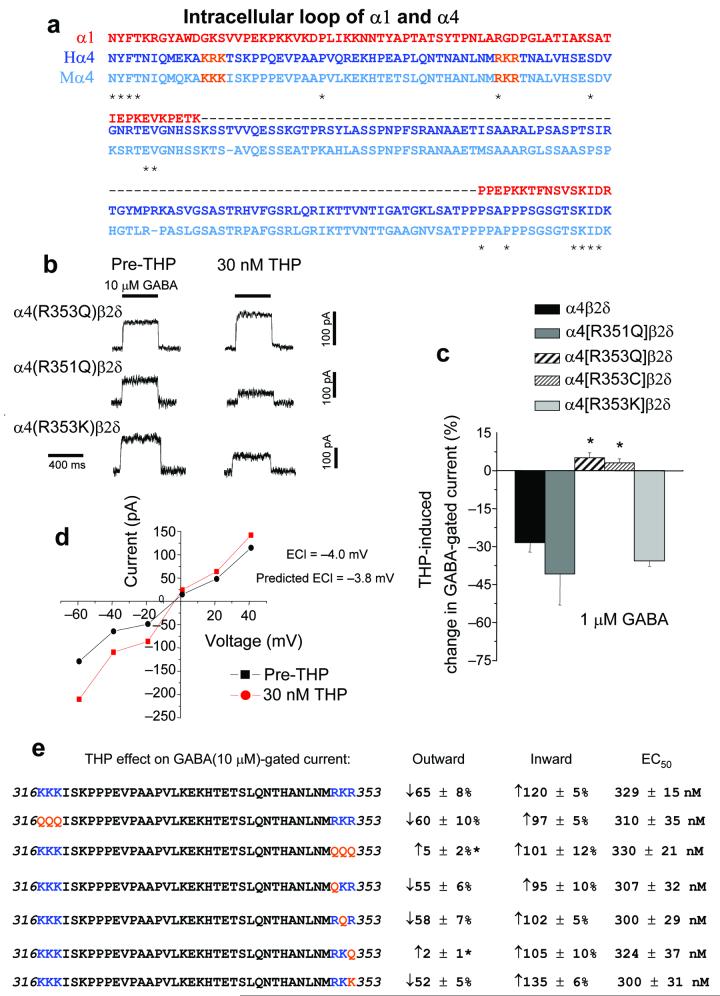
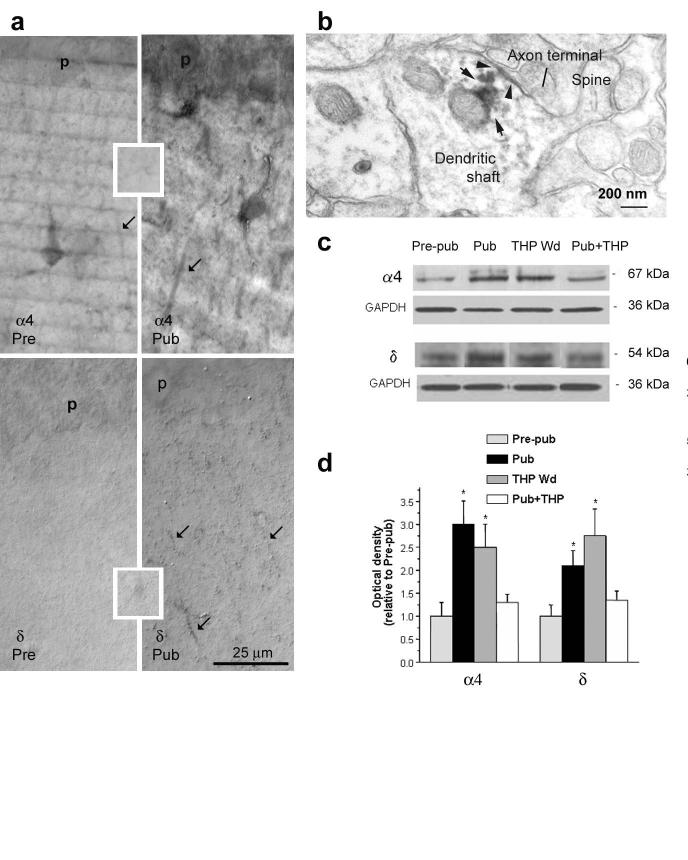
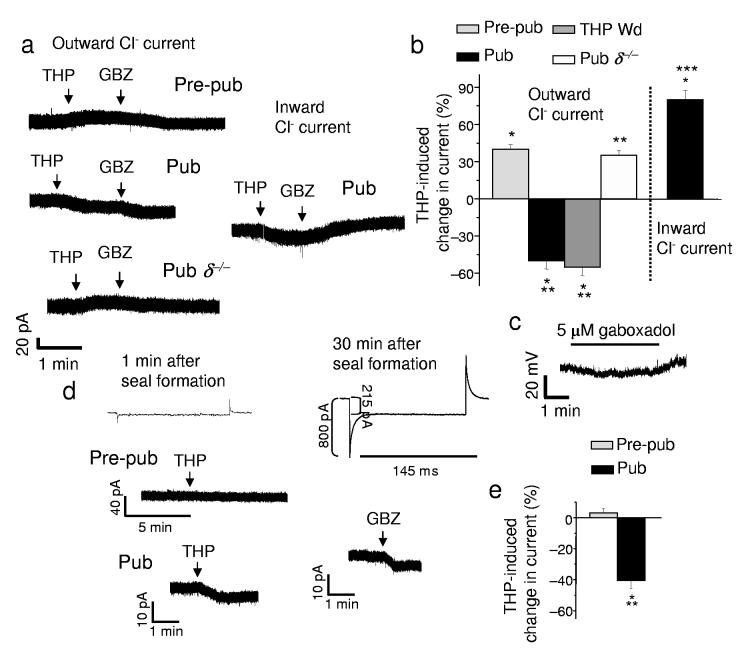
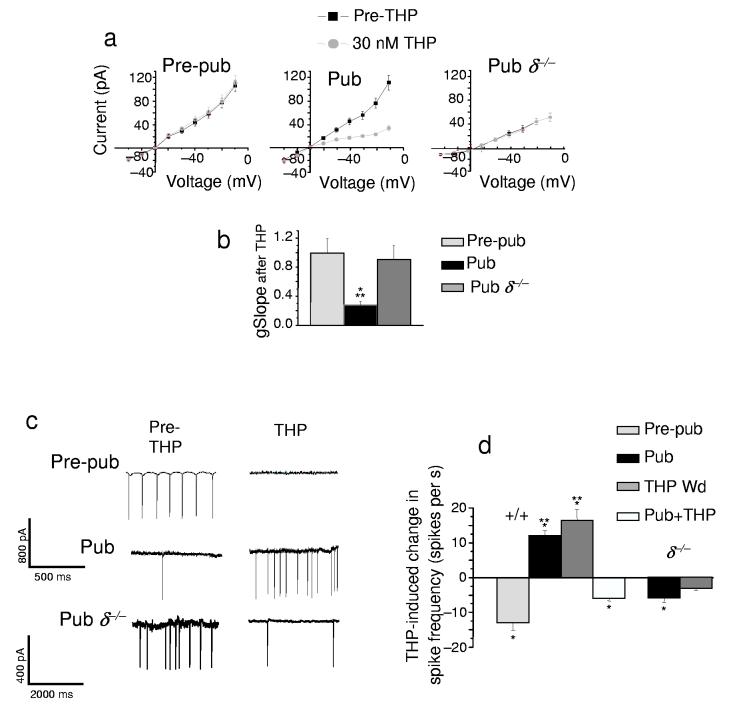
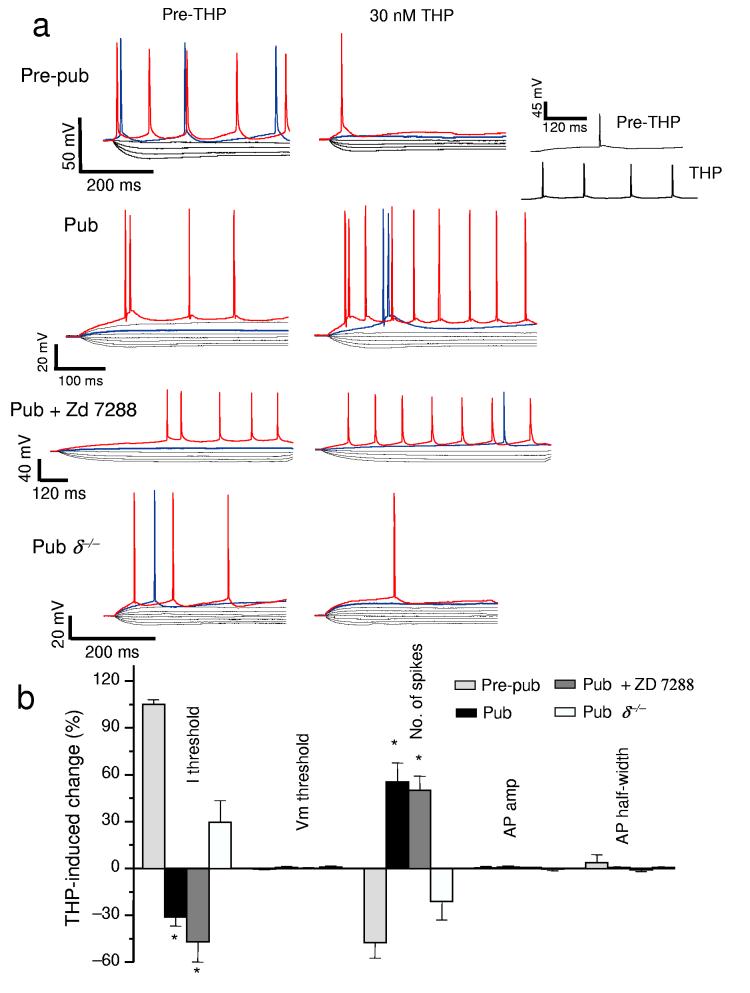
Puberty is characterized by mood swings and anxiety, which are often produced by stress. Here we show that THP (allopregnanolone), a steroid that is released as a result of stress, increases anxiety in pubertal female mice, in contrast to its anxiety-reducing effect in adults. Anxiety is regulated by GABAergic inhibition in limbic circuits. Although this inhibition is increased by THP administration before puberty and in adults, during puberty THP reduces the tonic inhibition of pyramidal cells in hippocampal region CA1, leading to increased excitability. This paradoxical effect of THP results from inhibition of alpha4betadelta GABAA receptors. These receptors are normally expressed at very low levels, but at puberty, their expression is increased in hippocampal area CA1, where they generate outward currents. THP also decreases the outward current at recombinant alpha4beta2delta receptors, and this effect depends on arginine 353 in the alpha4 subunit, a putative site for modulation by Cl-. Therefore, inhibition of alpha4beta2delta GABAA receptors by THP provides a mechanism for the generation of anxiety at puberty.
青春期的特点是情绪波动和焦虑,这些往往由压力产生。我们在此表明,四氢孕酮(别孕烯醇酮),一种因压力而释放的类固醇,与它在成年小鼠中减轻焦虑的作用相反,会增加青春期雌性小鼠的焦虑。焦虑由边缘回路中的γ-氨基丁酸能抑制调节。虽然在青春期前和成年期给予四氢孕酮会增强这种抑制,但在青春期,四氢孕酮会降低海马区CA1锥体细胞的紧张性抑制,导致兴奋性增加。四氢孕酮的这种矛盾效应源于对α4βδ GABAA受体的抑制。这些受体通常表达水平极低,但在青春期,它们在海马区CA1的表达增加,在那里它们产生外向电流。四氢孕酮还会减少重组α4β2δ受体的外向电流,这种效应取决于α4亚基中的精氨酸353,这是一个推测的由Cl-调节的位点。因此,四氢孕酮对α4β2δ GABAA受体的抑制为青春期焦虑的产生提供了一种机制。